


Stinkpots
By Richard Bartlett · December 9, 2014 5:39 am
From Maine to Ontario and Florida to Texas, you may encounter the little turtle known vernacularly as the "stinkpot" and more formerly as the common musk turtle, Sternotherus odoratus.
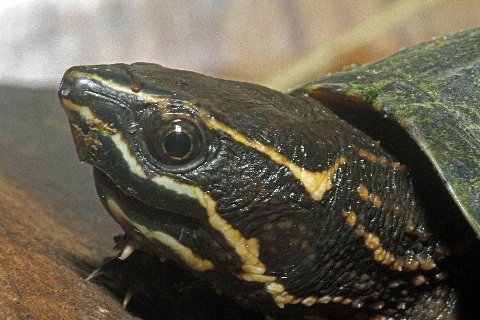
The names, both common and scientific, are derived from the odorous secretions produced by the two musk glands: one on each side of the plastron where the skin meets the shell bridge.
Although primarily aquatic, this little blackish turtle with the striped face, pointed nose, and elongate but high domed carapace may choose at times to wander far from its watery home.
Although musk and mud turtles are closely related, the small plastron of the musk turtles easily separates them from muds which all have a large plastron. Throughout most of its range the common musk is the only species of musk turtle to be found. Although the intensity and integrity of the yellow may vary, it is the only musk turtle to have a yellow striped face.
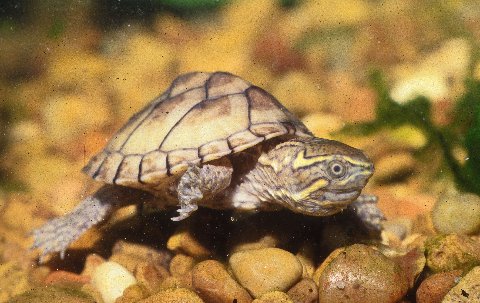
Hatchlings, so small they can sit comfortably on a quarter and have a roughened carapace, while the upper shell of the adults is usually very smooth.
Common musks are usually quite inexpensive and are very hardy and long-lived as captives. If you have an opportunity to get a baby you will find it an easily kept and responsive pet.
This is a normally colored adult common musk turtle.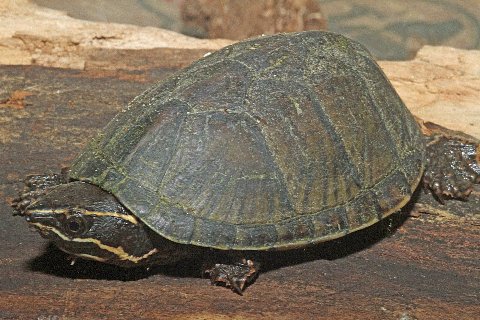 An unusually light colored juvenile common musk turtle from North Carolina.
 Author, photographer, and columnist Richard Bartlett is one of the most prolific writers on herpetological subjects in the 20th century. With hundreds of books and articles to their credit, Richard and his wife Pat have spent over four decades documenting reptiles both in the field and in captivity. For a list of their current titles, please visit their page in our bookstore. Author, photographer, and columnist Richard Bartlett is one of the most prolific writers on herpetological subjects in the 20th century. With hundreds of books and articles to their credit, Richard and his wife Pat have spent over four decades documenting reptiles both in the field and in captivity. For a list of their current titles, please visit their page in our bookstore. |