For those who remember The Venom Interviews, Ray Morgan is working on a new project, The Antivenom Interviews:The Global Snakebite Crisis and the Evolution of Treatment. Here is one of the videos he did promoting the project. Antivenom 101.
You can check out the project and donate at The Antivenom Interviews. I will be honest, I am one of the projects ambassadors and I did assist on some of the filming that will be used in the project. So I am pretty excited for the funds to be raised and the project to take off!
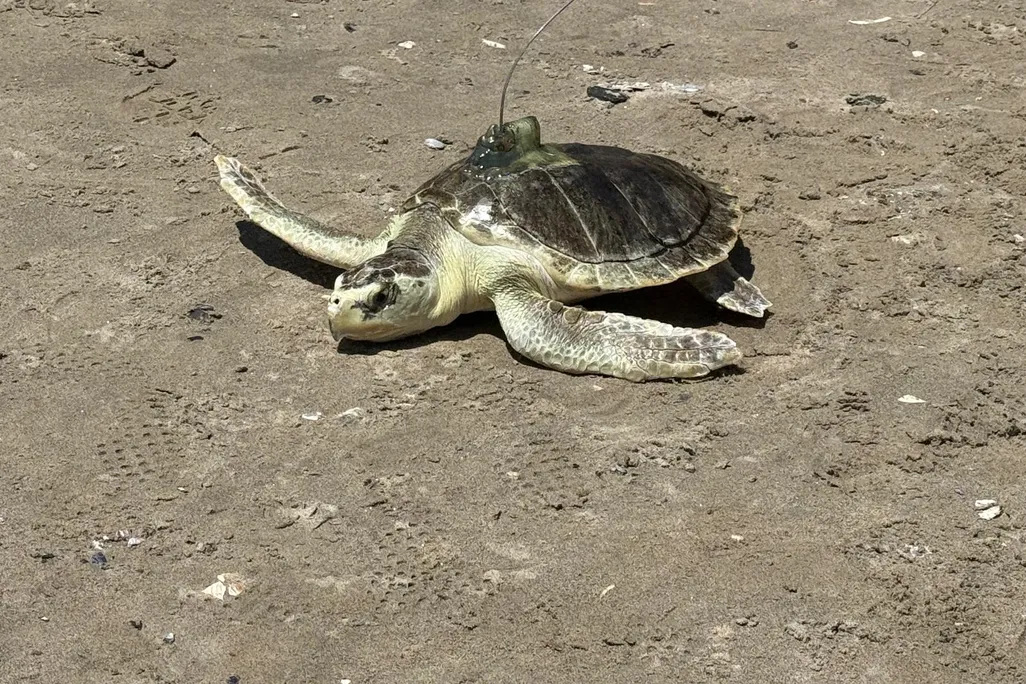
Experts attached a satellite transmitter to Pancake's shell, which will track its location for up to 90 days. Mary Dixon / Wildlife Conservation Society
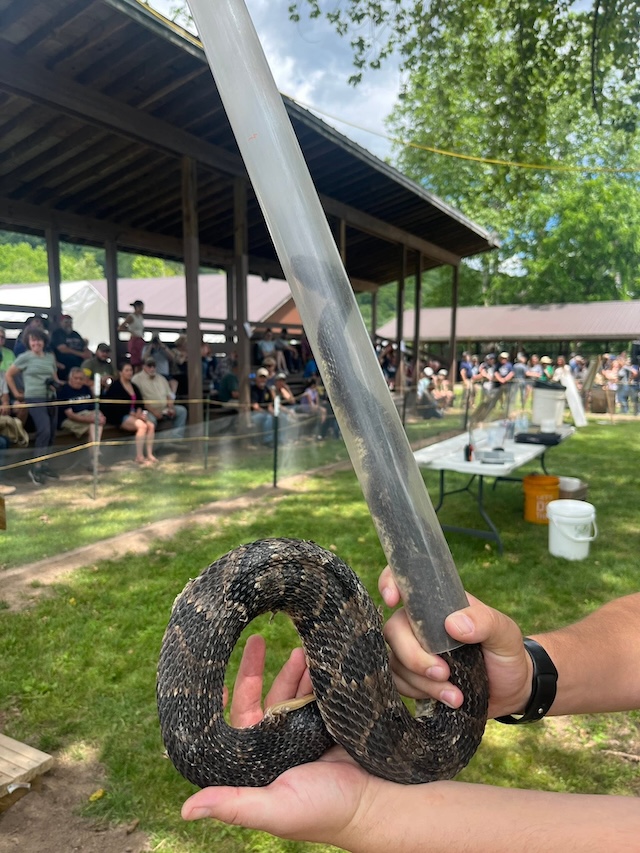
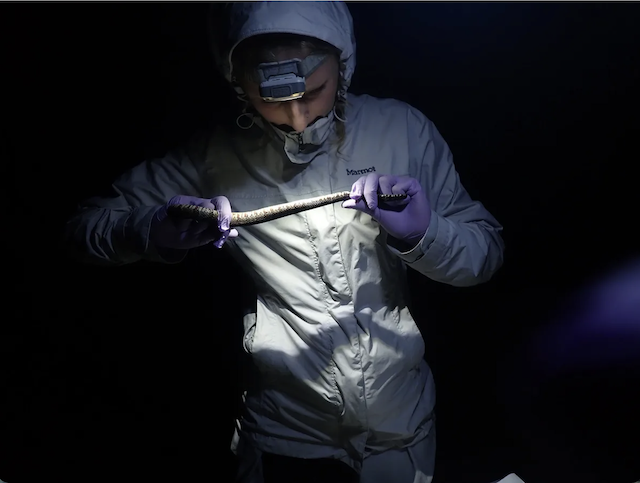
Photo of Noxen Fire Volunteer showing tubed venomous snake, rather than some more barbaric ways of other roundups such as sewing mouths shut while unsedated. Photo from Noxen Fire Dept Facebook page
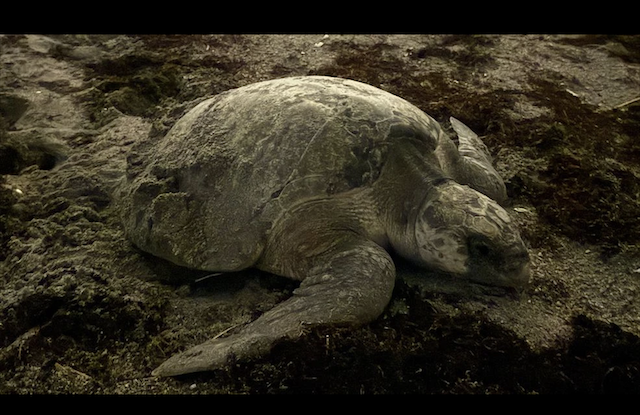
Tini, an olive ridley sea turtle, recently laid her eggs on Junitper Beach, Florida marking the first time ever for that species. While loggerheads, leatherbacks and greens do typically nest on the beach, this was the first ever record nest for the species recorded by Loggerhead Marinelife Center.
Olive ridleys are among the smallest sea turtle species and are known for their olive-green, heart-shaped shells. They are also famous for two nesting strategies: solitary nesting and the "arribada," a mass nesting event in which thousands of females come ashore at once.
Despite almost a year long battle with keepers, the Wisconsin Department of Natural Resources moved ahead on ban of all native species with an exception on only three color variants. This does include captive bred species, as well as a variety of color morphs. There is also a ban in place now on turtle and frog races, which is probably the only truly good things here. A few things of note from the new rules:
NR 16.01 (2m) “Color variant” means any of the following atypical native amphibians and
reptiles of any age class:
(a) Individuals, regardless of species, that are:
1. Tyrosinase-negative albino (light pink or yellow body with red eyes).
2. Fully melanistic animals (entirely black).
3. Piebald (10% or more of the animal is pure white).
(b) Gophersnakes and milksnakes that are patternless.
....
(2) POSSESSION RESTRICTED. No Beginning on January 1, 2027, no person may take from the
wild or possess any live or dead native amphibians or reptiles or their eggs, except as provided under
sub. (3) and s. NR 19.26, or turtles taken under the authority of ss. NR 19.275, 21.13 and 22.13. Any live
native wild reptiles or amphibians possessed before January 1, 2027, must be registered with the
10
department in a manner determined by the department on or before June 30, 2027. Any native wild
reptiles or amphibians not registered with the department on or before June 30, 2027, will be presumed to
be in violation of this chapter.
Bryna Daykin, crew leader, is on an airboat during an American crocodile capture survey. (Photo by UF/IFAS Croc Docs)
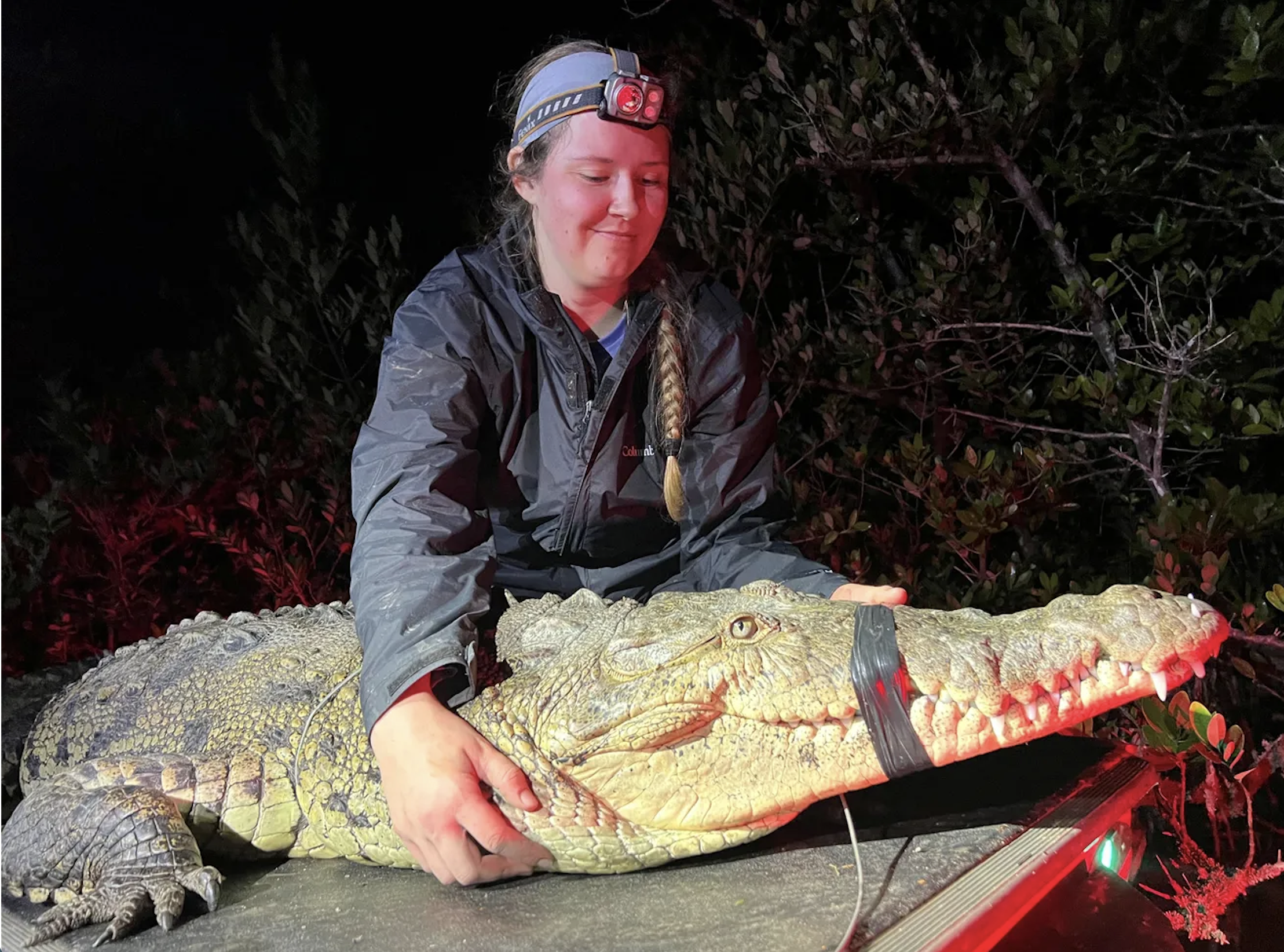
Today is International Women in Science Day and what better way to celebrate than to highlight some of the "Croc Docs" who track and research the alligators and even burmese pythons in the Everglades. The "Croc Docs" is a program through University of Florida Institute of Food and Agricultural Sciences (UF/IFAS) carry out overnight conservation research projects that checks data on alligator populations as well as tracking invasive species.
For Pupo, a South Florida native, a career in science once felt unrealistic. Like many women in her family, she briefly considered medicine before rediscovering biology during her undergraduate years, inspired by female wildlife professors and peers who shared her passion.
“I can’t imagine a more fulfilling way to spend my time than helping to conserve the environment and the fauna that taught me so much growing up,” she said in the news release.
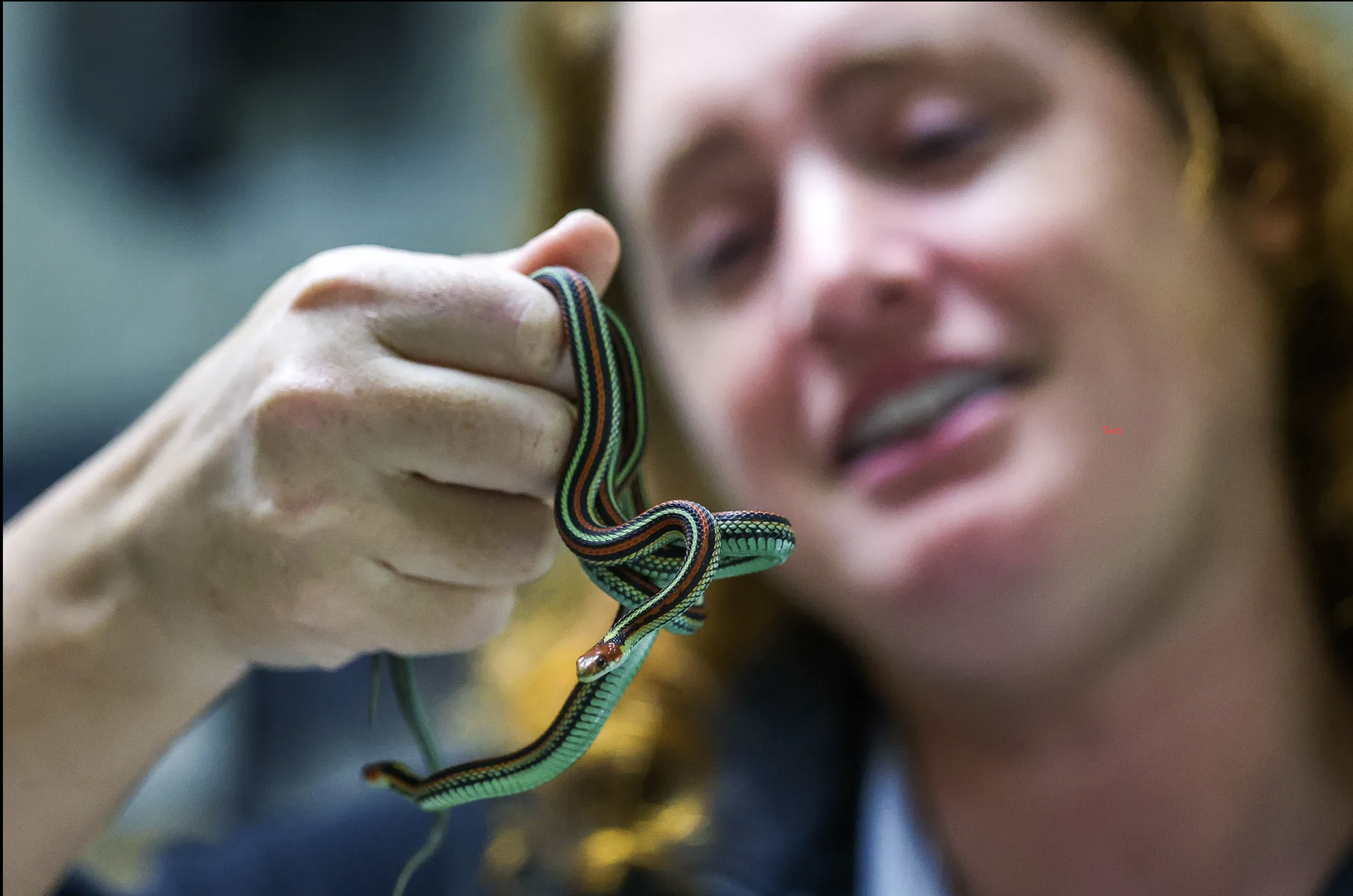
Jamie McNellis, a Conservation Specialist at the San Francisco Zoo, holds four-month-old garter snakes kept in enclosures at the San Francisco Zoo in San Francisco, Calif., on Thursday, Dec. 4, 2025. (Ray Chavez/Bay Area News Group)
The San Francisco Garter Snake is amazingly beautiful and also very endangered, but now with the help of the conservation program at the San Francisco Zoo, they may get a chance at re-establishing their population! The largest current population of the snake lives on the property of the San Francisco airport and is quite protected but there is another area in Pacifica that conservationist from the Zoo have been preparing to help headstart a population of 115 babies for a spring release with more planned for the future!
Those destined for Pacifica will be released into a habitat that has been upgraded for their arrival. The project included creating a new pond for snakes and red-legged frogs to thrive, and removing invasive Monterey Cypress and Monterey Pine trees.
“If we didn’t do any type of tree removal, those scrub and grassland areas would be converted into forested habitats,” said Fong. “For sun-loving reptiles like snakes, converting open grasslands and scrub to forested habitats is not great.”
In December, a vegetation crew from NPS scattered seeds to help populate the upgraded habitat with native plant species.
One remaining concern is the continuing threat posed by people and their pets. The striking colors that make the San Francisco garter snake a California icon have also made it a target for illegal poaching for the pet trade, said McNellis. SFO can secure its habitat with a security fence, but other habitats cannot provide protection.
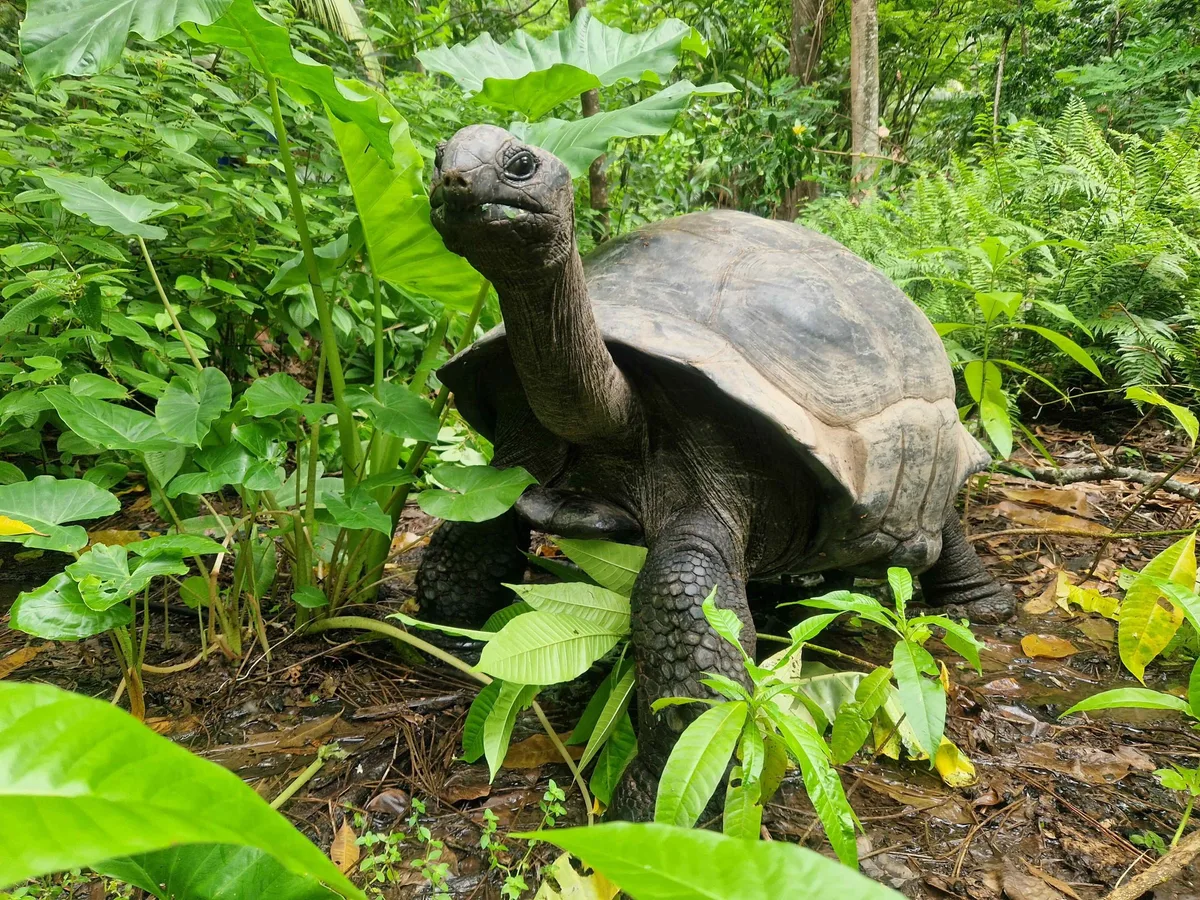
Aldabra giant tortoise foraging for food in a forest on North Island, which is part of Aldabra – the world's second-largest coral atoll. Credit: Rich Baxter/IOTA Seychelles
In 1997, North Island located in the Seychelles was purchased by private investors for ecotourism and rewilding. Today, that venture took 200 heavy steps forward as 50 Galapagos tortoises were released to the island to roam free again as they did once before. Many of the tortoises were actually pets surrendered for the joint project with Indian Ocean Tortoise Alliance (IOTA) and North Island Environment Department.
Before the tortoises left Mahé, they were microchipped for the national tortoise census and fed only native leaves to prevent the spread of invasive plant species via their droppings. They underwent two quarantines, one in Mahé and one on North Island, before taking their first steps into their new wild home.
Now, every day, they walk a little farther and explore a little more. “After months of planning, seeing them walk free was incredibly rewarding,” says IOTA assistant project officer Santosh Albert.
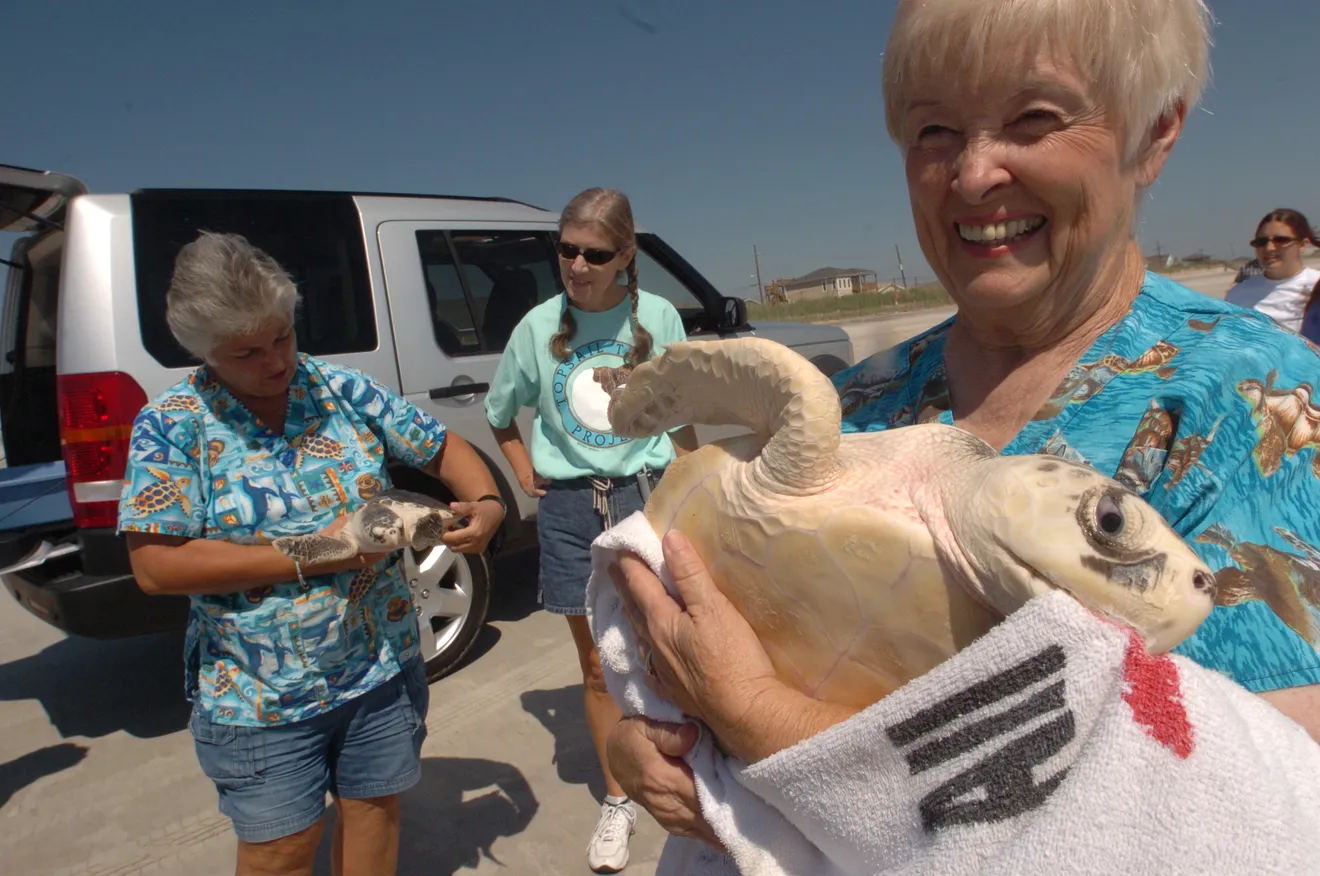
Jean Beasley with the Karen Beasley Rescue and Rehabilitation Center in Topsail Beach holds onto Southport a juvenile Kemp's Ridley sea turtle Wednesday Sept. 20, 2006. Southport along with Carolina held by Sandy Sly as Jeanie Marasco of North East, Maryland looks on were both released back into the ocean after being rehabilitated at the hospital. KEN BLEVINS/STARNEWS
Jean Beasley, the founder of the Karen Beasley Sea Turtle Rescue and Rehabilitation Center, passed surrounded by loved ones at the age of 90, but she leaves a huge hole in Sea Turtle conservation. She was the director and driving force behind the rehabilition center, named after her daughter who passed from Leukemia at the age of 29/ She and her daughter originally created the Topsail Turtle Project, which protected nests and hatchlings, eventually she expanded that into work with the hospital as well as public outreach through the center. Topsail is the midway point between New York and Florida, so the facility helps many cold stunned turtles each year on their migration. To read more about this amazingly dedicated woman, click here.
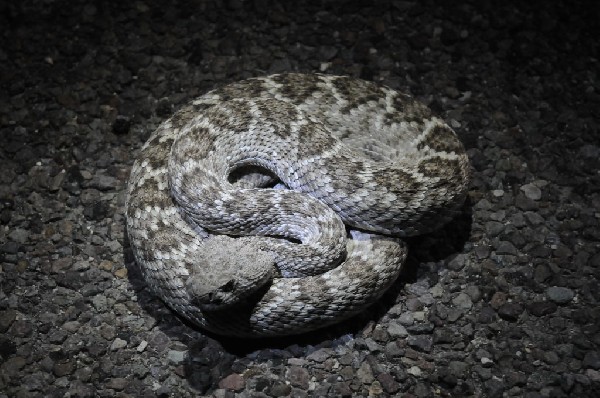
Inset photo by Jeff Barringer of my first Western Diamondback ever seen in the wild. Animal was seen at an event hosted in Sanderson Texas called Snake Days which was a conservation and educational event that brought reptile people from all over the world. I used this photo to respect the nat geo copywrites. They have amazing shots in the article!
Rattlesnakes are one of the most demonized animals on the planet. Deeply beloved by their fans and often hated by others. National Geographic author Elizabeth Royte spent a great deal of time traveling the country and looking into how to change the perceptions of rattlesnakes. She learned a bit about them in nature along the way and a bit about our battle as those who love rattlesnakes on changing perceptions.
At a time when populations of animal species globally have declined by an average of nearly 70 percent, wanton disregard for life—in the absence of imminent threat to humans—bothers Texas A&M University herpetologist Lee Fitzgerald. “The roundups do send a twisted message,” he says. “They’re not helping the way we think about biodiversity. We care about polar bears, but these snakes are worthless?”
...
“I’m blue in the face from teaching people that snakes aren’t out to get you,” Matt Goode said as we hummed through Stone Canyon. “But I don’t know how much progress we’ve made.” Throughout much of the South and Southwest, it’s legal to kill many rattlesnake species. And some people kill a whole lot.
Have you heard of Project RattleCam? It is a livestream of a Prairie Rattlesnake Rookery in Colorado at an undisclosed location and it runs 24/7 from May to October. You can watch and share interesting obeservations with the team directly through their contacts or just spend your time watching rattlesnakes be rattlesnakes! What a better way to celebrate Rattlesnake Friday! Check it out!