Search
Archive: 2023-07
kingsnake.com · Jul 31, 2023
Loving this Blue tongue skink just chilling in our Herp Photo of the day, uploaded by kingsnake.com user PatS . Be sure to tell them you liked it here!
Upload your own reptile and amphibian photos at gallery.kingsnake.com, and you could see them featured here!
kingsnake.com · Jul 28, 2023
Happy Rattlesnake Friday! Such a sassy Mamba in our herp photo of the day, uploaded by kingsnake.com user fangfatale! Be sure to tell them you liked it here!
Read full article
kingsnake.com · Jul 27, 2023
Poised and watching, what a stunning Mangrove in our herp photo of the day, uploaded by kingsnake.com user ptahtoo! Be sure to tell them you liked it here.
Read full article
kingsnake.com · Jul 26, 2023
This pair of Common Toads in our herp photo of the day, uploaded by kingsnake.com user Krallenfrosch are in the middle of amplexus! Just tell the kids they are wrestling! Happy Wednesday! Be sure to tell them you liked it here!
Read full article
kingsnake.com · Jul 25, 2023
Feeling kinda like this hoggie in our herp photo of the day, uploaded by kingsnake.com user jeffb ! Be sure to tell jeffb you liked it here! TAKE NO PRISONERS!
Read full article
Richard Bartlett · Jul 24, 2023
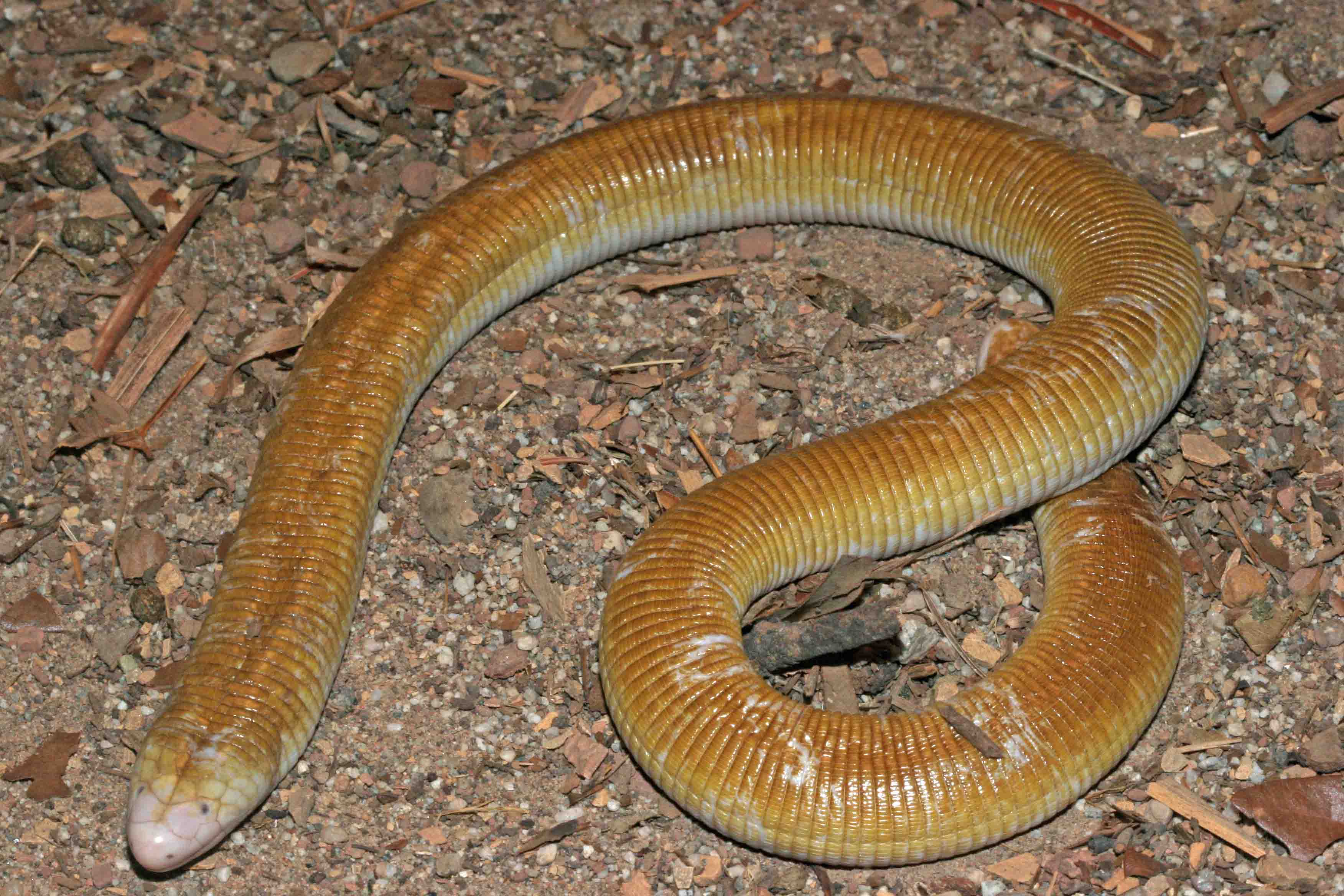
This almost all white example of the Giant Worm Lizard was found by a Peruvian villager.
Amphisbaenids are rather amazing creatures. In fact, they are so amazing that they are in their own family, the Amphisbaenidae. Most are legless, at least 3 species (in Mexico) have proportionately small, clawed, forelimbs but lack rear limbs. Amphisbaenids (often referred to as “worm lizards”) have for the most part, a, wedge-shaped head of the same width as their bodies that is adapted for digging, a cylindrical body, loose skin, scales arranged in rings, and a short tailt. Some species are long and slender, others, especially the European members of the family, are shorter and proportionately stout.
Despite perpetual but never confirmed tales of a Pacific Coast species, only a single taxon, the 14” long Florida Worm Lizard, Rhineura floridana, is known to occur in the USA. This, as suggested by both its common and species names, may be found in FL and extreme South Central Georgia.
The largest/longest amphisbaenid, is the 2 to 2 ½ foot long Giant Amphisbaenid, Amphisbaenia alba of South America where it ranges southward from Venezuela and Trinidad to Northern Argentina. It is also known as the Red (dorsal and lateral color) or the White-bellied (self-explanatory) Amphisbaenid.
In our dozens of trips to Amazonian Peru we had never seen one of these impressive creatures until one day a villager walked into the compound holding one that had been found near his home. Notable were the already mentioned colors, the darker eyespots, and the fact that while held it was not hesitant to attempt to bite.
Much in print information about this remarkable “worm lizard” is speculative. However, it is known that it is oviparous, laying ~12 eggs. It is also known that this burrower is often found in association with the nests of leaf-cutting ants. Stomach contents have disclosed that this species is primarily insectivorous, but also will eat nestling rodents and earthworms. One that I maintained was very fond of nightcrawlers. When defending itself the body is usually coiled in a semi-circle and both head and tail are turned upwards—but only the head, with widely opened jaws, need be watched (LOL)..
Read full article
kingsnake.com · Jul 24, 2023
This male veiled is hanging on tight for whatever is in store for him in our Herp Photo of the day, uploaded by kingsnake.com user GECKOPERSON ! Be sure to tell them you liked it here!
Upload your own reptile and amphibian photos at gallery.kingsnake.com, and you could see them featured here!
kingsnake.com · Jul 21, 2023
Happy Rattlesnake Friday! All venomous snakes need our support, and this stunning Olmec Pit Viper (Atropoides olmec) in our herp photo of the day uploaded by kingsnake.com user PeteSnakeCharmer is no exception! Be sure to tell them you liked it here!
Read full article
kingsnake.com · Jul 20, 2023
So precious! We love hatchling photos, like this awakening Gecko in our Herp Photo of the day, uploaded by kingsnake.com user SA! Be sure to tell them you liked it here!
Upload your own reptile and amphibian photos photos at gallery.kingsnake.com, and you could see them featured here!
kingsnake.com · Jul 19, 2023
This Western Fence Lizard is chilling like a villain in our herp photo of the day, uploaded by kingsnake.com user chrish ! Be sure to tell them you liked it here!
Read full article
kingsnake.com · Jul 18, 2023
These two little Cresties seem a bit confused which way to go to food in our herp photo of the day, uploaded by kingsnake.com user MOC_Reptiles ! Be sure to tell them you liked it here!
Upload your own and photos at gallery.kingsnake.com, and you could see them featured here!
kingsnake.com · Jul 17, 2023
That's a whole lotta bull. Bullsnake that is! Loving the colors on the one here in our herp photo of the day, uploaded by kingsnake.com user orchidspider has never missed a meal! Be sure to tell them you liked it here!
Upload your own reptile and photos at gallery.kingsnake.com, and you could see them featured here!
Richard Bartlett · Jul 17, 2023
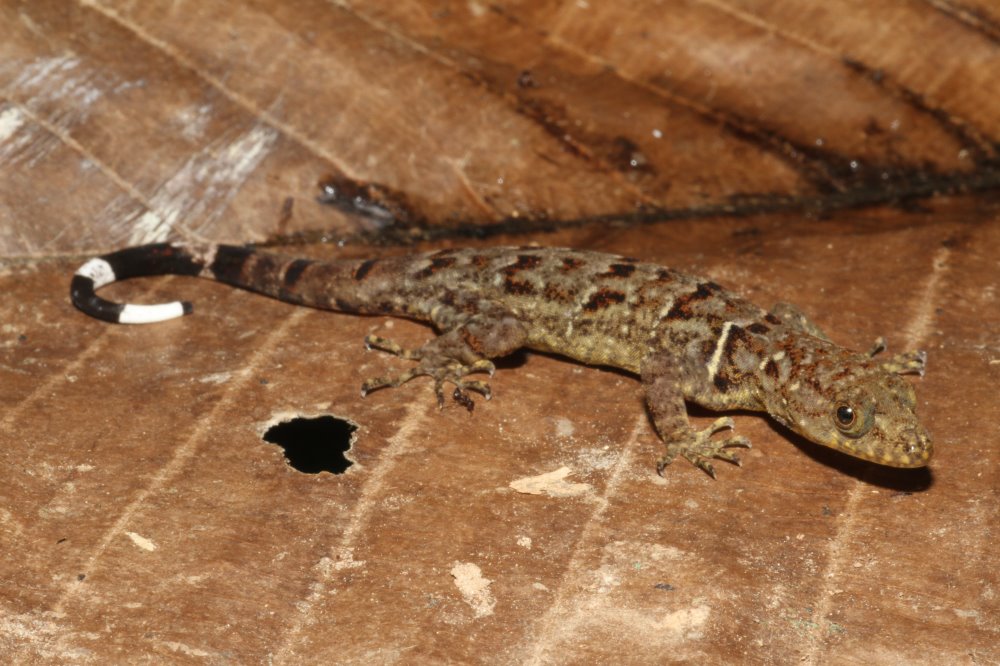
Female Collared Forest Geckos usually have prominently ringed tails.
This is another of the small but usually pretty geckos of the genus Gonatodes. The geckos of this genus are widespread in Tropical America as well as being present on many Caribbean Islands.
Although a bit less colorful than the related Bridled Forest Gecko, this Amazonian taxon, scientifically known as Gonatodes concinnatus, has derived its common name from the white to yellow bars on each side on the dark shoulders. It is the males that are so marked, the females having 6 or 7 chocolate and white transverse bars across the dorsum and usually also having white tail rings and tailtip. Males also have an unmarked brownish-yellow to orange head, shoulders, and forelimbs. Body ground color can vary. This species may be dark brown with faint lighter speckling or be exactly the opposite, being brownish-gold with dark speckling on the body.
Unlike its congener, the Collared Forest Gecko, this species seems seldom seen in camp clearings or on buildings, but is fairly common in the rainforest on stumps, fallen trees, and occasionally on broad shrub and tree leaves.
This is a small lizard, being about 3 ½ inches in total length. It is diurnal. A clutch consists of a single egg but several clutches may be produced annually.
Read full article
Cindy Steinle · Jul 16, 2023
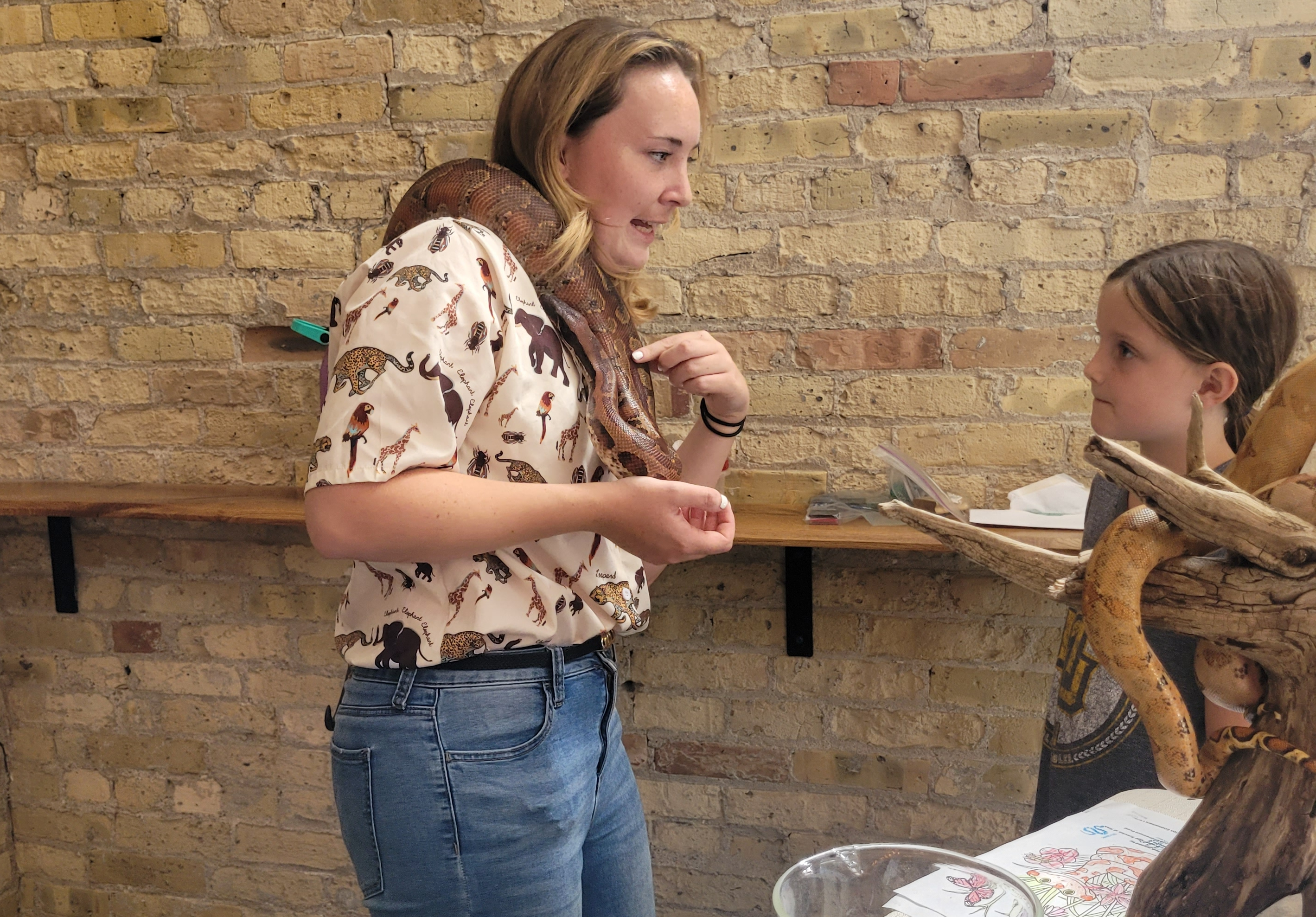
I celebrated World Snake Day a week early last Sunday here in Milwaukee at a fundraising event called "Sipping for Snakes" hosted by the Eastern Massasauga SSP. I mean it is Wisconsin, we do everything with either cheese or beer. I stumbled across the event on facebook and was instantly excited! A fundraiser for rattlesnakes ON MY DAY OFF! I mean what more could I ask for!!!
Read full article
kingsnake.com · Jul 14, 2023
Happy Rattlesnake Friday! Celebrating with this beautiful Eastern Massasauga in our herp photo of the day uploaded by kingsnake.com user ratsnakehaven found in the field in Michigan. Be sure to tell them you liked it here!
Read full article