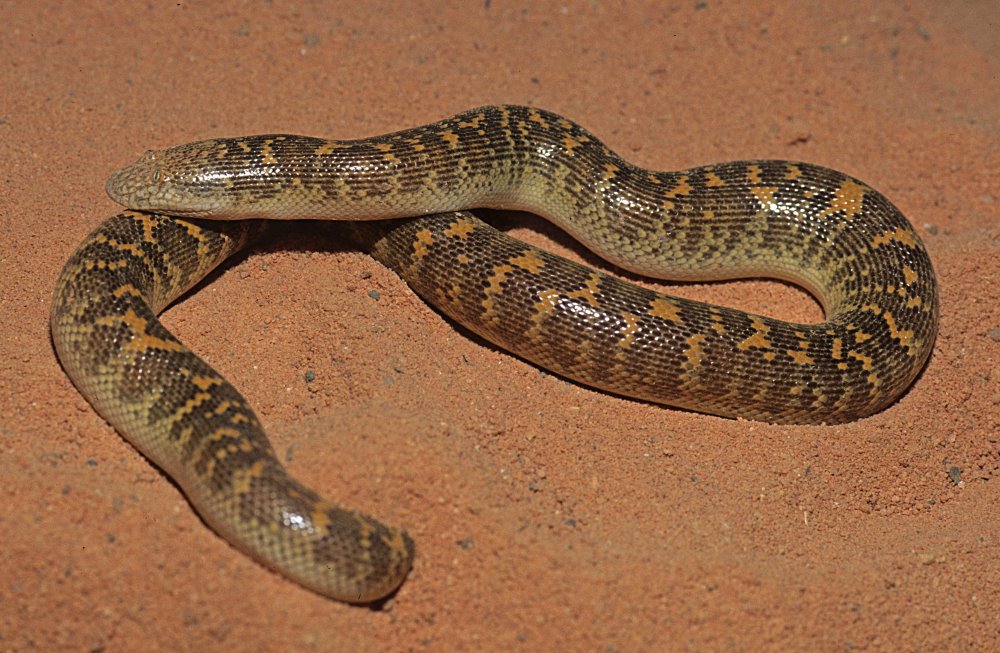
Meet the Arabian Sand Boa
By Richard Bartlett · May 31, 2021 12:02 am
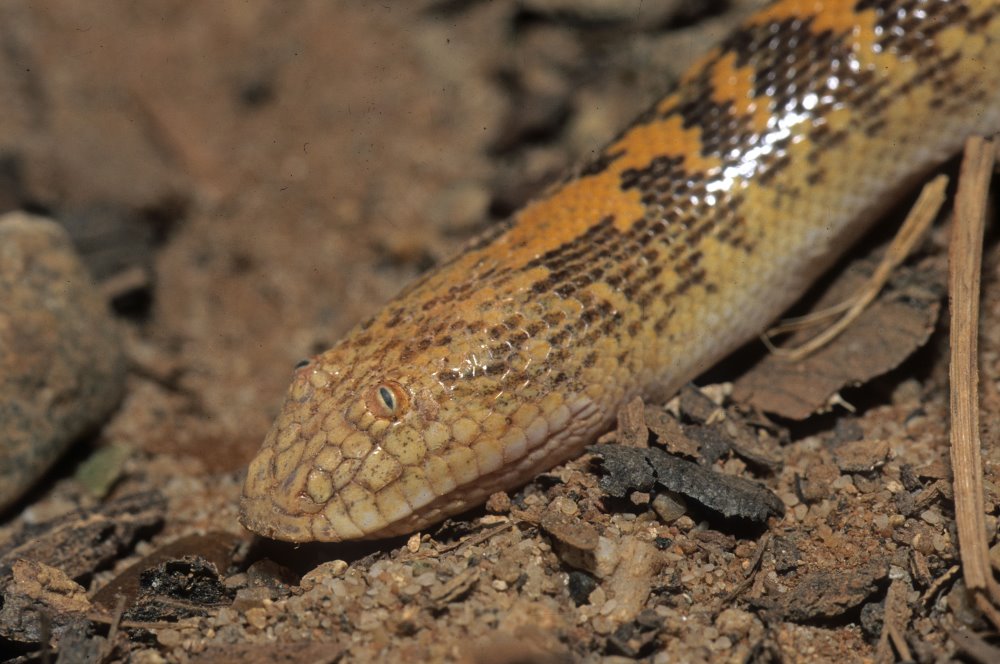
Note the enlarged rostral scale and position of the eyes on the Arabian Sand Boa. By Dick and Patti Bartlett Sand boas of various types have been hobbyist favorites for decades. Perhaps foremost in the lineup has been the Kenya sand boa. But other species have also paraded through. Rough-scales, Mueller’s. European and others have all had their “15 minutes” of fame. But way back on the “tag end” of the lineup has been the coolest sand boa of all. This is the Arabian Sand Boa, a species truly specialized for life in and beneath the sands of the arid Arabian Peninsula and Iran. Having an adult length of about 15 inches, the Arabian Sand Boa, Eryx (Gongylophis to some) jayakeri, is one of, if not THE, smallest member of this group. The eyes are small and are set high on the head rather than on the sides. With its wide, wedge-shaped rostral (nose-tip) scale and snout, this little snake is a streamlined burrower that needs only to show its eyes to watch for the approach of lizards and other prey items. During the heat of the day the snake is usually deeper in the substrate than during the comparative coolness of evening. The ground color of this tiny boa is sand tan, gray, or orangish. It is profusely marked dorsally and laterally with dark bands, half bands, or blotches. These markings narrow as they near the lower sides. An egg-laying species, clutch size is between 2 and 7 eggs. Incubation is said to be ~66 days. I am unaware of the size of the hatchlings but they are said to be so small that they have difficulty eating newborn pinky mice.
This Sand Boa is the most specialized of the genus.
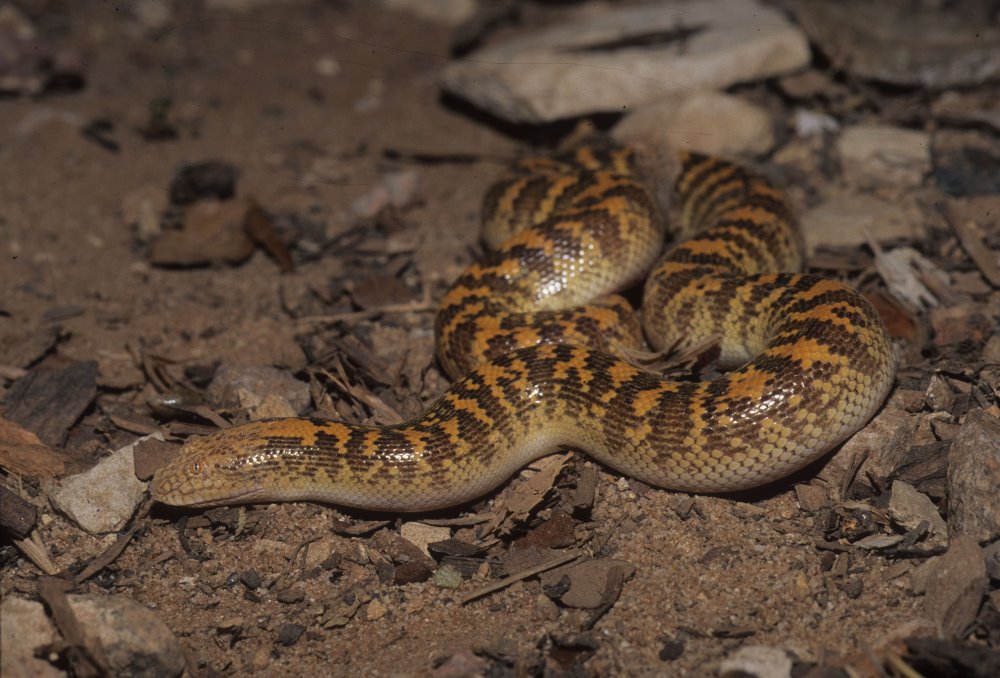
Emerging from the sand, hoping for a meal--an Arabian Sand Boa.