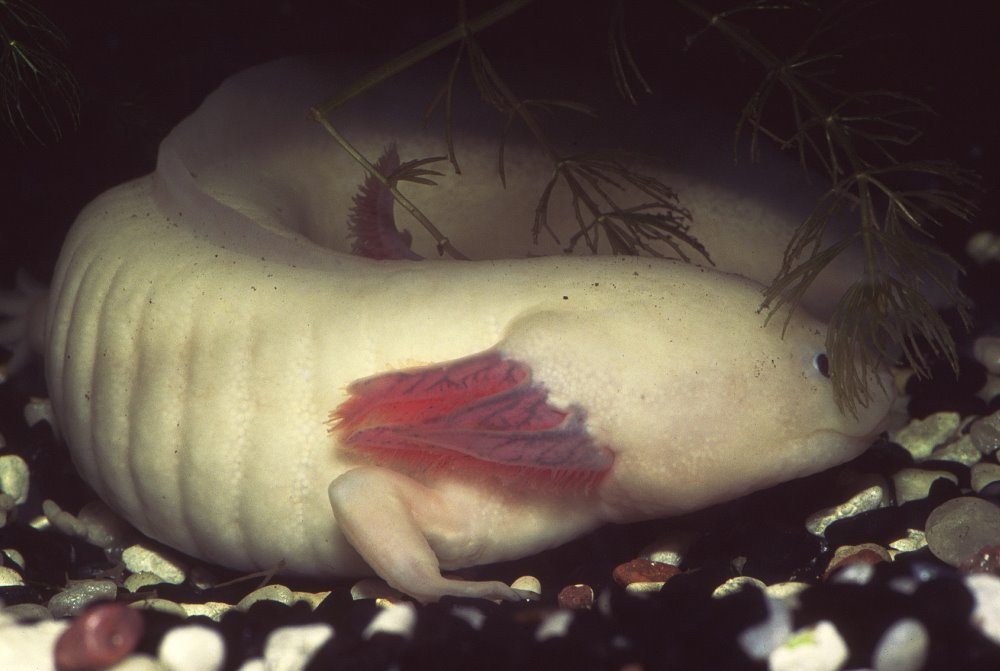

Axolotls
By Richard Bartlett · February 17, 2020 8:34 am
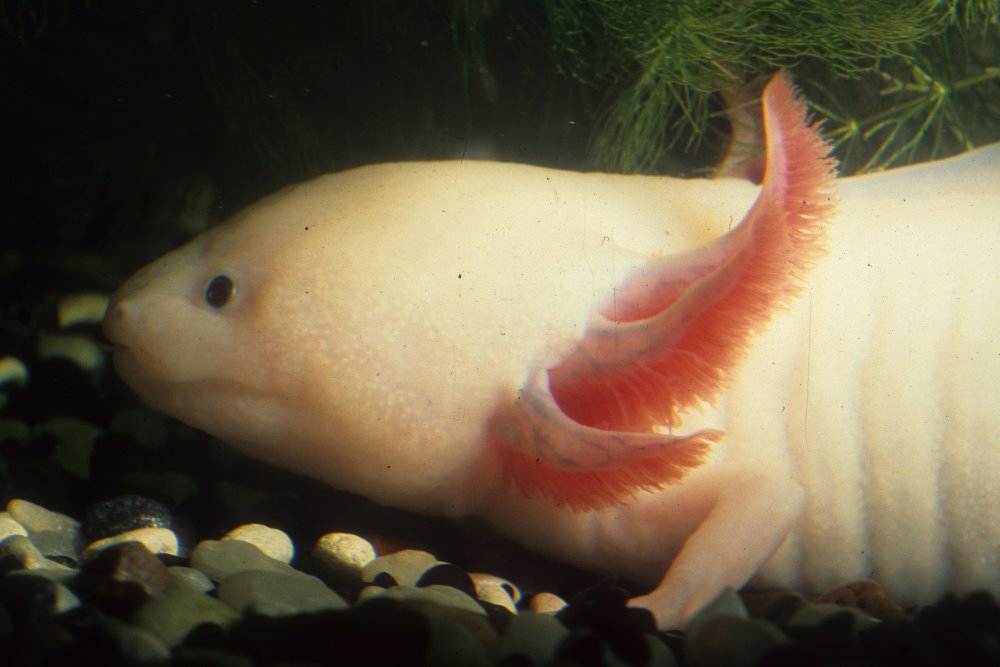
Cannibalism can occur even in axolotls of the same size. For decades a fully aquatic (neotenic) Mexican relative of the tiger salamander has been laboratory bred for both laboratory and pet purposes. This is a species with the complicated Aztec name of axolotl (axe-o-low-tul). Scientifically it is known as Ambystoma mexicanum. These are permanent and nearly obligate neotenes, never voluntarily metamorphosing into the adult form unless water quality becomes totally untenable. Even then, many simply die, not ever beginning to metamorphose. Most that do metamorphose die a short time later. Although many are full grown at about 7 inches in total length, some attain the impressive length of nearly 10". In spite of the fact that it comes from a country that we consider tropical, the habitat of the big, bushy-gilled axolotl is cold mountain and plateau lakes. Preferred water temperature is between 65 and 75 F. Axolotls now occur in many more than the normal olive-brown phase. Among others are the gold, albino (white with pink eyes), leucistic (white with dark eyes), and piebald (olive and white blotched with dark eyes). Axolotls are able to consume comparatively large food items. Worms, small freshly killed fish, beef heart, and other such items are ravenously accepted and these salamanders are usually not at all reluctant to accept food from your hand. Not uncommonly, during a feeding frenzy, axolotls will grasp, dismember, and consume the leg or a chunk of the tail of a tankmate—or even the tankmate itself. In other words watch out for cannibalism. You may consider this disconcerting, but in an axolotl community it is a fact of life. Axolotls (and most other larval salamanders) are quite able, given time, to regenerate missing limbs and tail parts. And if all else remains normal you will soon see signs of regenerative growth. Enjoy. These are wonderful salamanders.
Dark-eyed white examples are my favorite of the many available colors.
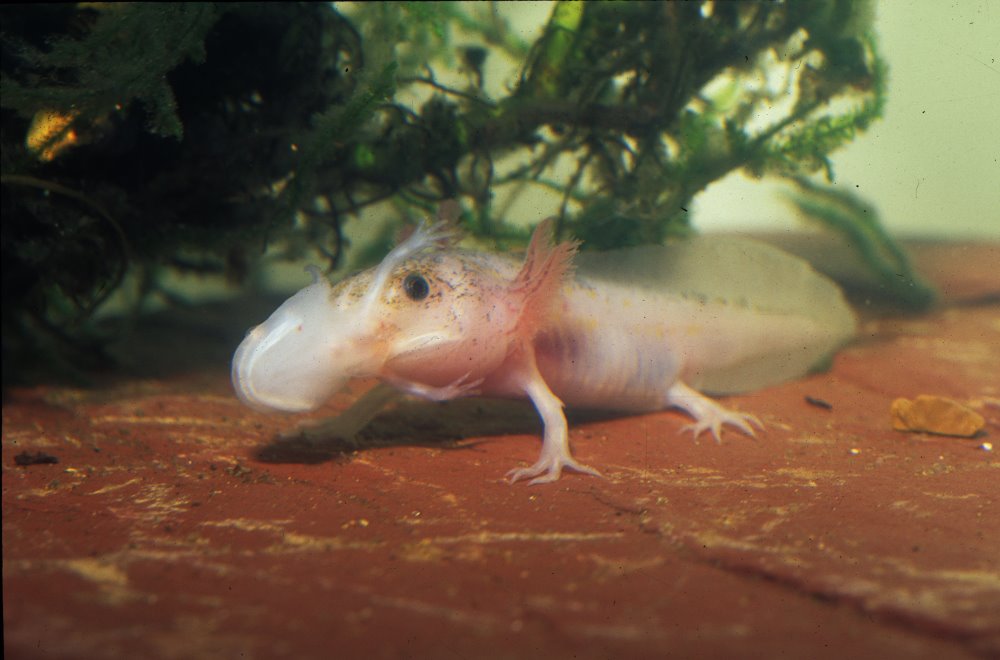
An axolotl fully at rest--including the gill structures.