Great Plains Skink
By Richard Bartlett · January 6, 2020 12:55 am
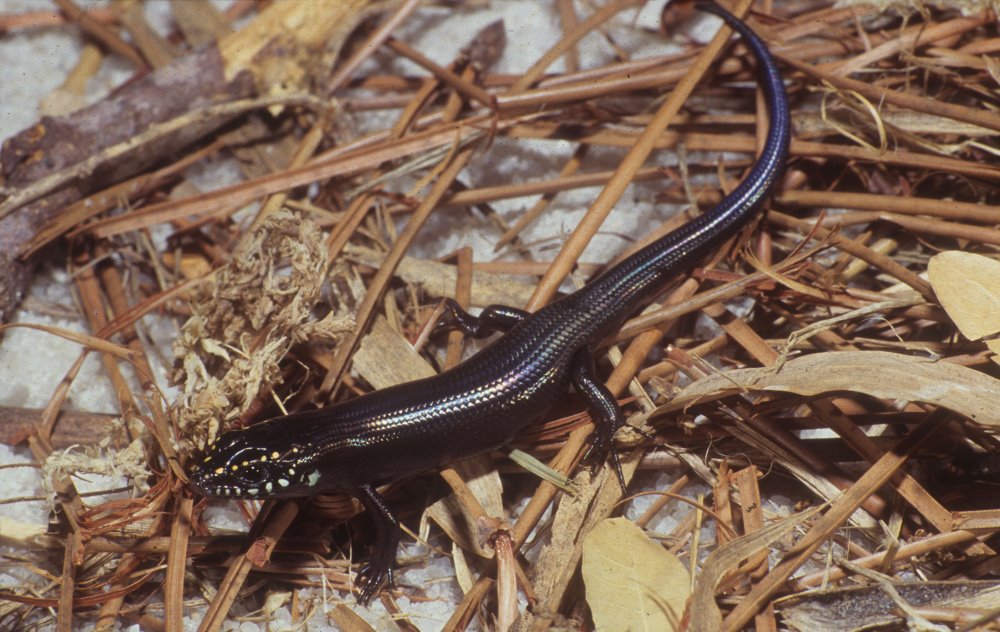
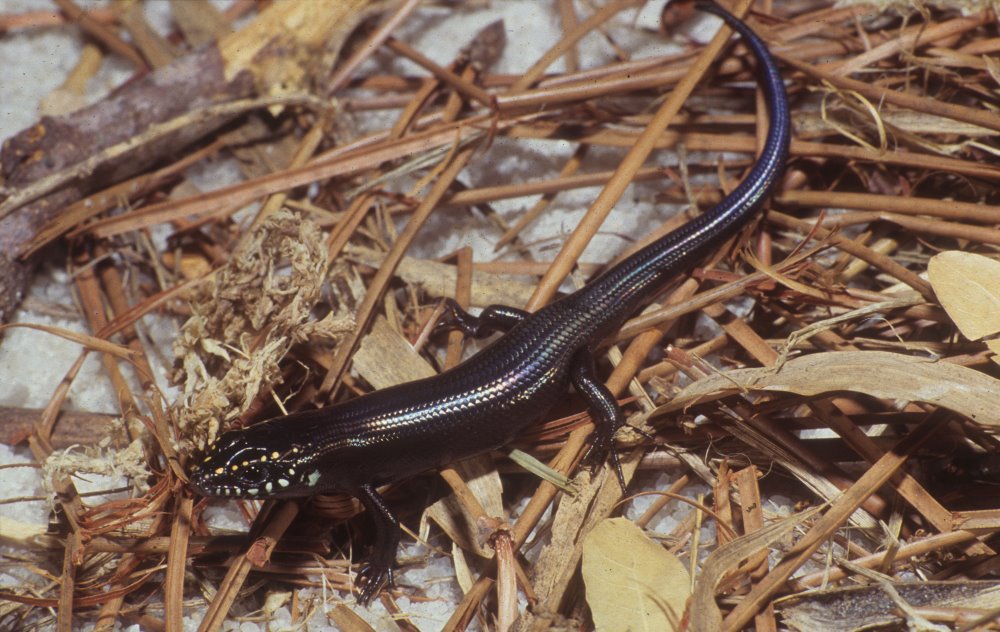
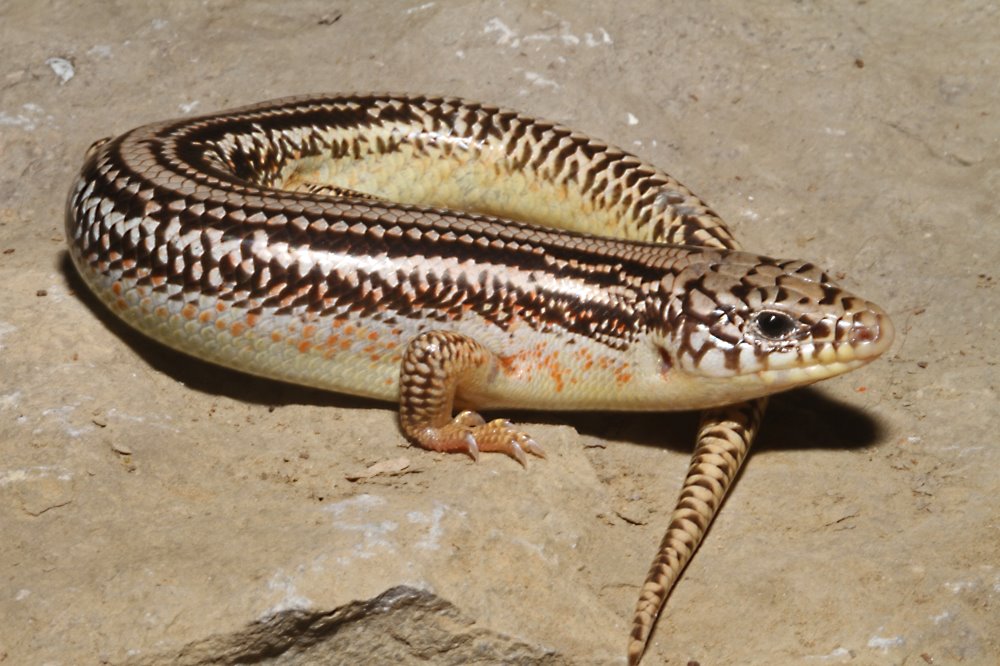
A profile of an adult male Great Plains Skink This dweller of plains and prairie grasslands is known scientifically as Plestiodon obsoletus. It is not only pretty, but is also one of the 2 largest skink species in the USA where it may be equaled in size by the more easterly Broad-headed skink, Plestiodon laticeps. The ground color of the Great Plains skink varies from light sandy tan to a much darker olive-tan. Each dorsal and lateral scale is edged in black or very dark brown. The edging varies in thickness, producing when minimal a light tan skink or when broad one that is quite dark in color. Over all the pattern may be appear speckled, striped, or almost nonexistent. The sides may be darker than the dorsum. This lizard does not change color or develop a strongly widened head when in breeding condition. However, males may develop a wash of orange along each side and become more territorial. Females are normally a bit smaller than the males and, except when gravid, are slenderer. Like those of many skink species, the hatchlings are of a color very different than the adults. Hatchlings have a black head and body, white labial (lip) spots, a few small yellowish spots along the upper edge of the snout and above the eyes, and a dark blue tail. This insectivore ranges widely in the USA from southwest Nevada and extreme southwest Iowa southward to south Texas and southern Arizona. It also ranges well into northern Mexico. Secretive, they are primarily terrestrial, can burrow, but often seeks seclusion beneath surface cover.
This strongly patterned Great Plains skink was found in Kansas.
This is a typically colored hatchling Great Plains skink.