

Hog-nosed Snakes, Natures Bluffers
By Richard Bartlett · November 4, 2019 7:50 pm
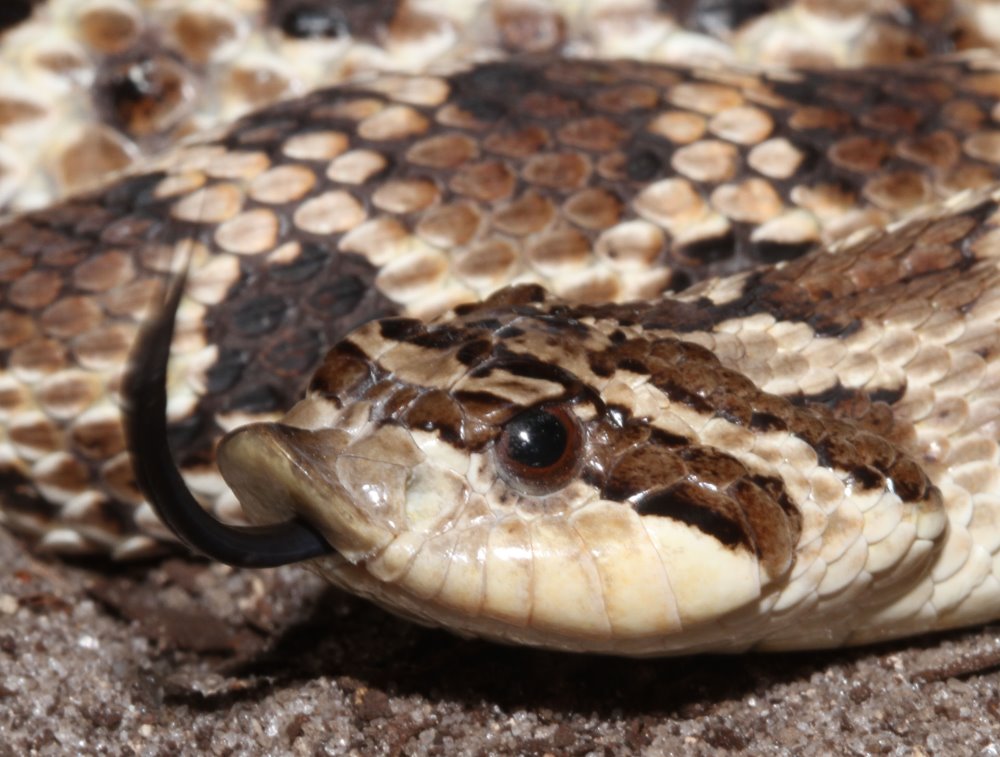
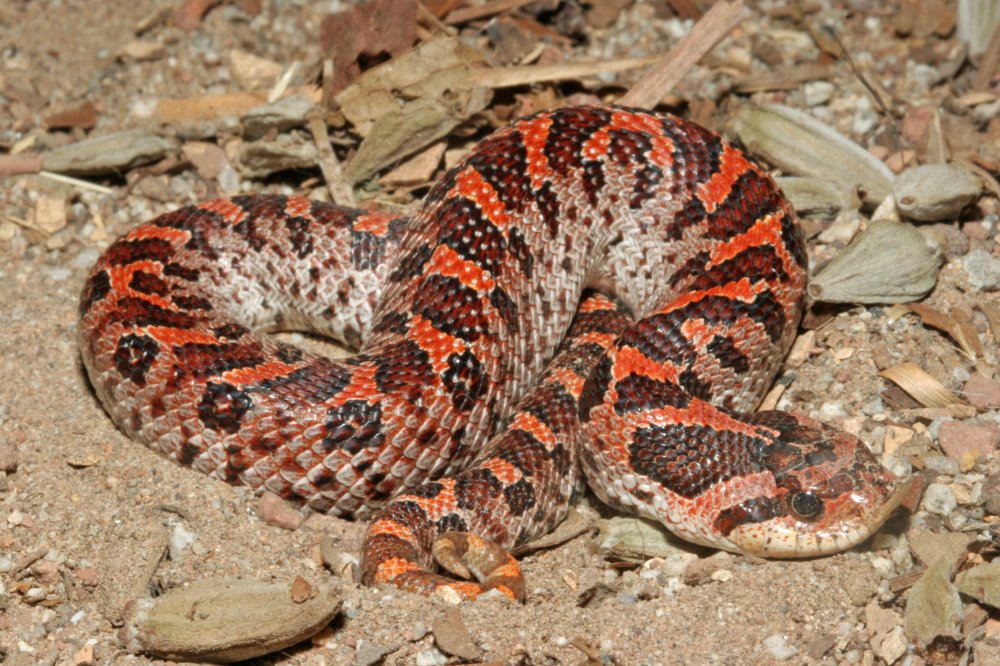
The rostral scale of the Mexican Hog-nose is strongly upturned. It feeds on both anurans and warm-blooded prey.For their length they are heavy bodied, short-tailed snakes that occur, in their various species when adult (20 to 30 inches), in myriad colors. Of these it is the eastern hog-nosed snake, Heterodon platirhinos, that is the most variable. Hatchlings tend to be more uniformly colored. Collectively, hog-noses range from central New England to central Montana and Southeastern Alberta, then southward to southeastern Arizona, much of sorthern Mexico, southern Texas and the southern tip of the Florida peninsula. These snakes are our great bluffers of snakedom. If frightened they may coil, they may hiss loudly, they may flatten the head and neck into a modified cobra-like hood, they may strike (usually with their mouth closed) or, if hard-pressed they may begin writhing spastically, contorting the body, open their mouth, then roll over and feign death. But as far as the hog-nosed snake is concerned the only position for a dead snake is lying upside down. If you turn the feigner right side up it will immediately roll upside down again. Southern and Eastern hog-nosed snakes are toad eaters. Hog-nosed snake species and subspecies:
- Eastern, Heterodon platyrhinos
- Southern, Heterodon simus
- Plains, Heterodon nasicus nasicus
- Dusty, Heterodon nasicus gloydi
- Mexican,Heterodon nasicus kennerlyi, or if you prefer Heterodon kennerlyi
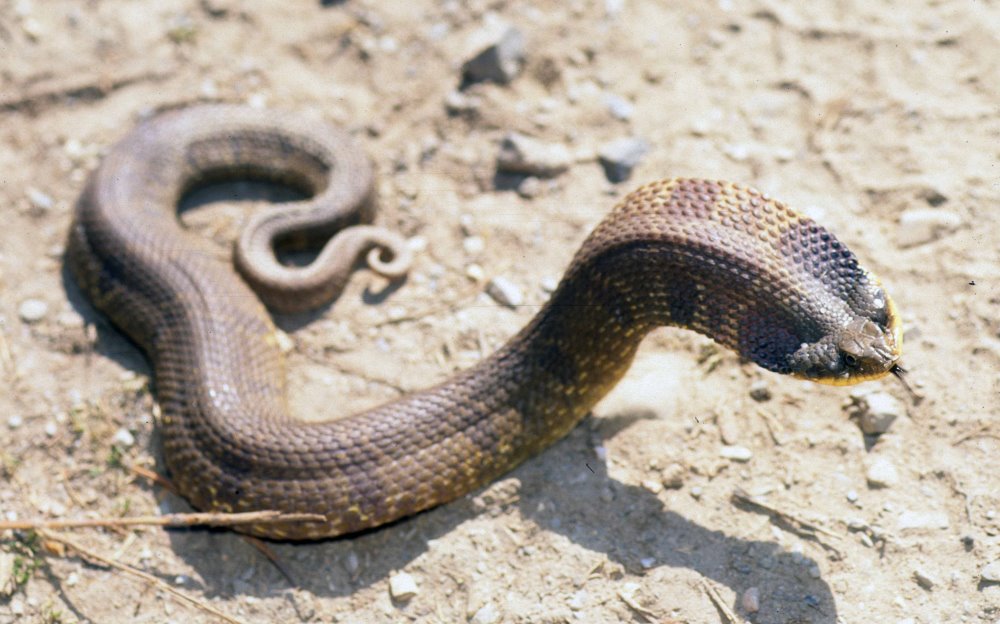
Before feigning death, hog-noses (like this eastern) often assume impressive threat positions.
This is a beautifully colored adult male Southern Hog-nose.