Reversed Ontogeny
By Richard Bartlett · December 21, 2016 12:51 am
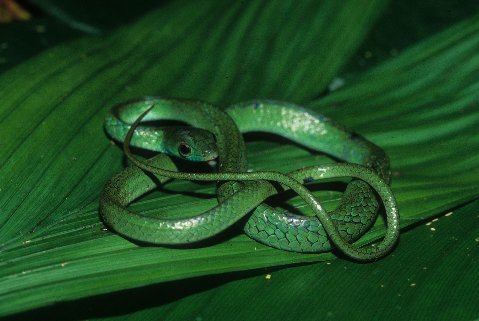
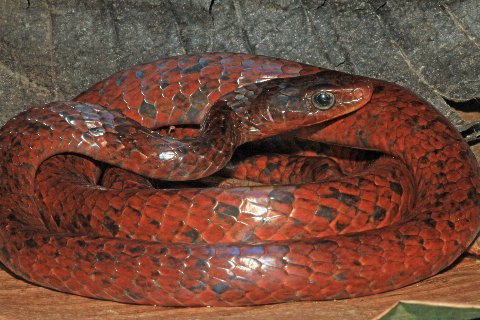
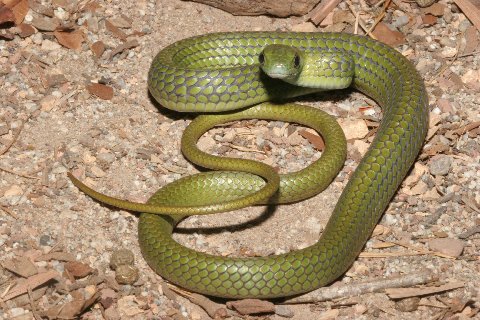
Hatchling rusty whipsnakes are bright green. Most herpers are familiar with the ontogenetic changes (orange as neonates/hatchlings and green as adults) of emerald tree boas and green tree pythons. But fewer among us are familiar with the color changes of the rusty whipsnake, Chironius scurrulus. The rusty whipsnake is a hefty and often feisty Amazonian species. Although 4 to 5 feet in length is the most commonly seen adult size, a few may exceed 6 feet by a few inches. Subadults and adults are often found along watercourses where they feed on amphibians and (I have been told but have not verified) fish. The term “rusty” fits the adults to a T—they are a rusty orange, often with scattered black scales dorsally and laterally. The head may have a dusky hue. The hatchlings, however, are semiarboreal and are a beautiful leaf green. The green dulls quickly with age and growth and within 2 or 3 shedding cycles the once bright green baby has become a dull olive, an ontogeny 180 degrees reversed from the better known emerald boas and pythons.
The bright green of the hatchling rusty whipsnake dulls quickly with growth.
"Rusty" is a most appropriate name for adults of this whipsnake.