The Colombian Red-eared Slider
By Richard Bartlett · July 15, 2016 12:03 am

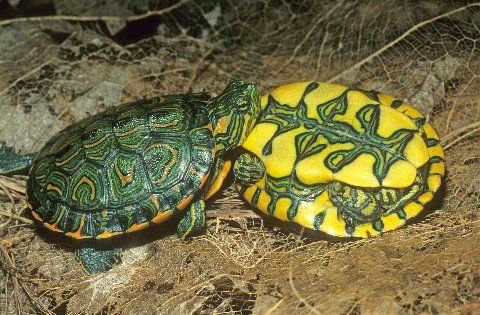
Adult Colombian red ears may attain 10" in length and the pattern becomes suffused with melanin. No doubt worse for the baby turtles than for the humans who bought them, there was a time- span of several decades (until 1975 when the sale of turtles having a carapace length of less than 4” became illegal) when hatchling red-eared sliders, Cumberland sliders, and Mississippi map turtles were sold over the counters of almost every five and dime store in the nation. In that time frame the little turtles were hatched in Gulf Coast turtle farms by the tens of thousands. But it was soon apparent that despite the immense numbers produced, the little reptiles became unavailable for several months each year. To the rescue of the industry came the South American country of Colombia. Their baby turtles, both red-eared sliders and Amazon sidenecks, hatched at a different time of the year and became available as a “fill in” for the months when the American species were not available. Thus, we were introduced to the Colombian red-eared slider. Then (when subspecies were in vogue), this pretty turtle was known as Pseudemys scripta callirostris. Today this same species is known as Trachemys callirostris, and it, like many other once common pet trade species, is no longer often seen.
Hatchling Colombian red-ears have a prominent carapacial pattern.
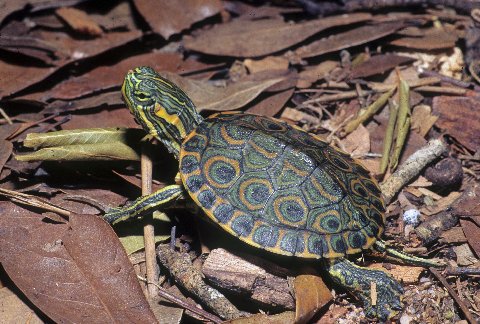
The plastral pattern, bright in juvenile examples, becomes less conspicuous as the turtle grows.