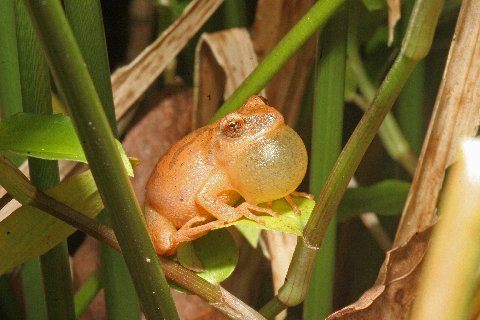
Peeper Season
By Richard Bartlett · January 5, 2016 12:34 pm
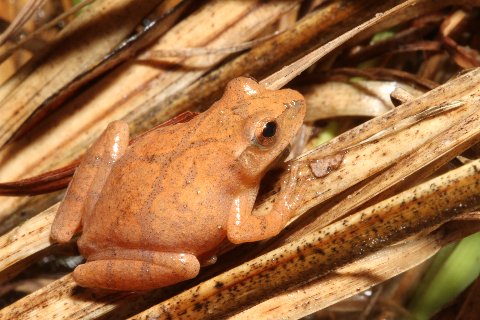
The spring peeper's species name, "crucifer," is derived from the dorsal X (the crucifix). In many areas spring peepers, Pseudacris crucifer ssp., a common chorus frog that ranges from eastern Texas to eastern Manitoba then eastward to Newfoundland to northern Florida is actually a spring breeder, but in the deep southeast it is a late autumn and winter breeding taxon. On wet years, in this latter area we expect to hear these harbingers of the northern spring chorusing from marshes, swamps, and roadside ditches by late November. They and other chorus frog species welcome in the seasonally cooler days and colder nights when our trees are still dropping their leaves rather than recovering from cloaks of snow and ice and greening with expanding buds. The strident peeps of the well named hylids (they are treefrog relatives), boisterous on warm nights, faltering when temps drop below 45F or so, are as eagerly listened for on our winter days as when the little “X backed”, tan harbingers of spring are making their appearance in the northland swamps and puddles.
Spring choristers in the northeast, in the south peepers usually call from late autumn through the winter months.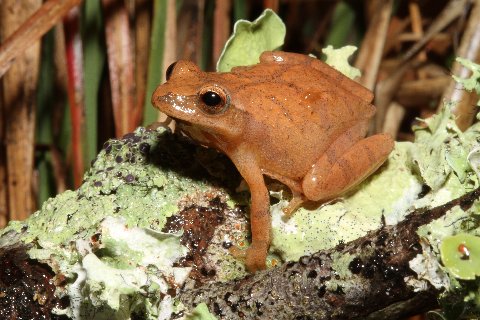
One of the earliest anurans to emerge from hibernation, spring peepers may often be heard chorusing while their breeding ponds are still rimmed in ice.