


Bitterns and cottonmouths
By Richard Bartlett · August 13, 2015 12:00 am
 It was early morning (about 0715) and the temperature was just about 70 F. A least bittern -- always an avian photographic nemesis for me -- had just flown across the gravel road and landed in a patch of cattails about 30 feet ahead of me. I slowed, not that I was walking all that fast anyway, and decided to sit and wait a while on the wet and grassy bank to see if the bird would emerge in a photographable position. It did. But hoping for something even better I waited longer.
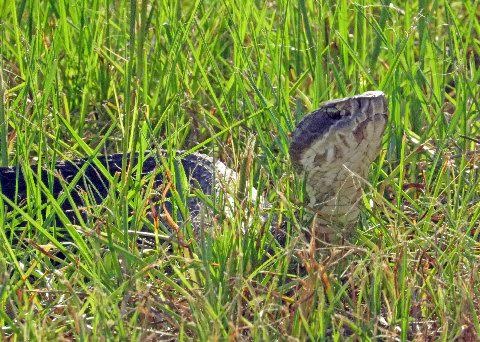
As luck would have it, while waiting I noticed a slight disturbance in a patch of floating vegetation about 15 feet from shore. My interest shifted to the floating grasses. Was something really there or was the disturbance caused by a current? I watched. Yes, there definitely was something there and it was closer to shore now. Ah ha! A snake. A dark snake with vestiges of darker bands and of a fair girth. Oh, of course. A Florida cottonmouth, Agkistrodon piscivorous conanti.
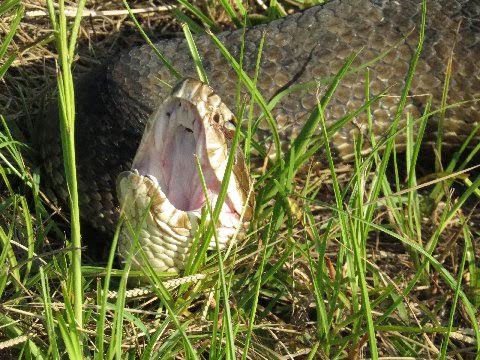
The snake neared the shore, idled quietly in the shallows for a minute or two, then slowly emerged. It angled towards a sunny spot about 6 feet from me. Once there it stopped with its head bathed in the warming rays, and then with tongue flickering coiled ever so slowly. When I shifted positions to better angle the camera the snake made a fleeting defensive gape.
Once it settled, I stood, moved quietly up the hill, and left both bird and snake in peace. This was a fine way to begin the day.
More photos under the jump...
Undisturbed by my presence the snake chose a sun-warmed basking spot: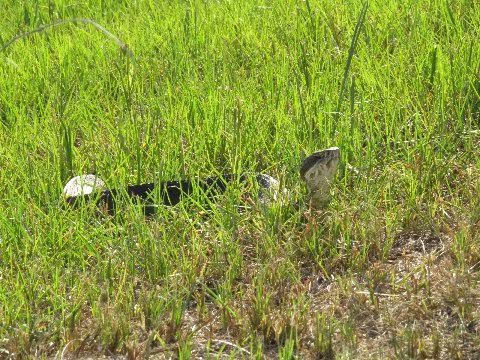 My moving to take a photo prompted this half-hearted defensive display:
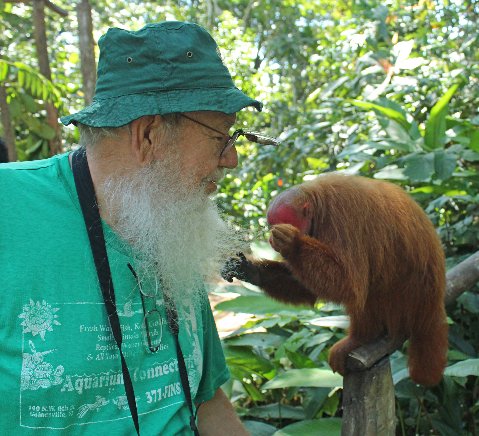 Author, photographer, and columnist Richard Bartlett is one of the most prolific writers on herpetological subjects in the 20th century. With hundreds of books and articles to their credit, Richard and his wife Pat have spent over four decades documenting reptiles both in the field and in captivity. Author, photographer, and columnist Richard Bartlett is one of the most prolific writers on herpetological subjects in the 20th century. With hundreds of books and articles to their credit, Richard and his wife Pat have spent over four decades documenting reptiles both in the field and in captivity. |