Royal Diadem Snake
By Richard Bartlett · March 14, 2017 12:23 am
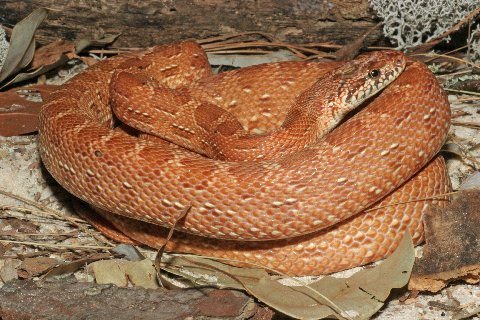
Not all royal diadem snakes are strongly patterned. For reasons still unbeknownst to me, the snakes of the genus Spalerosophis have never become overly popular with hobbyists. Big, hefty, easy to care for, attractive. and relatively inexpensive — even though they are a bit on the feisty side and an opisthoglyph, it seems to me that at least one species, S. diadema atriceps, should have become a hobby wide favorite. Let’s address the opisthoglyphid aspect first. Clinical toxinology assessments on this snake by the University of Adelaide conclude: “Bites by this species are not expected to cause medically significant effects and the only risk, probably small, is local secondary infection. Patients presenting with bites by these snakes do not require medical attention, other than to check for infection and ensure tetanus immune status. ”The report continues “Non-venomous, so essentially all bites should be “dry.” In other words, despite its enlarged rear teeth and feisty attitude, this snake is considered nonvenomous. Over the years the royal diadem snake (also known as the black headed diadem snake, or simply, diadem rat snake) has been bred by a few dedicated hobbyists. Hopefully there will continue to be enough interest in this species to assure that this big orange on orange snake doesn’t disappear from the hobby.
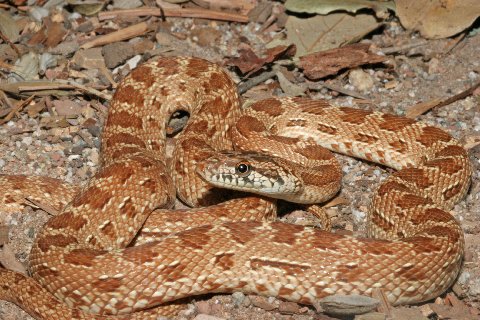
This old adult royal diadem snake was imported from Pakistan.
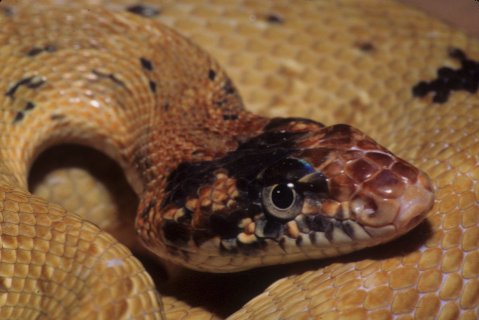
This is a juvenile royal diadem snake.