


Jellyfish aid in sea turtle recovery
By Cindy Steinle · December 19, 2011 10:56 am
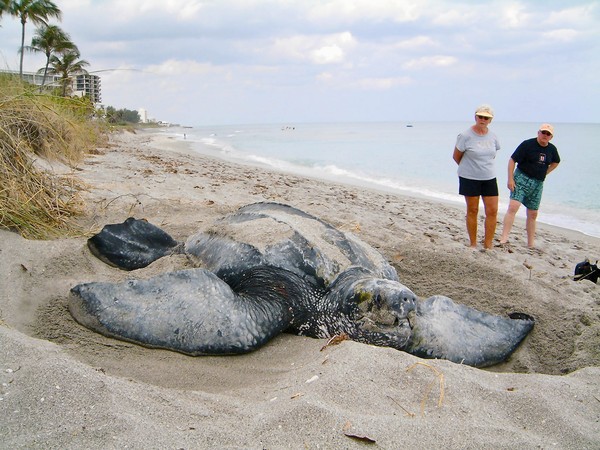 Just like Jello, jellyfish jiggle and wiggle. And that just may be the key to the increase in Florida's Leatherback Turtle population.
The largest of the marine reptiles, leatherbacks used to be rare visitors to Florida shores. But over the past two decades, the number of nests dug at Florida beaches has been increasing. This year's count is 600 nests, one of the highest ever at beaches tracked for long-term trends. Nest counts are the main method of assessing sea-turtle population trends. This success story of sea-turtle conservation has a possible twist, said Kelly Stewart, a researcher with the National Oceanic and Atmospheric Administration. When jellyfish are abundant, the leatherbacks have a veritable feast, which could help the female turtles reproduce more often. "Jellyfish, and any gelatinous species, are the preferred food source for leatherback sea turtles," said Stewart, who completed her doctoral thesis at Duke University on these turtle trends. "So, if there are more jellyfish, that may not be good for people, but is good for the leatherbacks." Jellyfish aren't really fish but gelatinous creatures related to corals. There are more than 1,000 species around the world, and they have a familiar, umbrella-like body and tentacles. Most have the ability to sting their prey, but their main predators, such as leatherback turtles, seem to be immune to the venom. In recent years, there have been giant blooms around the world, including several cases involving a jellyfish species that is foreign to an area. Cocoa Beach had such a phenomenon over the Memorial Day weekend with an invasion of mauve stingers, a deep ocean jellyfish that is rare in Florida but common in the Mediterranean.To read the full article, click here.