Abundant and Dangerous, The Terciopelo, Jergon, or Fer-de-Lance
By Richard Bartlett · October 25, 2021 12:03 am
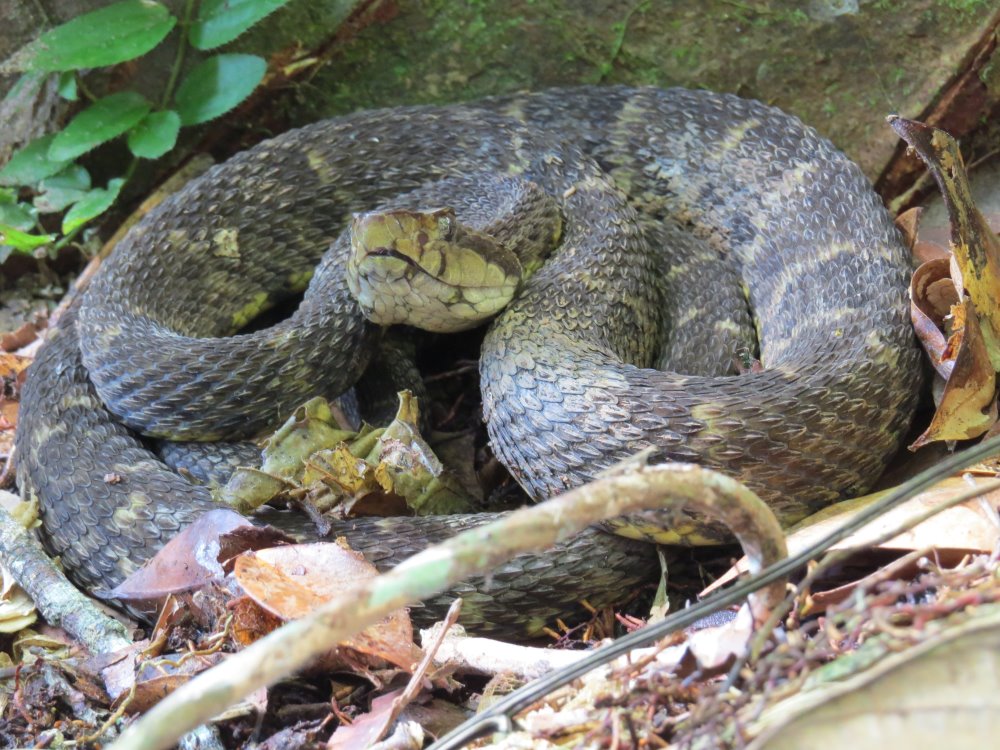
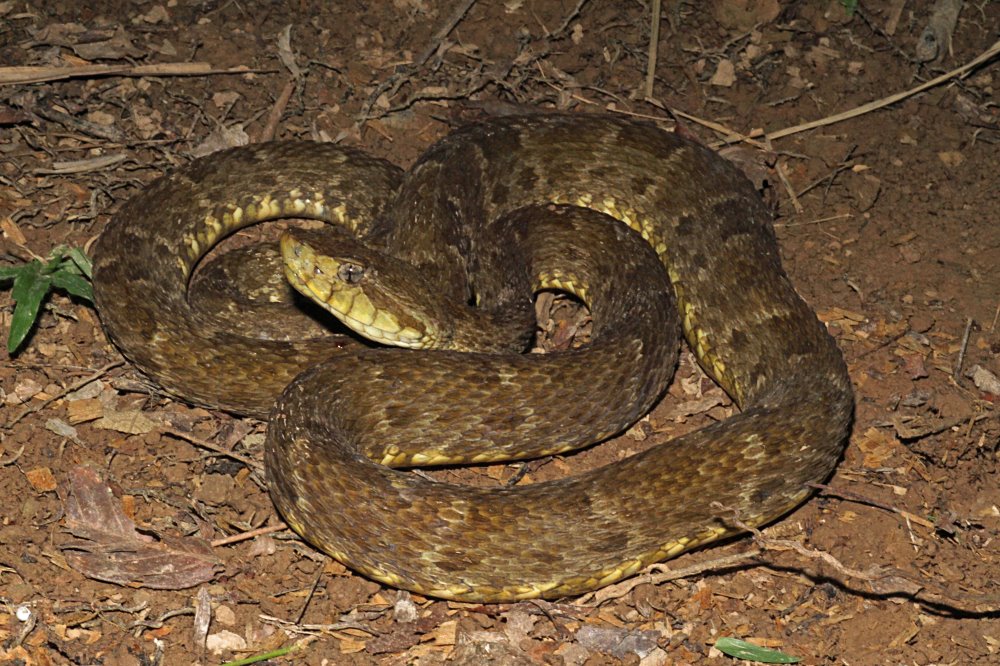
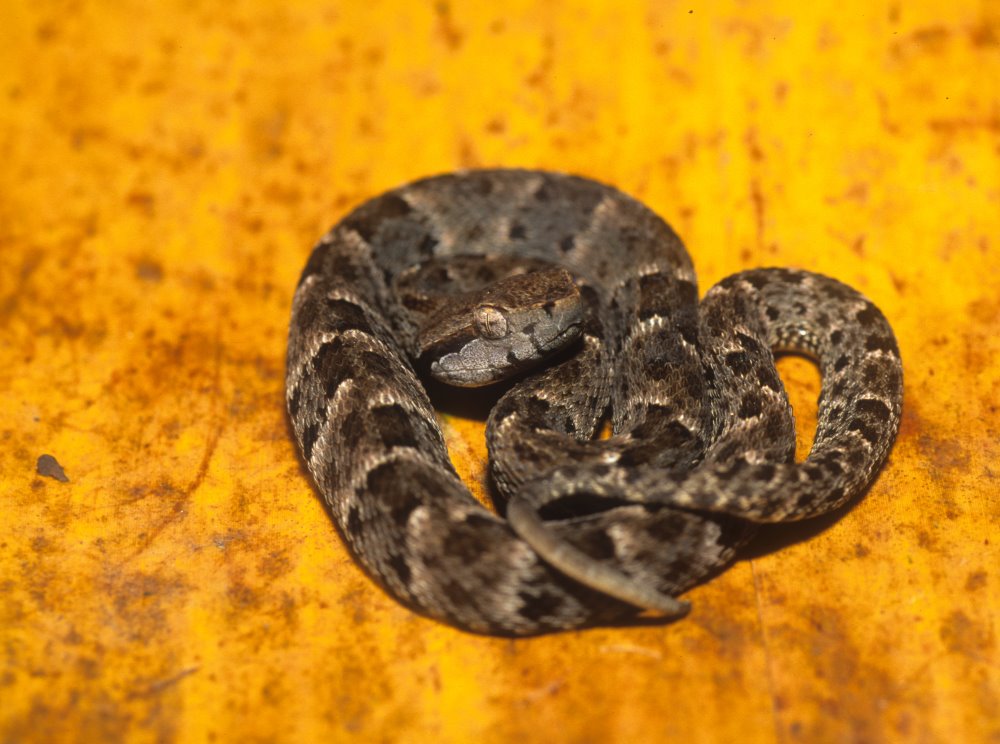
This adult Fer-de-lance is coiled in ambush position at the base of a tropical tree. The Fer-de-Lance, Bothrops atrox, or Jergon (as it is known in the Iquitos, Peru region) is one of those well camouflaged venomous species that is everywhere and nowhere. There were times when we could walk all around the biological preserves and never see one, and there were other times when they were literally in all areas. The latter seemed especially true when rains had induced frog activity, and frogs are a favored prey item of the Jergon. A dangerously venomous, crepuscular and nocturnal, species of neotropical rainforests, the fer-de-lance is primarily a terrestrial snake, especially when adult. Neonates are more inclined to access low shrubs and other vegetation. Adult size ranges between 3 and 5 feet. It ranges widely east of the Andes Mountains from Panama to Bolivia and northern Brazil. It also occurs in Trinidad. A viviparous species, litters are large, often consisting of 25 to 40 (up to 80 have been recorded). The neonates have a light colored tailtip and utilize caudal luring.
Neonate Fer-de-lance are usually more strongly patterned than the adults. The light tailtip is used in caudal luring.
This adult Fer-de-lance was resting quietly in a small clearing.