- Black Milk Snake
- Lampropeltis triangulum gaigeae
- Size:
- Hatchling: 12 - 14 in.
- Adult: 48 - 60 in.(normal) 71 in.(personal record)
- Scalation:
- Dorsal: 19-23 near mid body
- Ventral: 216 - 236
- Sub caudal: 42 - 63
- Infra labial:8 - 10
- Supra labial: 7
- Anal Plate: Single
|
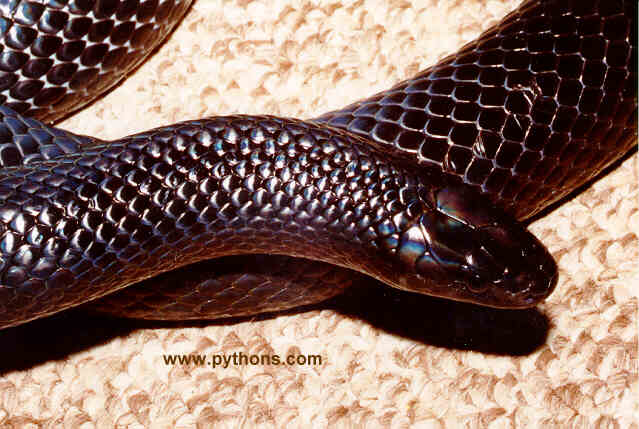
Photo courtesy Al Zulich
click to enlarge |
Written by Stuart Tennyson
- Coloration
- This is a very unusual subspecies in that it under goes a complete ontogenetic color change
from birth to maturity.
- Juvenile:
Black Milksnakes are typically tricolored at hatching not unlike most other Central and South American triangulum subspecies. They have about 17 to 22 red body rings. The red rings are bordered by black rings and separated by white rings. The first red ring ranges from 9 to 13 scales long. The rest of the red body rings range between 3 to 9 scales in length. The snout pattern is highly variable. Some specimens have a complete white nose band while others have only white mottling and remnants of a nose band. Black tipping of the scales is moderately evident in some juveniles but is nonexistent in others. Most juveniles are so brightly colored and attractive at birth it is hard to believe they will become so dark as they mature.
- Adult:
The darkening of growing gaigeae seems to be a gradual process that doesn't have a definite rule. It appears how fast they turn black could be a genetic trait governed by the individual gene pool. I have observed hatchlings from three different gene pools through this process.
Of all juveniles one of the first to start showing signs of darkening was the smallest and youngest at about six months of age and 24 inches in length. Some of the larger, older hatchlings didn't begin darkening until they reached 8-10 months of age and 30 inches in length. One juvenile still hasn't shown any darkening at 11 months of age. I guess it would be safe to say that most juveniles start turning dark between 6 and 10 months of age. The change doesn't appear to be size dependent as much as age and locality dependent. The gaigeae from the same localities tend to turn dark in the same manner. In some specimens the white rings are the first to start darkening. The black tipping will gradually get more intense until the white rings are completely obscured giving the snake a bicolored appearance similar to some of the other triangulum subspecies (hondurensis). Others will show signs of darkening starting with the red rings. The black tip on some of the red scales will gradually get so large as to completely obscure the red coloration on the scale. When they start darkening this way (red first) the juveniles go through phases where they take on the appearance of other triangulum subspecies such as andesiana and stuarti. It is interesting to note that as the different color change phases occur that gaigeae exhibits color patterns similar to several of its other triangulum cousins. Things that make you go hummm..... In any event, the darkening process continues until the entire snake is black and any remnants of pattern is obliterated by black. This process is usually completed during the second year of life and when the snake has reached about 3 feet in length. In a few specimens some faint remnants of pattern can still be discerned if the snake is closely examined especially in the throat and belly area. For the most part, large adults are uniformly black all over and closely resembling an Indigo Snake.
- Range:
- The mountains of Costa Rica and western Panama.
- Habitat:
- The habitat for this triangulum subspecies is wet, high mountain cloud forests at elevations between 5000-7400 feet (Costa Rica) and 4300-6500 feet (Panama).
- Prey:
- Most gaigeae readily accept mice and rats in captivity but little is known of their diet in the wild.
- Behavior:
-
Very little is known concerning the habits of this particular subspecies. Collecting dates are March, July and November. Due to the habitat that gaigeae is from it is suggested they are active year round and forage for food mostly during the day because of mild daytime temperatures.
- Breeding:
-
- Literature Cited:
-
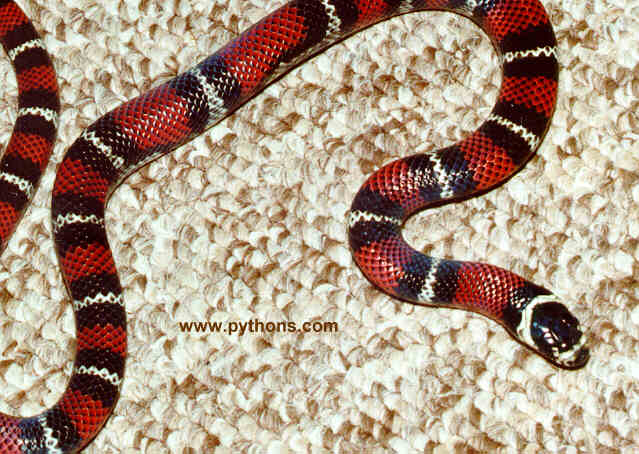
Photo by Al Zulich
Click to Enlarge |
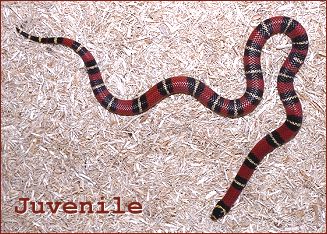
Photo by Jim Kane
Click to Enlarge |
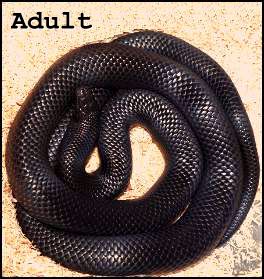
Photo by Jim Kane
Click to Enlarge |
![]()
Photo by -
Click to Enlarge |
|
|
Sponsored Link
New & Updated Business Listings
Looking for a reptile or amphibian related business? A reptile store, breeder, importer,
maunfacturer or supplier? Our business directory lists some of the most popluar herp businesses in the world.
| Locate a reptile or amphibian business by name:
|
|
Recent Milk Snake Forum Forum Posts
• hypo-e pumpkin Sinaloan milk, posted by sballard
• What's getting paired this year?, posted by AaronBayer
• I'm here, too!, posted by Sunherp
• Kingsnake lives!, posted by exposito
• Hey Everybody, I'm here., posted by AaronBayer
• Scott Ballard Provided A Wealth Of Info, posted by Ameron
• Central America Milksnake Dilemma, posted by Ameron
• Retun to Forum / New Stuart's Milksnake , posted by Ameron
• Eggs ok?, posted by highley1980
• Splotched Sinaloan Variety, posted by bslugger551
• Splotched/Bullseye Sinaloans, posted by bslugger551
• Is my milk snake is getting TOO HOT?, posted by darbellah
• New owner looking for advice, posted by Irishfran
• New adoption biting and chewing fingers, posted by ajcur17
• Help*** Our milksnake won’t eat., posted by KieranSnake
Recent Milk Snake Classifieds:
- Black Milk Snake Male 20...
- 11 Stuarts Milks 2025
- Two Male Vanishing Patte...
Banner Pool
KINGSNAKE.COM
Enjoy all our content free of charge with a user account that gives you full access to every feature.
For added visibility, paid options are available - post in our Classifieds, showcase your business with
Banner Ads or a Directory listing, promote reptile events, and more.
|
Quick Links
|
Community
|
Legal & Safety
|
Support
|
|
|
Kingsnake.com ® is a registered trademark © 1997-
|
|
|