Evolutionary link between size of animal and habitat found in Chelonians
By Cindy Steinle · March 17, 2011 9:47 am
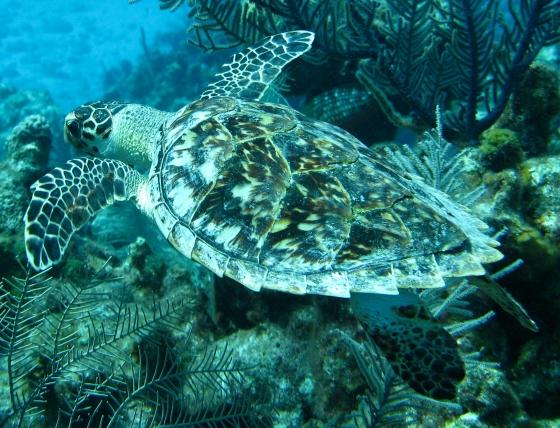 A student volunteer in the laboratory of UCLA evolutionary biologist Michael Alfaro is lead author in a study showing that there is an evolutionary link between habitat and body size in turtles and tortoises.
From Science Daily:
A student volunteer in the laboratory of UCLA evolutionary biologist Michael Alfaro is lead author in a study showing that there is an evolutionary link between habitat and body size in turtles and tortoises.
From Science Daily:
Combining statistical computer modeling with genetic data and the fossil record, Alfaro, an associate professor of ecology and evolutionary biology, and his colleagues demonstrated that different environments have specific optimal body sizes for their chelonian inhabitants. These researchers act as "evolutionary detectives," piecing together how the tremendous diversity in living chelonians today evolved from a common ancestor that lived millions of years ago. DNA sequences from modern chelonians provide important clues for determining the evolutionary path followed by their progenitors, said co-author Graham Slater, a National Science Foundation-funded UCLA postdoctoral scholar in ecology and evolutionary biology. The results show a surprisingly strong statistical correlation between habitat change and significant adjustments in body size. Chelonians living in marine or island habitats have an optimal body size several times larger than their cousins on the mainland, said first author Alexander Jaffe, a high school student at Harvard-Westlake School in North Hollywood, Calif. Marine turtles have the largest optimal shell length (about 4.5 feet), followed by island tortoises (approximately 2.5 feet), while freshwater and mainland chelonians are several times smaller (roughly 1 foot).To read the full article, click here.