
mobile - desktop


  |
| mobile - desktop |
|
 |
 Contact Sales! |
News & Events:
|
|
Reptile & Amphibian
News Blog Keep up with news and features of interest to the reptile and amphibian community on the kingsnake.com blog. We cover breaking stories from the mainstream and scientific media, user-submitted photos and videos, and feature articles and photos by Jeff Barringer, Richard Bartlett, and other herpetologists and herpetoculturists.


Thursday, January 29 2026The Evolution of the Osteoderm discovered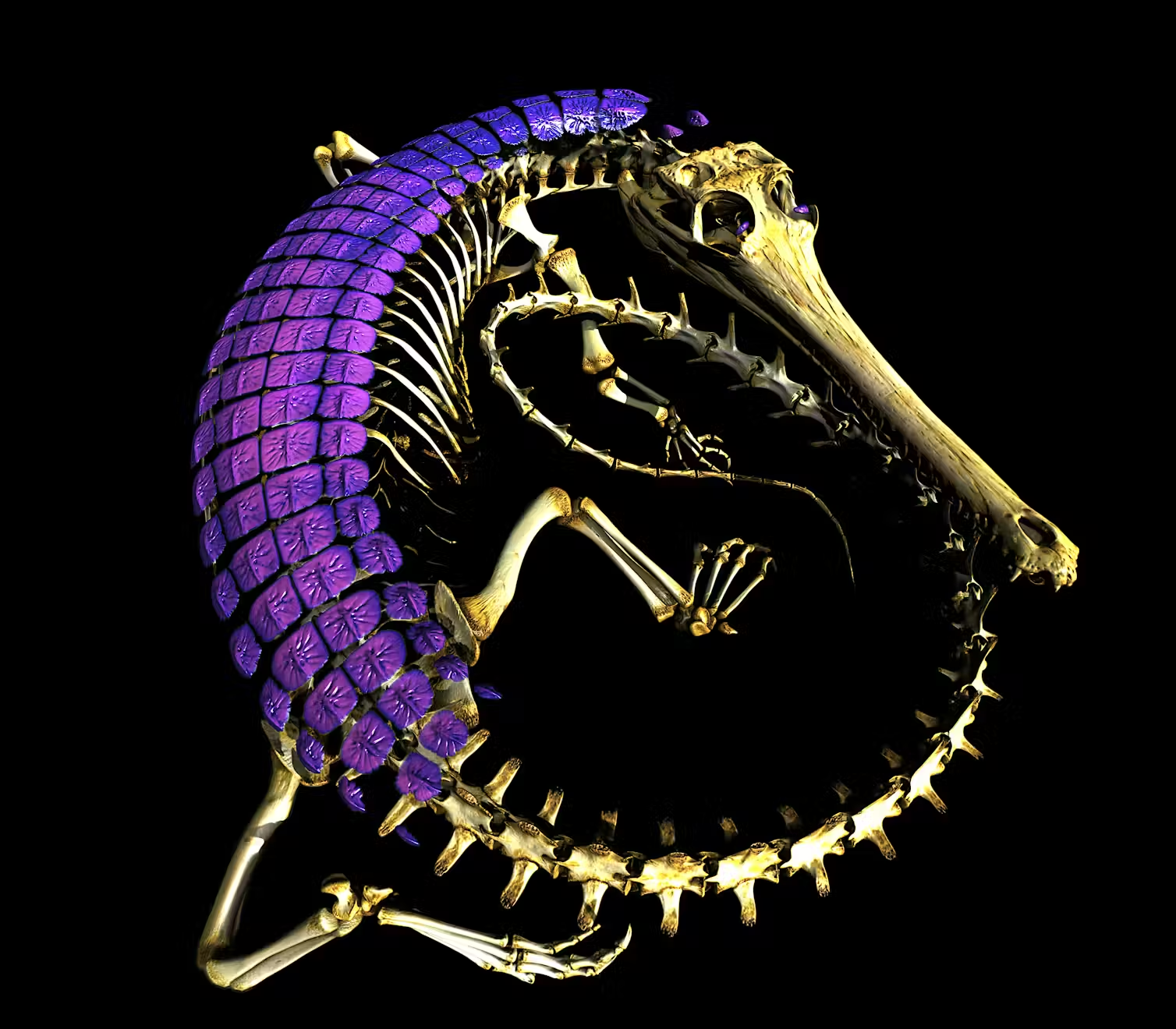 While skin bone plates are well studied in crocodylians (shown here in a gharial, in purple), their presence in lizards and snakes has long remained poorly understood. CT data provided by Jaimi Gray (2022, UF 33421) via MorphoSource. With the horrible weather, it seems a great time to get into this study that looks at the how and why of osteoderms or the bony skin plate that many reptiles have and this awesome study gets deep into it! The original belief was that animals with the bony plated scales all had a similar ancestor, but now with modern technology that has been disproven. So what was the origin? We found that most lizards first evolved osteoderms during the Late Jurassic and Early Cretaceous, more than 100 million years ago. At that time, some of the most iconic dinosaurs roamed the Earth, including the towering Brachiosaurus, the fierce Allosaurus, and the plate-backed Stegosaurus. There was one species that decided to shift gear, lose plates, only to regrow them later. To learn what that was, you gotta read the article! For that, click here! Comments
Display comments as
(Linear | Threaded)
Add Comment
|
Our Sponsors CategoriesSubscribe |

|

|

|
|

