The Variably Colored Carolina Pygmy Rattlesnake
By Richard Bartlett · November 15, 2021 1:35 am
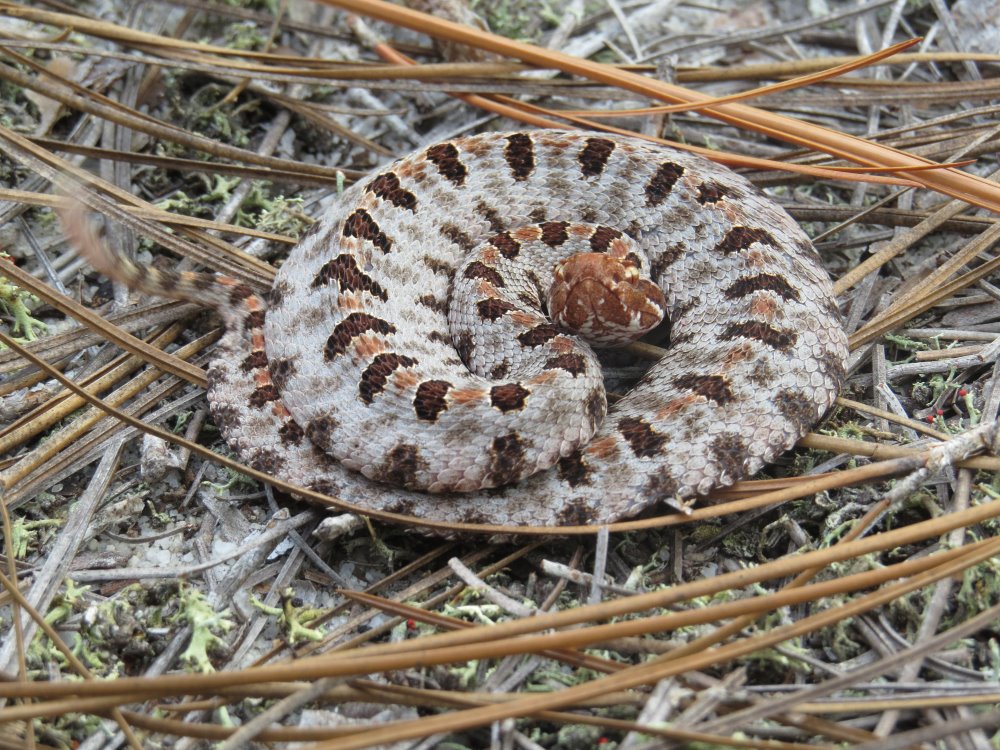
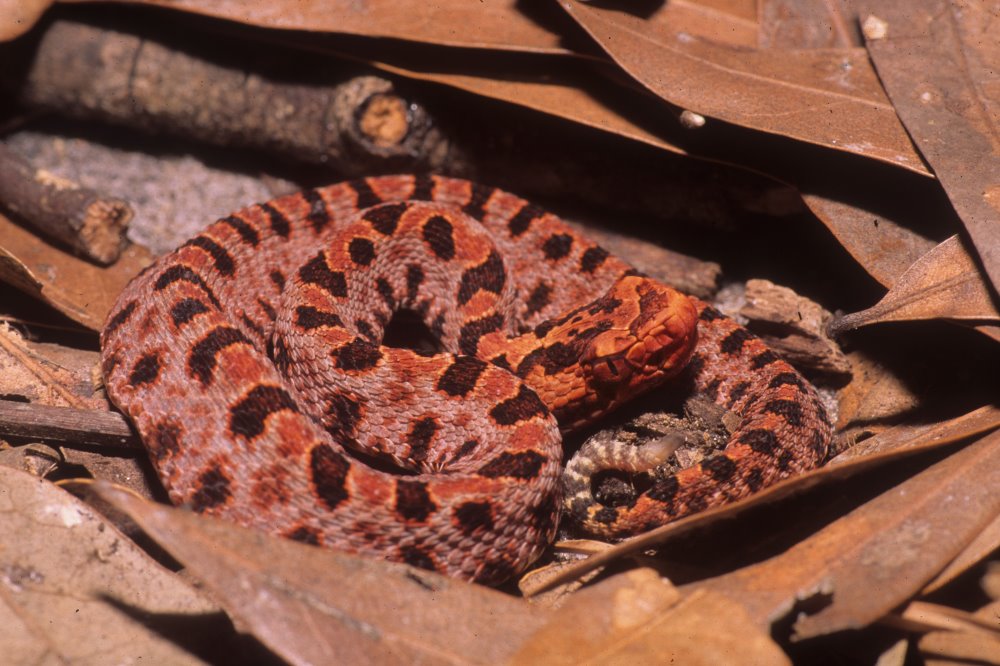
The Carolina Pygmy Rattler of the Sandhills can vary widely in ground color but are usually light with well defined dorsal blotches. The Variably Colored Carolina Pygmy Rattlesnake, Sistrurus m. miliarius is the most northeasterly, most variable in color, and marginally the smallest of the 3 subspecies of Pygmy Rattlesnakes. It ranges southward from the Albemarle Peninsula of North Carolina to South Carolina, Central Georgia, and westward to Northern Alabama. At the southern extremes of its range it intergrades with the Dusky subspecies in the east and with the Western subspecies in the west. Adult size is a stocky 15 to 20 inches. It seems as if the record length is 25 inches. It is in color that this little buzztail varies most. Two of the most often mentioned color phases are the “sandhill” phase and the “red” phase. The latter seems restricted to neGA and eNC while the lavender sandhills phase, restricted to the NC sandhills, is aptly named. Besides the lavender and red ground colors already mentioned, this little snake may vary from gray to brownish. It lacks the dark stippling of the dusky phase but has clearly defined light edged dark dorsal saddles as well as lateral smaller lateral blotches. In areas of intergradation stippling is heavier and the patterns are less clearcut. Between 2 and 9 young are produced in each clutch. Neonates measure a rather slender 6 inches in total length. The tail is usually dark on adults but yellowish on neonates.
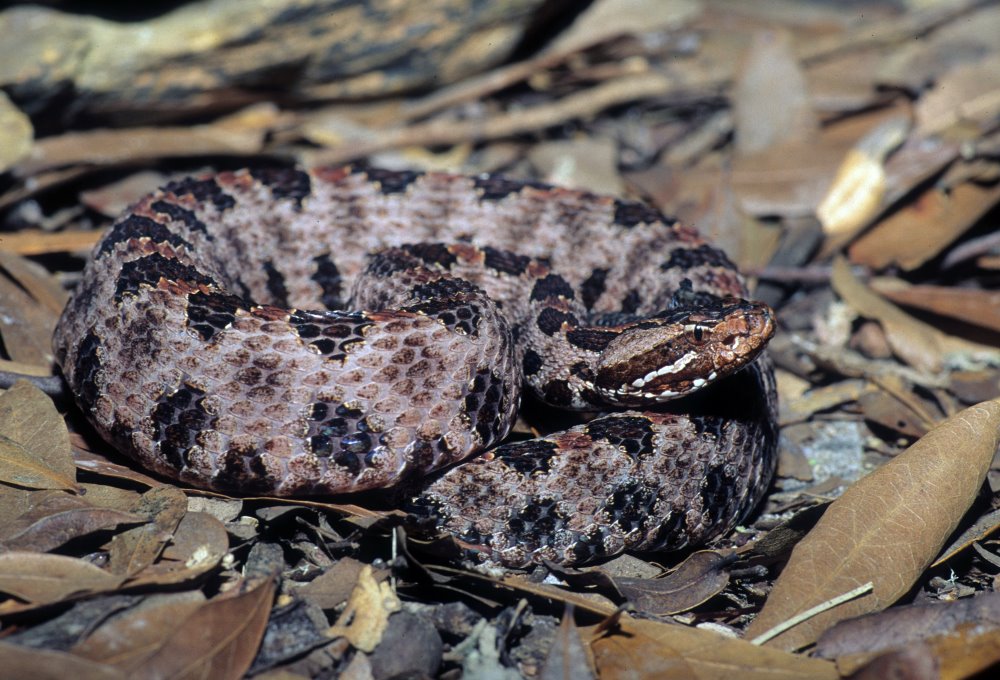
This is a Carolina Pygmy Rattler from southern coastal SC.
Many Carolina Pygmy Rattlers from the Lake Mattamuskeet area of decidedly red ground color.