Meet the Western Painted Turtle
By Richard Bartlett · November 8, 2021 1:04 am
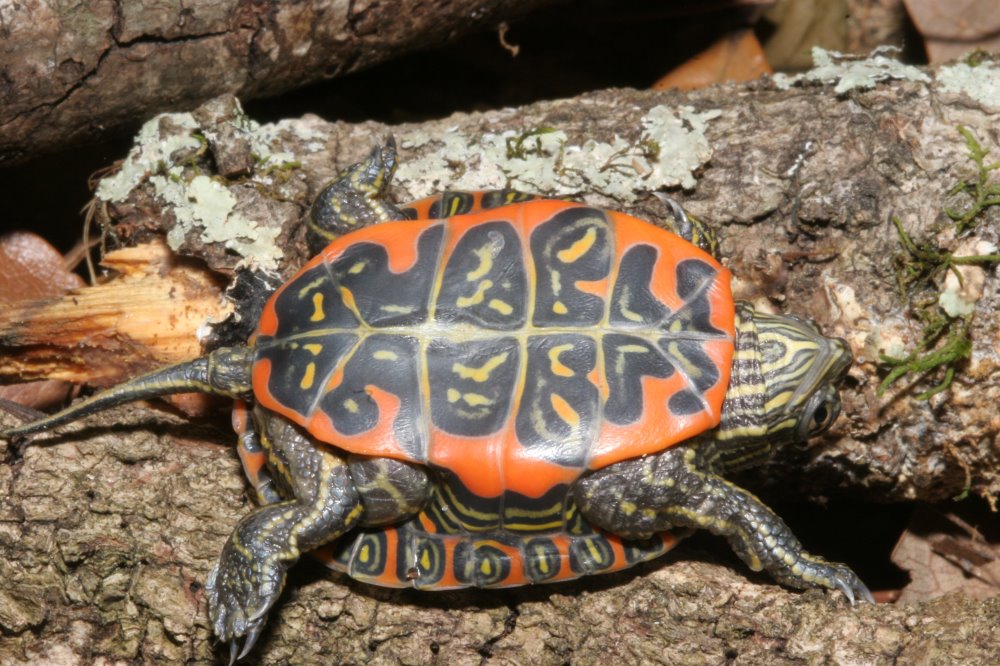
Both in young and old (this is a hatchling) the plastra of Western Painted Turtle, Chrysemys picta bellii, bears a variable dark figure against the red. For nearly my entire life I have been enchanted by the beauty and abundance of the 4 subspecies of painted turtles—the eastern, the midland, the southern, and the western. Where I spent my childhood, both the eastern and western subspecies were common. But to see both the southern and the western painteds in the wild, it was necessary to travel several hundred miles. But travel those distances I did, and was happy to do so. Of the four subspecies, the southern is the smallest and the western, at a straight-measure carapace length of 8 to 10 inches, the largest. The western also has the largest range and just happens to be the most colorful. It may be seen throughout most of the central states, to the Pacific Northwest, southwestern Canadian Provinces, and in several disjunct river systems and lakes of our southwest. The olive-ish carapace may or may not have a busy pattern of light lines and the plastron is red to reddish (especially bright on hatchlings) with broad areas of dark pigment following the scute junctures. Face, neck, limbs, and tail are olive to dark grayish green and are busily striped or spotted with yellow.
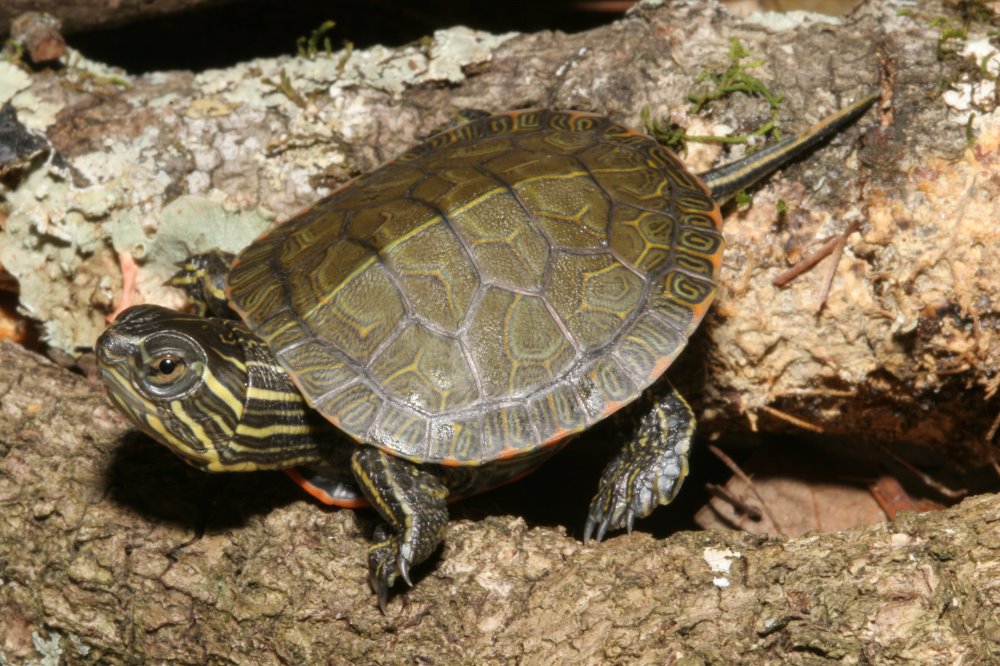
Light carapacial reticulations are usually present in this subspecies.
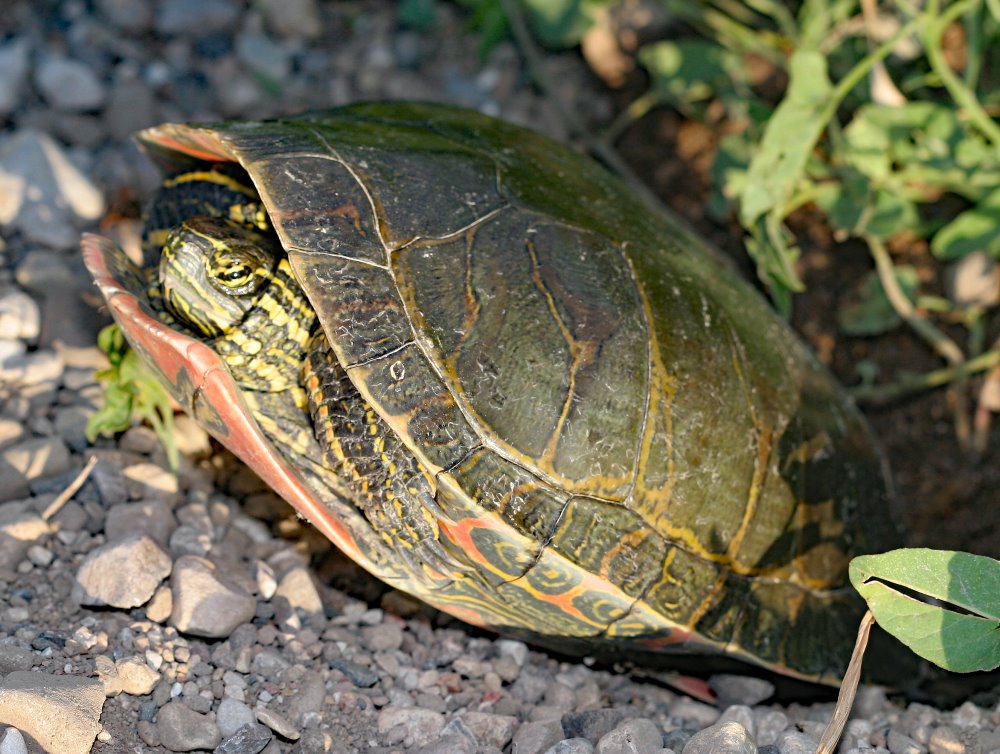
An ovipositing female Western Painted Turtle in Iowa.