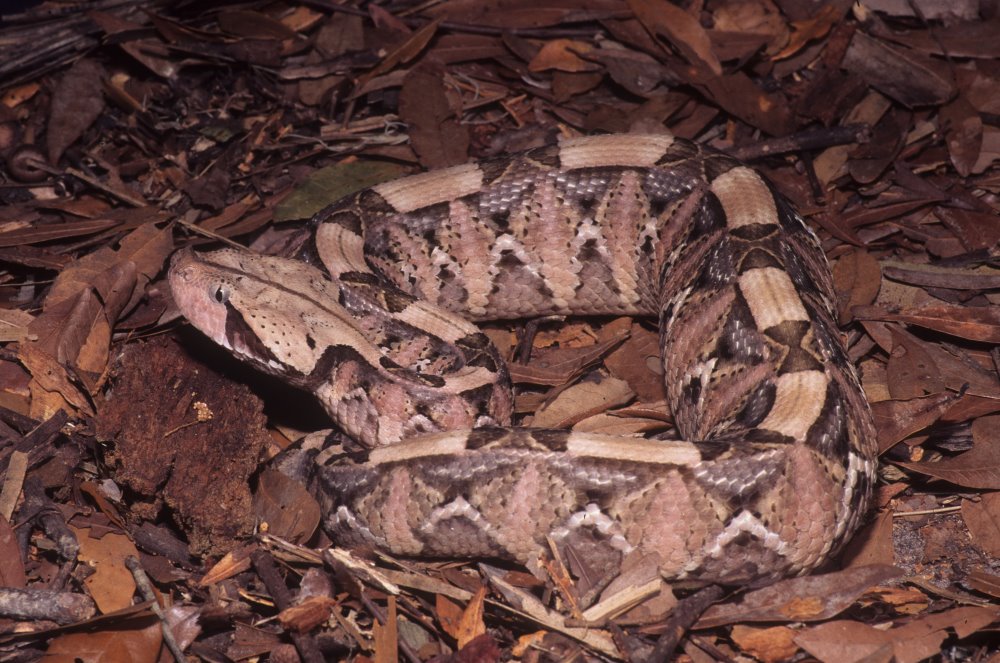
West African Gaboon Viper
By Richard Bartlett · June 21, 2021 12:33 am
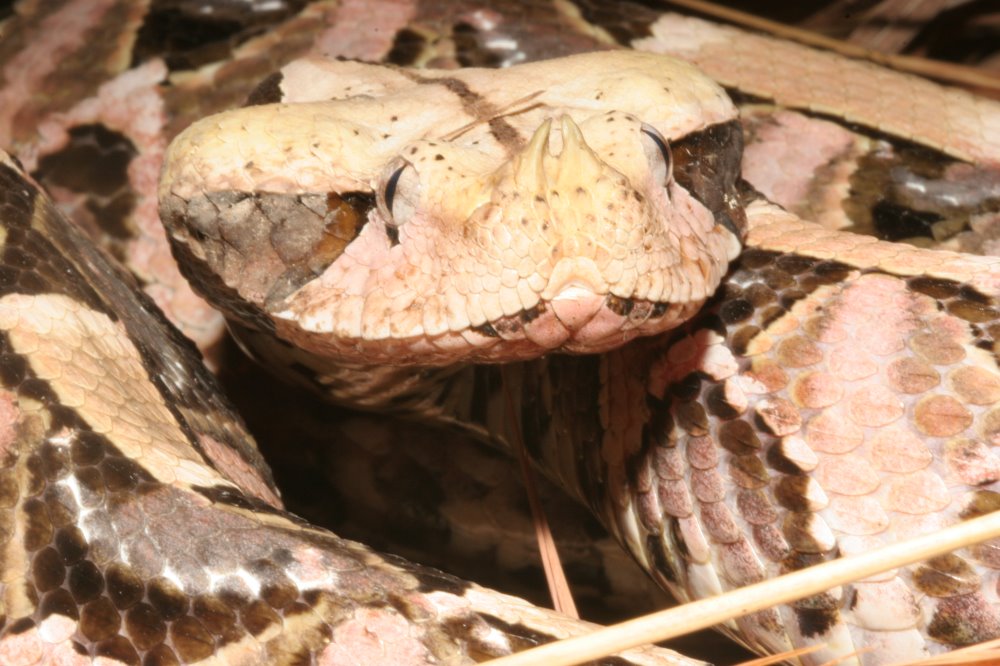
Note the nasal horns on this pretty West African Gaboon Viper. By Dick and Patti Bartlett West African Gaboon Viper, Bitis gabonica rhinoceros. Except for facial markings, this large sized snake is of very similar appearance to the East African Gaboon Viper but has prominent nasal horns. It too attains a heavy bodied, remarkably well camouflaged length of 4 ½ to 5 ½ feet with females being larger. It is dangerous, very beautiful, and also has a very wide range (rainforest habitats) from Togo westward to Senegal and Mali. Food is primarily of small mammals. This subspecies has one dark marking, a diagonal triangle marking on each side of its face. The 2 subspecies of Gaboon viper can interbreed with each other as well as with the Rhinoceros Viper. They give birth to live young that may number from as few as 5 to more than 40. Neonates are 10-12 inches in length. In activity pattern both subspecies of these shade preferring, fallen-leaf colored, snakes are primarily nocturnal. Both subspecies have very long fangs. Despite their virulent toxins both subspecies are quite popular with herpetoculturists worldwide. Gaboon Vipers are often quiet to the point of placidity during the hours of daylight (keepers—do not be deceived by this, ALWAYS USE EXTREME CAUTION) but become alert and even active after nightfall. Gaboons may move in a typical side to side motion but are more inclined to use a straight rectilinear movement, being slowly propelled forward by ventral scale motion.
This is a young adult West African Gaboon Viper.
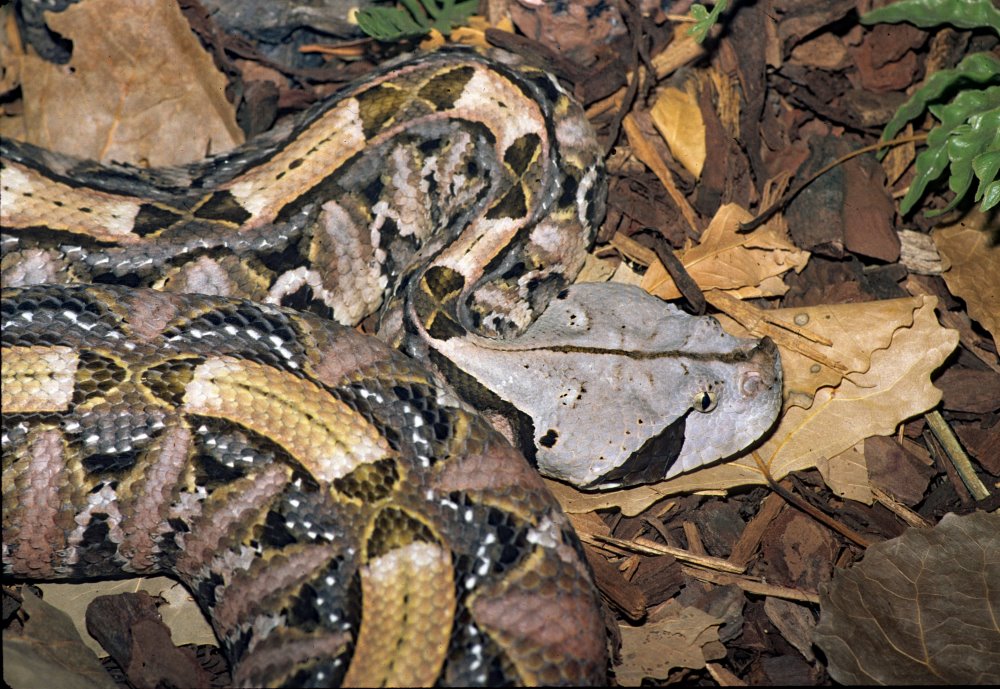
Juveniles such as this are often pinkish in color.