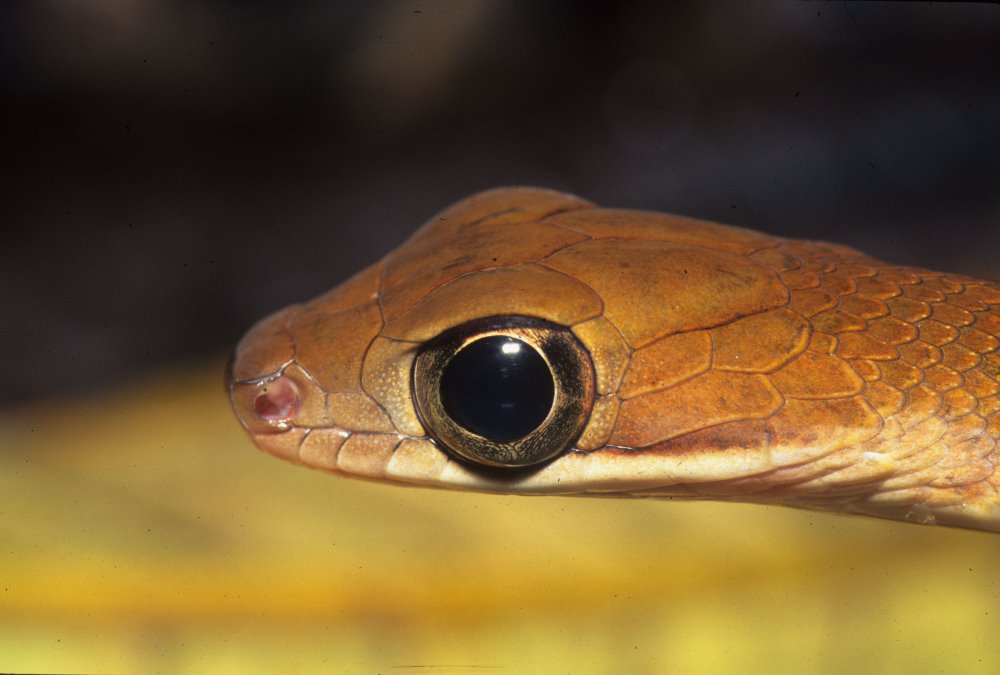


The Tawny Forest Racer
By Richard Bartlett · December 28, 2020 12:36 am
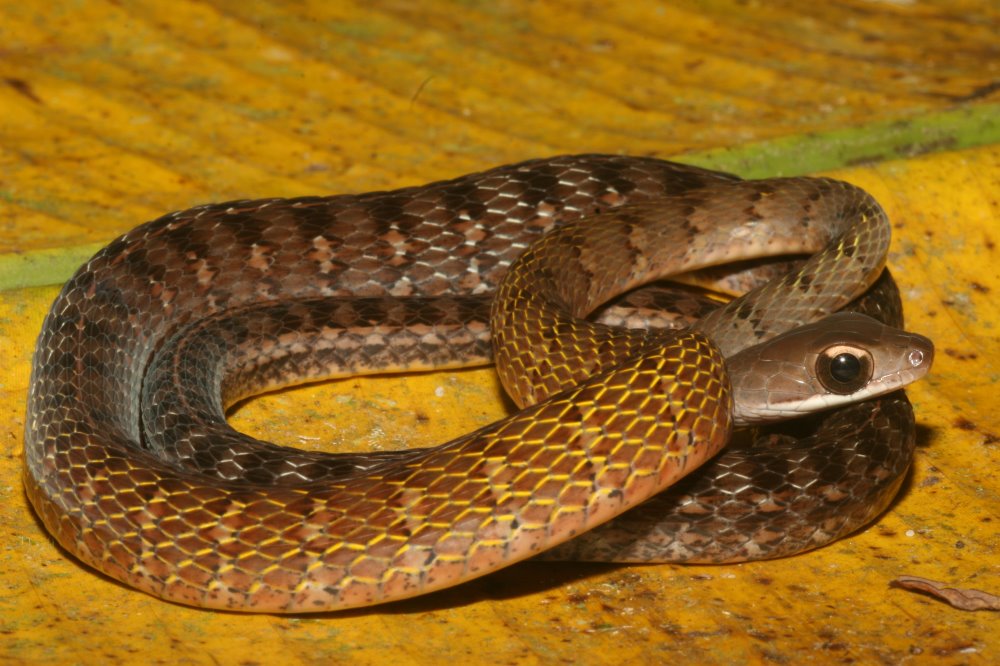
Note the yellow interstitial skin of this forest racer. The genus Dendrophidion contains about 15 species of big-eyed, diurnal, alert snakes, all of racerlike slenderness and speed. The overall distribution of the genus is from southern Mexico to Bolivia. The Tawny (aka Olive) Forest Racer, Dendrophidion dendrophis, was a common and welcome species at our camps in Amazonian Peru. Although of subdued color this is a pretty snake. The ground color is lightest anteriorly and darkens progressively towards the tail. A series of 50+ narrow, dark-edged, light bands or dark bands with light lateral spots, begins on the nape, and continues to tailtip. These are best defined on young snake and may be obscure on old adults. The Interstitial skin (the skin between the scales) and the belly are yellow, paling anteriorly. Each eye is shaded by an enlarged, flat, outward projecting, supraocular scale. The eyes of juveniles appear proportionately larger than those of the big-eyed adults. Adult size of this oviparous snake is 3 to 4 feet. This is a frog-eating species. These racers are most often seen on or near the ground, but they can climb well and often sleep in shrubs or trees 5 to 8 feet above the ground. The fact that this snake (as a matter of fact, all snakes in this genus) readily autotomizes the tail if grasped by this terminal appendage explains why many forest racers seen have a truncated appearance. The tail is readily lost but does not regenerate.
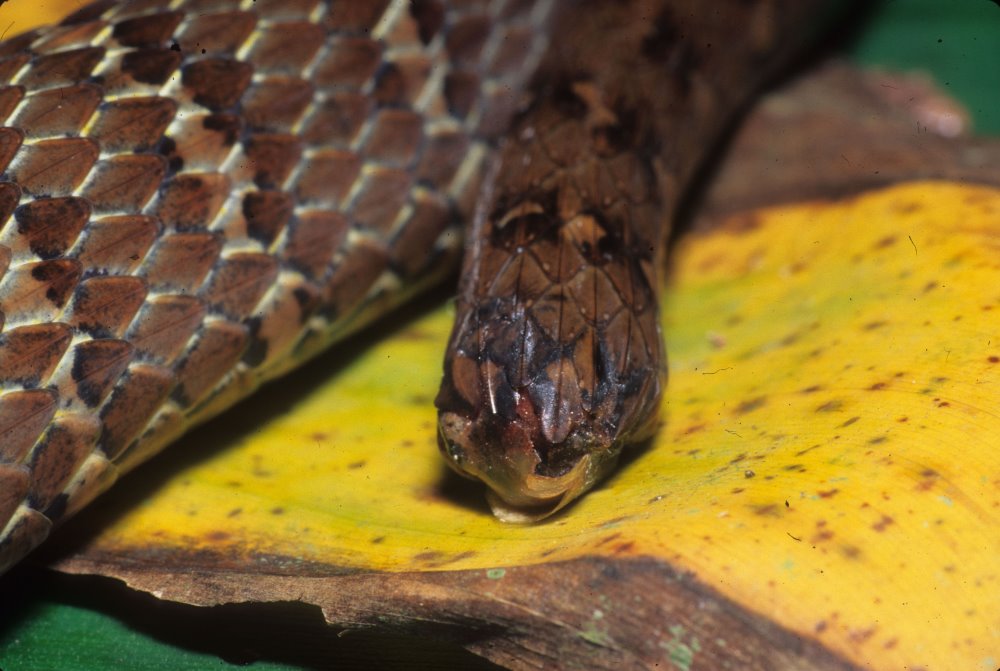
Although the tail of the forest racers is readily autotomized, it does not regenerate.
The eyes of the juvenile forest racers is proportionatey larger than on the adults.