
mobile - desktop


  |
| mobile - desktop |
|
 |
 Contact Sales! |
News & Events:
|
|
Reptile & Amphibian
News Blog Keep up with news and features of interest to the reptile and amphibian community on the kingsnake.com blog. We cover breaking stories from the mainstream and scientific media, user-submitted photos and videos, and feature articles and photos by Jeff Barringer, Richard Bartlett, and other herpetologists and herpetoculturists.


Tuesday, April 17 2012kingsnake.com launches new state/local classified ads! kingsnake.com advertisers can now reach both a national and a local market with the same advertisement. There is no extra charge, and no separate account is required to post local and state classifieds. kingsnake.com advertisers can now reach both a national and a local market with the same advertisement. There is no extra charge, and no separate account is required to post local and state classifieds. State-by-state ads are now available at http://market.kingsnake.com/indexlocal.html, with a zip code-based/regional search launching soon. To make sure your ads show up in the state and local ad system, simply include the state and zip code in the appropriate advertising fields in the classified ad posting form. If you already have advertisements posted, you do not have to re-post them to take advantage of this new functionality. To update your existing ads, log into the My Ads section of your classified account, enter your state and zip in the appropriate form fields, fill in the check box that says "update all my ads," and then click submit. The system will update all your existing ads! Easy! To check out the new state and local reptile classifieds, go to http://market.kingsnake.com/indexlocal.html. To update your existing classified ads, please log into http://market.kingsnake.com/account.php?page=manage. To purchase a classified account please, go to http://www.kingsnake.com/shared/services/classified.php. Friday, April 13 2012Educating the Masses: Chicago Herp Society's ReptileFest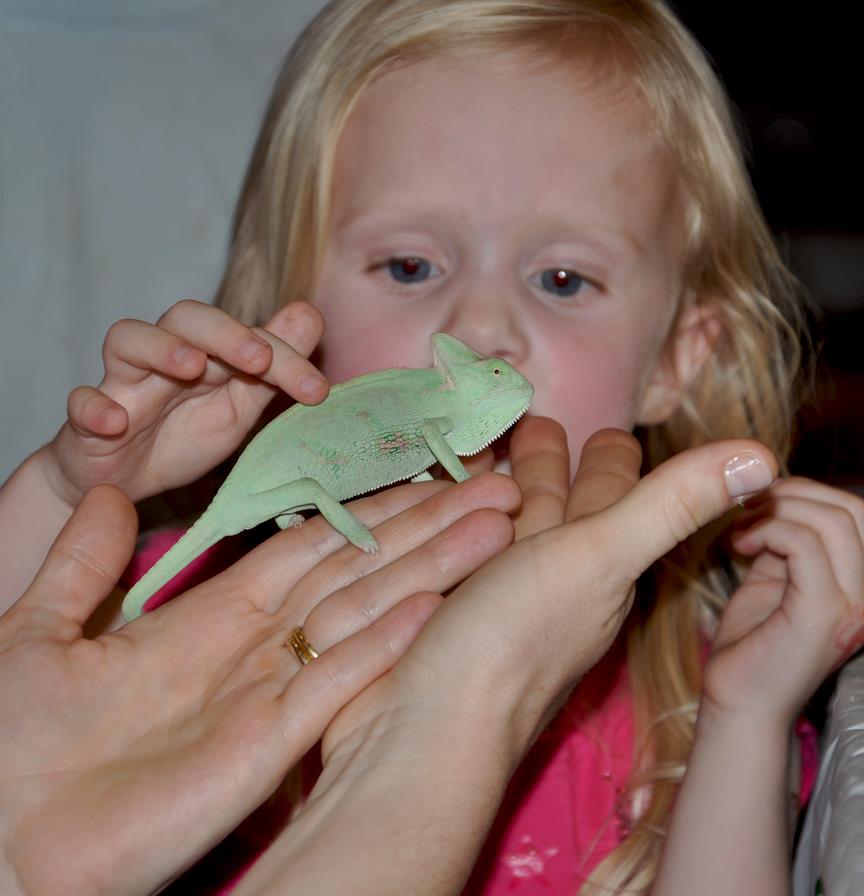 Educational outreach is the key to changing people's perceptions about reptiles, PERIOD. It creates a personal connection to reptile ownership that will override misconceptions put out there by the media and others. Educational outreach is the key to changing people's perceptions about reptiles, PERIOD. It creates a personal connection to reptile ownership that will override misconceptions put out there by the media and others.With that thought in mind, I am locked and loaded for this year's ReptileFest, an event hosted and organized by the Chicago Herpetologial Society. I will be both exhibiting and covering the event for kingsnake.com. Coverage will be a bit sporadic however, as I will be staffing 12 tables with my slave labor and good friend Chris Law. My exhibit combines my beautiful beloved morelia, my reptile rescue group. and the International Reptile Conservation Foundation. Keep an eye here or on our Facebook page for fun stuff! It is a very unusual event in that it will have no live animal sales, but that isn't all that makes it special. The fact that there will be around 400 animals and 200 species on display is pretty special. The really cool part is that 99 percent of these animals are privately owned. These are people's pets, and they can share the day to day joy on a far different level than, say, a zoo keeper would. Our exhibits will range from a 5-year-old darling girl and her corn snake display, to professionals like Rob Carmichael from the Wildlife Discovery Center showing off Illinois native venomous and doing proper public education without sensationalism. As I get ready to turn the house over to my husband and pick up my trailer of supplies before I head down to Chi-Town, I hope that this weekend will serve as an inspiration to others. Remember, Snake Day is May 14! Photo courtesy of Mike Heinrich - ReptileFest 2011 Monday, April 9 2012Snakes worldwide developing increasing resistance to neurotoxin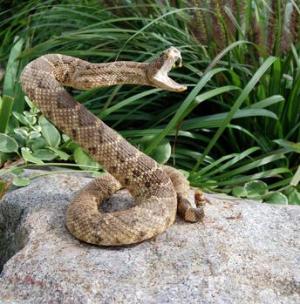 Neurotoxin compositions may vary worldwide, snakes on four continents are demonstrating remarkably similar evolutionary responses enabling them to combat the toxins. Neurotoxin compositions may vary worldwide, snakes on four continents are demonstrating remarkably similar evolutionary responses enabling them to combat the toxins.(University of Notre Dame biologist Michael) Pfrender and colleagues found species of snakes in North, Central and South Americas and Asia that are able to feed on amphibians that secrete a deadly neurotoxic poison, tetrodotoxin or TTX. These snakes have similar mutations in a key sodium-channel gene that makes them highly resistant to TTX. These mutations prevent TTX from blocking the sodium channels in muscle, which would otherwise immobilize the snakes by paralyzing nervous and muscle tissue. To read the full article, click here. Sunday, April 8 2012HSUS offers reward for capture of python mutilator in one state, while their policies lead to python abuse in others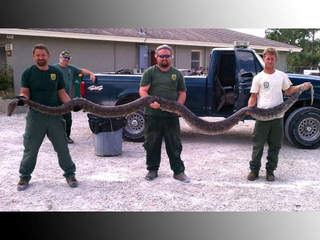 These are the cases of two Burmese pythons, both mutilated. One case is a crime, the other a state job. These are the cases of two Burmese pythons, both mutilated. One case is a crime, the other a state job.In bitterly ironic twist, the Humane Society of the United States is offering a reward of up to $2,500 for information leading to the identification, arrest and conviction of the person or persons responsible for the mutilation, neglect, and abandonment of an emaciated 7-foot male Burmese python who was stabbed twice, shot, and released in York Haven, Pa. "Snakes require specialized expertise and care and deserve the same humane treatment as all other animals,” said Sarah Speed, Pennsylvania state director for the HSUS. Sadly the Humane Society of the United States has said nothing about the recent mutilation and slaughter of a similar, yet larger, Burmese python by Florida Forest Service Rangers, killed by being beaten to death by rakes: Tarrete held the tail, and Chaney grabbed the head. The two killed it with a rake rangers usually use to set fire breaks during controlled burns, Tarrete said. Perhaps Sarah Speed can speak to her compatriots at HSUS in Florida about offering a similar reward and prosecute the Florida Forest Rangers with the same enthusiasm. Unfortunately her compatriots at HSUS, both in Florida and at the national level, were among the main proponents of the new federal regulations, and state regulations, that allow a duality in laws to occur. Where in one state mutilating a python is a crime, and in another it is a state-funded job opportunity. Perhaps she can also ask why her organization is paying thousands of dollars to prosecute someone for mutilating a python in Pennsylvania, and has simultaneously spent hundreds of thousands of dollars convincing the State of Florida and the USFWS to essentially mutilate these animals on an industrial scale. In the meantime this is yet another example of Burmese pythons being "dumped" by irresponsible owners, after the species was recently listed by the USFWS as "injurious," preventing import and interstate transport. This despite USFWS assurance that this would not happen as owners would have local outlets to place their animals. Unfortunately this is just the beginning, and these numbers will continue to rise as more Burmese python owners find fewer and fewer people and organizations willing to accept their animals. And sadly, one wonders if the snakes would have both met the same ends in shelters, had neither been mutilated, just surrendered. Friday, April 6 2012Of pythons and pit bulls: Pushing back against media bias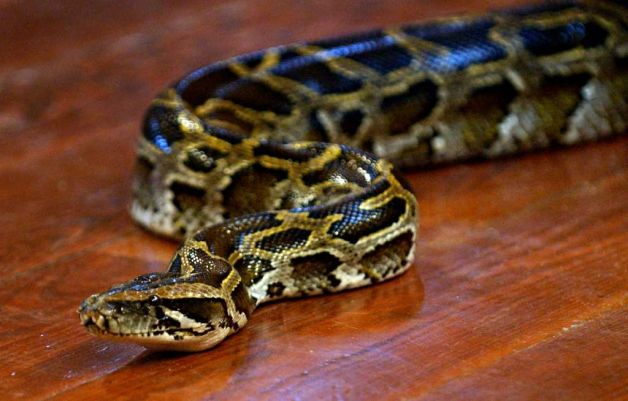 People used to say "Euuuw!" when they heard I had pythons, and shiver in fear at my pit bulls. Now, those reactions are reversed. People used to say "Euuuw!" when they heard I had pythons, and shiver in fear at my pit bulls. Now, those reactions are reversed.Over the years, the pit bull community has taken a very proactive role in fighting false negative stereotypes about our dogs. For longer than I have owned dogs, people in the community have stepped out, created educational days, spent time talking about our dogs to anyone who will listen. It's time for the python community to adopt what has been an extremely successful program for getting out the truth about our pets. Consider the headline on an article on ctpost.com: DEEP collects 5 illegal pets, one vicious python, at Beardsley Zoo The article goes on to explain the surrender of a Burmese python in lurid detail: The most exciting moment of the day occurred behind closed doors. That is the scene people who have never met a python will always remember. They'll get the idea pythons are dangerous beasts who will strike at you and wrap around you and, presumably, send you to your scaly doom -- something those of us who keep them know is a distorted and false view of our pets. Distorted or not, stories like this fill the newscasts, papers, and websites non-snake owning people read every day. It's time we learned from the pit bull people and started pushing back. We need to attend Snake Day and herp society events that are occurring this spring nationwide. Offer to do presentations at local schools, camps, and community groups. Set up a booth at festivals and street fairs. We need to talk about our pets to other pet people, whenever and wherever we can. This is our opportunity to reach out and change minds. It worked with pit bulls. It will work with pythons -- if we do the work to get our voices heard. Will you start speaking out this spring? Sunday, April 1 2012Escaped pythons linked to secret U.S. Army project from 1960s According to documents and interviews obtained for his book, Vietnam's Underground War: Snakes, Rats and Boonie Hats, Icelandic author Uno Imnottyourdottr makes the shocking revelation that the python and boa problem in the Florida Everglades was the result of the purposeful release of animals used in a secret U.S. Army/CIA sponsored project to develop large constrictor snakes as weapons to fight in the extensive Vietnamese tunnel network. According to documents and interviews obtained for his book, Vietnam's Underground War: Snakes, Rats and Boonie Hats, Icelandic author Uno Imnottyourdottr makes the shocking revelation that the python and boa problem in the Florida Everglades was the result of the purposeful release of animals used in a secret U.S. Army/CIA sponsored project to develop large constrictor snakes as weapons to fight in the extensive Vietnamese tunnel network. Dubbed Operation: Blue River in official documents, and gaining the unofficial name Operation: TubeSnake by wags assigned to the project, thousands of boa constrictors, pythons, and anacondas were surreptitiously purchased by the military from Florida wildlife importers in the late 1960s and early 70s and brought to MacDill AFB in Tampa for processing, before being sent to a secure containment facility deep in the Everglades. Once there, the snakes were evaluated for their ability to be trained and suitability for mission, and were given basic mission testing by species. Snakes were equipped with a variety of equipment depending on mission assignment. Sensor and camera platforms, including infra-red and millimeter band and side-looking radar, as well as UHF/VHF communications equipment were utilized in the reconnaissance role, as well as a variety of weapons to be used literally as a hunter-killer platform. Weaponized snakes included a variety of munitions including everything from small explosive charges to large anti-tank mines. Chemical weapons such as CS gas and pepper spray were also evaluated, difficulties arising in finding applicable gas mask solutions for the constrictors. Testing of the animals revealed issues with trainability as well as limited load carrying capabilities. According to Army documents Burmese Pythons were found to be the species most suitable to the mission profile, and after late 1971 only Burmese Pythons were used although weapons and sensor platforms had been developed and successfully tested on snakes as small as 2 feet long and as large as 18 feet long. According to Imnottyourdottr's book, Operation Blue River was quietly discontinued in 1974 before being tested in combat, and all the constrictor snakes remaining in the project were demilitarized and then released outside of the facility into the surrounding swampland, after Congressional investigations were opened into the CIA's failed attempts to train King Cobras as assassins. It was hope that the highly trained constrictors could be recovered should the project be revived, but military priorities by then had shifted to the Middle East. Million Snake March hits Washington D.C.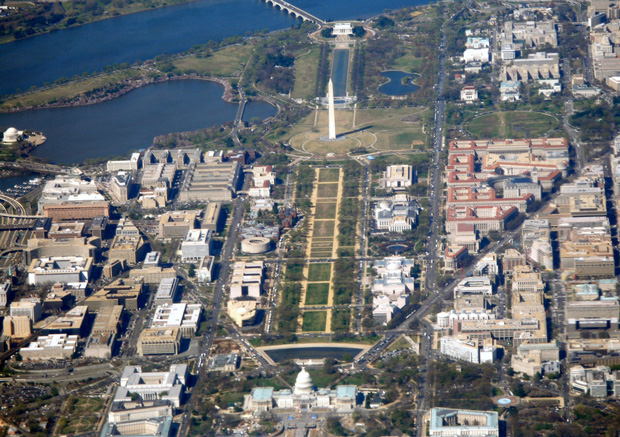 Millions of undocumented boas and pythons descended on the National Mall in Washington D.C. today demanding that Congress afford them the protections that others have received, and to demand that Congress stop the building of a wall between Louisiana and Texas to prevent the snakes further migration westward. Acting as their spokesman Norville T. Bass, President of the American Snakehandlers Association, said, "These snakes have come here and are doing jobs that American snakes by and large don't want, and now with no due process the government wants to stop them from traveling between states. Some of these snakes have family in other states. What happens to them?" Millions of undocumented boas and pythons descended on the National Mall in Washington D.C. today demanding that Congress afford them the protections that others have received, and to demand that Congress stop the building of a wall between Louisiana and Texas to prevent the snakes further migration westward. Acting as their spokesman Norville T. Bass, President of the American Snakehandlers Association, said, "These snakes have come here and are doing jobs that American snakes by and large don't want, and now with no due process the government wants to stop them from traveling between states. Some of these snakes have family in other states. What happens to them?"Watching the slithery procession of participants while providing crowd control on foot, Sergeant Eric Witherspoon of the Metro D.C. Police Department offered, "We haven't seen this many snakes since the last time Congress was in session." Asked about the lack of mounted patrols at the event, Witherspoon said, "The horses don't like snakes, and some of the officers aren't too keen either," as a reticulated python slithered across his boots. Bystanders at the event, Cecil and Trudy Horsfeldii from Rockford Illinois, were caught up by the day, but a little confused as to what was going on. "Is this the Rick Astley flash mob? We were all supposed to meet at 3 pm and go to the Air and Space Museum." It was difficult to tell just how many of the reptiles packed the Mall, their squirming, writhing mass being difficult to calculate with any accuracy. By dusk, however, the snakes, their representatives, and the media had vanished, leaving cleaning crews to clear D.C.s Mall area of debris that always accompanies an event like this, like cups, signs and thousands of shed skins. But the snakes shall return soon when the Senate convenes again. Obama okays use of drones in fight against invasive pythons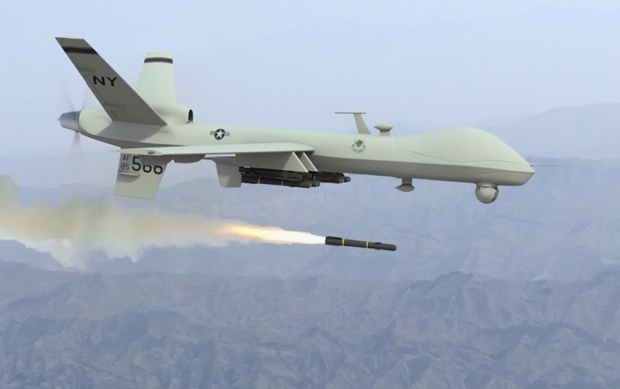 Multiple White House sources have confirmed that the Obama administration has approved the use of armed drones in the fight against the invasive Burmese python, pending clearance by the Federal Aviation Administration. While the use of armed drones to eliminate threats outside U.S. borders has become rather commonplace, this is the first time that the weapons have been approved for use inside the United States. Multiple White House sources have confirmed that the Obama administration has approved the use of armed drones in the fight against the invasive Burmese python, pending clearance by the Federal Aviation Administration. While the use of armed drones to eliminate threats outside U.S. borders has become rather commonplace, this is the first time that the weapons have been approved for use inside the United States."This is an escalation that we don't think the pythons are prepared for. We hope the technology will give us an edge." said one unnamed official. When asked about the $1,200,000 per missile/python cost he replied, "They're eating endangered wood rats. And they are putting American snakes out of work. They have to be stopped before they make the I-10 corridor. Once that happens, we'll start finding em in El Paso, Los Angeles, San Francisco, Portland, Seattle...then it's game over. The Canadians are even less prepared than we are." Both Lockheed-Martin and Northrop-Grumman are said to be preparing drone-based python remediation programs, as are European defense contractors SAAB and MBB. Brazil's Embraer is said to have a head start after developing a similar drone based Anaconda remediation program for it's neighbor Venezuela, but faces challenges selling in the U.S. market after it's Super Tucano deal got hung up in congressional red-tape. "We are the only ones that have actual field experience using laser guided weapons from high altitude to remove yellow Anacondas, the Israelis have only gotten theirs to work with Sand Vipers, and then only with the nominate species Vipera ammodytes" said Embraer's Python Project Manager Pedro Borbón."The Israelis have no jungles to test in as well, all of their work has been in the desert. That might be fine once the pythons reach New Mexico and Arizona, but that cedes the pythons the entire gulf coast." Other American defense contractors are hard at work on their own remediation products, services and proposals, some less high-tech than others. World Ultradyne Security Systems, formerly a division of Blackwater Associates, is putting its former special forces operatives to work training "A Teams", or action teams, of specially trained mongoose, to hunt out the pythons on the ground. "We' have 100,000 of these rodents ready and trained so far, we are just waiting on the go ahead from the Park Service and USF&W to insert them into the Everglades with a large scale airdrop from C-130 transport aircraft. We're not going to win this until we put boots on the ground, four tiny jump boots at a time" Said Earl Wycleff, former Army Ranger and program manager. When asked about the possibility that the mongoose themselves may not return, and in turn become established Ultradyne has already considered that and is preparing "B Teams" of cougars to release and remediate any mongoose that fail to return. And if the cougars become established? "Bears. Bears are cougars' natural enemy, so we are working with bears. The Russian bears seem easiest to train, probably due to their extensive circus background." |
Our Sponsors CategoriesSubscribe |
|
|

|
|
|

