Click here to visit Classifieds
Click for ZooMed
Click for 65% off Shipping with Reptiles 2 You

RSS

Christie Keith

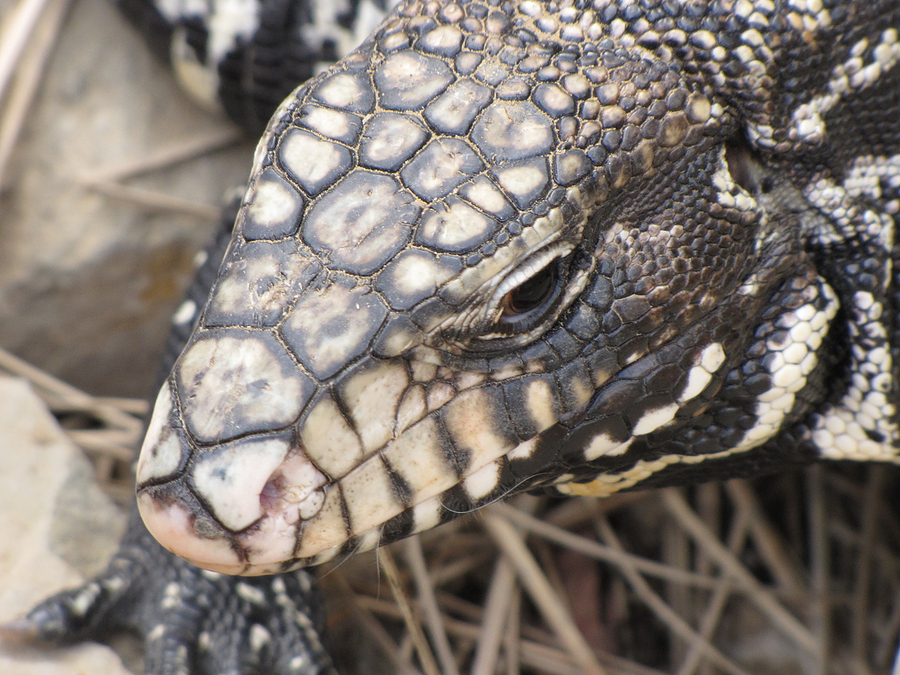
SUV full of reptiles stolen - but not for long

October 23, 2012

A car thief got quite a surprise when the Suburban he stole turned out to have a few cold-blooded passengers in the back. KDNVR in Denver, Colo., reports that police recovered the SUV the day after it was stolen, with all the animals safe inside. The vehicle belongs to Phil Rakoci, who goes by the name of "Wildman Phil." He does educational shows for children with his 13-foot python and 13 other animals, including a three-legged African Spurred Tortoise named Stumpy, for whom Rakoci had made a wheel to enable him to get around. From KDVR:

A police spokesman indicated that authorities discovered the SUV abandoned at West Iliff Avenue and South Quitman Street at approximately 8:55 a.m. Thursday. Rakoci will most certainly be relieved, considering his postings on Facebook at 4:47 a.m. Thursday: ”AMBER ALERT!” Rakoci wrote. “Stumpy the Tortoise has been kidnapped in the Denver area!” Rakoci went on to say say he didn’t care about the car or the computer inside. He simply wanted to recover his reptiles. “We’re like family,” he wrote. It seems only natural that Rakoci would feel a special tie to the three-legged tortoise. According to Rakoci’s website, “Stumpy” was left on his front porch in a milk crate four years ago missing one of his two front legs. Rakoci said that he and “Fabricator” Ken Hillery clamped the 50-pound African Spurrred tortoise in a vise for 24 hours and surgically attached a bracket and wheel to the outside of the reptile’s shell. “Stumpy” has been wheeling around on the wheel for the past seven odd years.
Read full article

CDC updates African Dwarf Frogs salmonella investigation

July 21, 2011

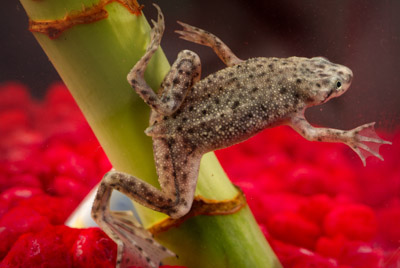
The Centers for Disease Control announced yesterday that it is still investigating an outbreak of salmonella typhimurium associated with African Dwarf Frogs bred at Blue Lobster Farms in California:

This nationwide outbreak is ongoing. As of July 18, 2011, a total of 241 individuals infected with the outbreak strain of Salmonella Typhimurium have been reported from 42 states since April 1, 2009. These infections are associated with African dwarf frogs–a type of water frog–and water from their habitats (e.g., tanks or aquariums). Epidemiologic, traceback and laboratory findings between 2009 and 2011 link this ongoing nationwide outbreak of human Salmonella Typhimurium infections to a single African dwarf frog breeding facility in Madera County, California, Blue Lobster Farms. The owner of Blue Lobster Farms voluntarily stopped shipping African dwarf frogs in late April but resumed shipping the frogs in early June. These frogs may be found in pet stores, educational stores, toy stores, fairs, carnivals, from online retailers and other venues. Public health officials with the Madera County Department of Environmental Health are currently working with the owner of Blue Lobster Farms to conduct interventions and ongoing testing and monitoring of the frog breeding facility. At this time, the effectiveness of these interventions is unknown, and reports of ill persons infected with the outbreak strain are continuing.

Read full article

One of the 10 most wanted frogs found in Borneo

July 21, 2011

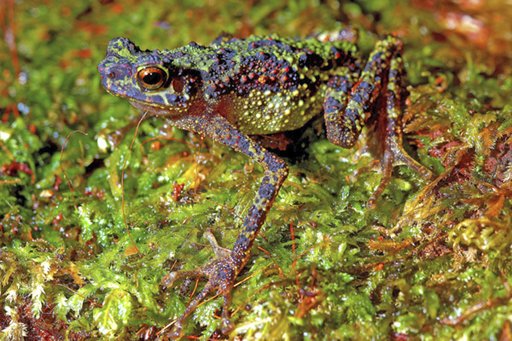
The Sambas Stream Toad, also known as the Bornean Rainbow Toad, was spotted by scientists for the first time in 87 years last week in Borneo.

Researchers found three of the slender-limbed toads living on trees during a night search last month in a remote mountainous region of Malaysia's eastern Sarawak state in Borneo, said Indraneil Das, a conservation professor at the Sarawak Malaysia University who led the expedition. Only illustrations of the toads previously existed. Das said his team first decided to seek the toad last August, but months of searching proved fruitless until they went higher up the Penrissen mountain range, which has rarely been explored in the past century. "It is good to know that nature can surprise us when we are close to giving up hope, especially amidst our planet's escalating extinction crisis," Robin Moore, a specialist on amphibians at Conservation International, said in a statement announcing the discovery.

Read full article

Can reptile owners rely on veterinarians for health care info?

July 15, 2011

What is the state of veterinary care of reptiles today -- and is the Internet helping or hurting? Clinician's Brief is the official publication of the North American Veterinary Conference, and in today's newsletter they linked to a blog post by veterinarian JC Burcham, DVM, in which she talked about what she sees as the three biggest challenges in treating scaly pets. Number one was the difficulty in establishing normal values for reptiles, particularly radiographs. Number two was the lack of effective pain management, and the dearth of knowledge about it in reptile medicine. Number three was the amount of bad information out there on the Internet, and the way that so many herp owners try to do almost anything to avoid going to (and presumably, paying for) the veterinarian:

The internet is not my friend. The amount of mis-information purported on all manner of websites and online discussion forums is beyond ridiculous. The few, rational people who insist that any sick reptile should be seen by a vet are hopelessly outnumbered by clueless individuals who think they have all the answers. This means I get phone calls from people who have no intention of bringing their reptile in to see me, to see if I can tell them what’s wrong over the phone and what they should do (besides bring it in for an exam).

Read full article

NARBC/Tinley: Talking with Brian Potter

October 9, 2010

Tonight, Cindy Steinle spoke with Brian Potter, one of the founders of the North American Reptile Breeders Conference and Trade Show (NARBC), which is happening this weekend in Tinley Park.

Surprised by the beauty of snakes

July 8, 2008

I write a regular pet column for the SF Chronicle/SFGate.com, and this week I wrote about how my understanding of snakes and the people who keep them changed after I started working for kingsnake.com. A couple of Bay Area users of the site were interviewed in the piece as well.

When you were young, did you ever lie on your belly in a field, watching a bug crawling up a blade of grass? Did you stand perfectly still in a creek, hoping to catch a frog? Did a garter snake ever slither across your bare foot in the backyard, only to be caught in your curious hands? For many of us, our childhoods were filled with wonder at the world of nature, and free of prejudice against things that slither or crawl. But as we grew up, we frequently got the message that while puppies, kittens, and baby bunnies are adorable, cold-blooded critters are something else entirely. I know that happened to me. But all that changed eight years ago. I started doing some editorial work for kingsnake.com, the oldest and largest reptile and amphibian Web site in the world, and had my eyes opened to the beauty of snakes and the motivations of the people who keep them as pets. Many of the people I met never lost that childhood wonder at the natural world. They would devote endless hours to creating habitats for animals that evolved in environments ranging from the driest deserts to tropical rainforests, sometimes having to learn by trial and error what even the experts didn't know about their snakes. They became obsessive observers of their animals, noting the slightest deviation in activity levels or appetites, their interest and their patience apparently endless. I also became aware of how much prejudice exists against snakes and the people who keep them. Snakes in our culture have often been relegated to roles as scary monsters in horror flicks and the "ewww gross" segment on nature shows. I wanted to challenge that view, so I asked some of the Bay Area users of kingsnake.com if they'd be willing to talk to me for a column.

Read full article

California fires: Grab those herps and run

October 22, 2007

Information for herpers whose animals are in danger from the San Diego wildfires from San Diego's Liz Palika, author of more than 50 animal books including Leopard Geckos for Dummies and Turtles and Tortoises for Dummies ... more updates from Liz, and info on shelters, evacuations, and the fires are here.

As I’m writing this, I am listening to the news reports that are tracking the wildfires threatening southern California. Right now hundreds of homes in San Diego county have been destroyed and at this moment, more than a quarter million people have been evacuated. Unfortunately, it will probably continue to get worse for at least a few more days as no rain is predicted and the winds are still strong. Since the San Diego Cedar fire of 2004 and the disaster of Hurricane Katrina, some things have gotten better. Communications between emergency officials is much better and pets are now allowed to be brought to evacuation shelters. But, wildfires, hurricanes, earthquakes and floods are still disasters that take lives – human and animal – and these disasters will disrupt our lives for a long time to come. Many rescue groups have focused on rescuing dogs and cats and other organizations will catch and transport horses, cattle, llamas and other livestock. Very few people, however, think about reptiles and amphibians. During the Cedar fire, I set up as many cages as I had available in my garage and then notified the local television channels and shelters that I could take in refugee reptiles and amphibians. I ended up with snakes, lizards of many species, frogs, and newts. I also took in rabbits, ferrets, and several guinea pigs simply because most of the shelters were not set up to deal with these pets. Although many of these pets only stayed with me for a few days, some remained for a few weeks as their owners’ homes were destroyed by the flames. I am expecting the same to happen with the pets I’m taking in right now that have been evacuated from the Witch fire and the seven other fires burning in San Diego county. There is very little you can do to stop a wildfire such as the 2004 Cedar fire or today’s Witch fire; these are fire storms that can move as fast as 30 to 40 miles per hour, destroying everything in their path. However, you can make plans ahead of time so that you and your herp pets can get out as safely and quickly as possible. Caging. The lovely, roomy display cages your herps live in are probably much too large to be readily moved. It’s important to keep a supply of small, light weight cages that can be used to evacuate your pets. You may have a supply of plastic shoe or sweater boxes (with air holes, of course) that you put your pet in while you clean his cage or while you feed him; these would work fine as temporary mobile cages. Just make sure you have enough of these containers to house all of your pets and that they are readily available. You probably won’t have the time to go searching for them in the garage or storage shed. Have a roll of duct tape available, too, to make sure the lids are securely fastened. With a felt tip marker, write a description of the pet on the duct tape. “Charlie, red corn snake” is sufficient although you may wish to post additional information if the herp will bite, is aggressive, or dangerous. Not only will this aid you in taking care of your pets, but should someone else need to assist you, they will know what to expect when opening the container. Some of the pets I have taken in have been in unmarked containers and when I open it, I have no idea whether I’ll find a friendly corn snake or a grumpy reticulated python. Transportation. I drive a big, full size cargo van. It doesn’t get the best gas mileage but it will easily transport all of our pets as well as the belongings my husband and I would take with us in an emergency. The van also has plenty of power; when we helped a friend evacuate herself and her husband, as well as their belongings and pets, I ended up driving over sidewalks and going across landscaped yards. Will your vehicle hold all your herps and their mobile cages as well as your belongings? Don’t assume that it will; test this one day by gathering together all these cages and containers and stacking them in your car. Figure out how many can fit in the back seat. Or, will the back seat fold down so that you can also use the trunk area? Will you need some bungee cords or rope to keep the cages secure? Heat. Our cold blooded pets are, for the most part, dependant upon their environment for the heat to keep their bodily processes working as they should. It’s vitally important that heat be provided during any evacuation although if you’re evacuating due to a cold weather emergency, such as a blizzard, this is even more important. The hand warmers used by campers and hunters can be very effective for providing heat for three or four hours. These can be found at any store that has camping or hunting supplies. Just activate the heater, put it in a sock so that the herp won’t get too hot, and put it in the container with your pet. If you have enough time during evacuation, toss any heaters, heat lamps, under cage heaters, extension cords or other supplies in your car. When you reach your destination, you may have access to electricity. Food and Water. Luckily, many herps can go for a few days without food. If your herp was recently fed, you may be able to take him and run without worrying about what to feed him. If your pet needs to eat on a daily basis, however, make sure you grab a small container of wax worms, crickets or a jar of baby food. Take from your home what your pet needs; don’t expect to find it at your destination. Water is much more important to most herps than is water; many species will dehydrate quite rapidly without water. Depending upon what species of herps you have and how sensitive they are, you may need to grab a few bottles of water to bring with you. Where Will You Go? When my husband and I were forced to evacuate during a wildfire a number of years ago, I loaded all our pets (two German Shepherds, two rabbits, two cats, two pet rats, and six herps – including a twelve foot Burmese python) into our truck and took off. Unfortunately, we didn’t have any idea where we would go. We ended up at the local beach where we lived out of our truck for three days. Although the dogs loved it, it made caring for ourselves and our pets difficult. Since that time I have made sure I always have a plan and a back up plan! Do you have family or friends who will accept you and your pets? Or is there a boarding facility a few miles away that will care for more than just dogs and cats? Ideally, have a back up plan so that should this friend be in danger, too, you have an alternative. Listen to the News. Although earthquakes never announce themselves and people rarely have more than a few minutes warning of a tornado; hurricanes and blizzards can usually be predicted. Even the path of a wildfire can often be predicted. If you hear of the news of a potential evacuation, start getting ready. If you wait until the fire fighter or police officer knocks on your door, you may have time to save only yourself and your family.

Read full article

https://www.crepnw.com/
Click here to visit Classifieds
Click to visit Spitfire Reptiles
Site Tools