
mobile - desktop


  |
| mobile - desktop |
|
 |
 Contact Sales! |
News & Events:
|
|
Reptile & Amphibian
News Blog Keep up with news and features of interest to the reptile and amphibian community on the kingsnake.com blog. We cover breaking stories from the mainstream and scientific media, user-submitted photos and videos, and feature articles and photos by Jeff Barringer, Richard Bartlett, and other herpetologists and herpetoculturists.


Friday, February 7 2025ACTION ALERT SOUTH CAROLINA: Proposed Statewide Venomous Ban As expected, likely in response to the irresponsible owner with the Taipan who was bitten in 2024, the state of South Carolina is now proposing a state wide venomous Ban. They are including a grandfather clause for current owners who can register their animals and receive permits within 90 days of the law going into effect. There are exemptions included for research facilities and zoos as well. The proposed banned list is: Venomous reptiles banned, including hybrids: families Elapidae, Crotalidae, Viperidae, and Hydrophiidae; all reptiles in the genus Heloderma; all reptiles in the family Colubridae belonging to the genera: Rhabdophis, Balanophis, Macropisthodon, Boiga, Dispholidus, Thelotornis, and Thrasops, and all reptiles in the family Atractaspididae. USARK has supplied sample letters as well as all the contact information in their action alert which can be found here. Thursday, February 6 2025Water anoles show ability to "breathe' underwater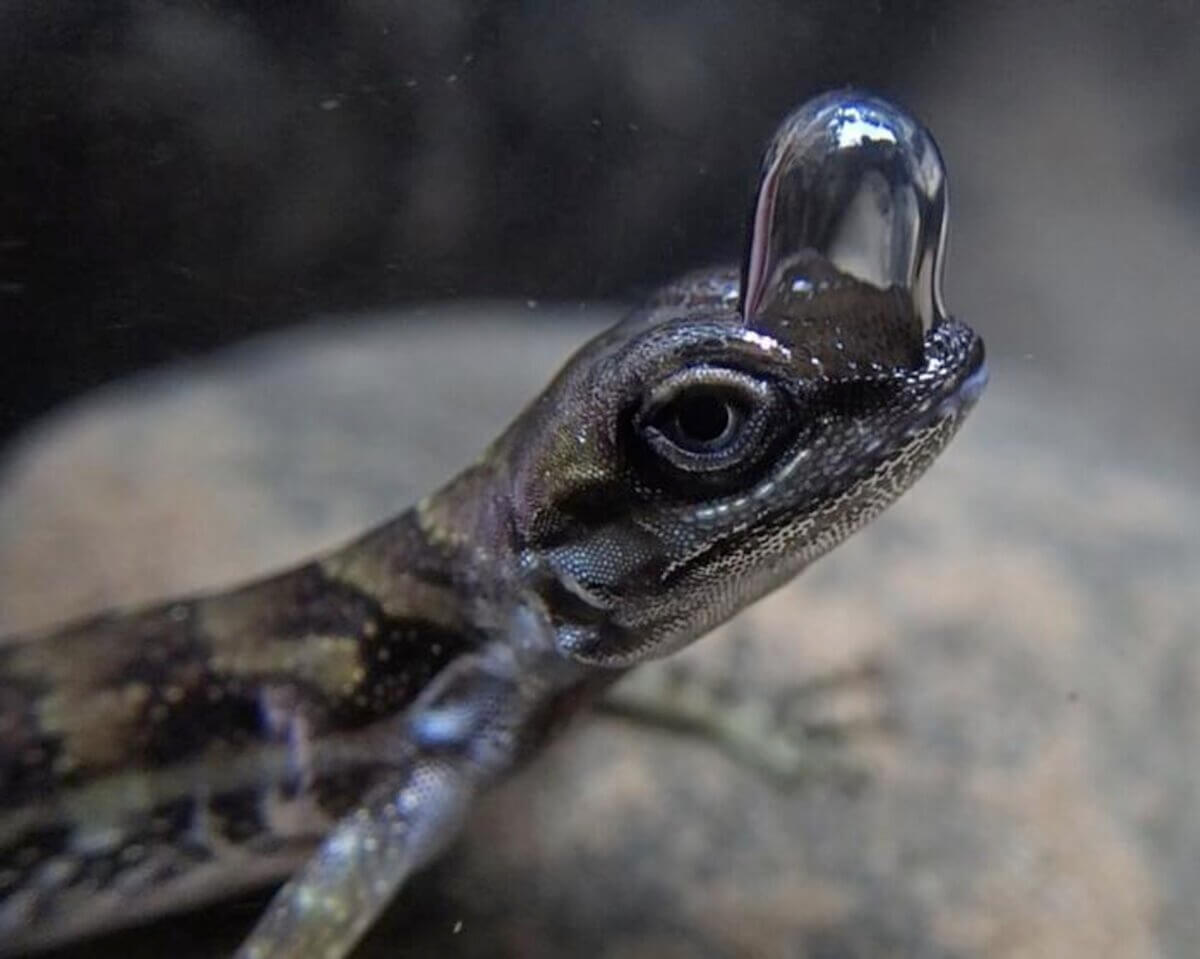 A species of semi-aquatic lizard produces a special bubble over its nostrils to breathe underwater. (Credit: Lindsey Swierk) The semi-aquatic species of lizard, water anole (Anolis aquaticus) found in Costa Rica have recently shown to have a unique way to evade predators, they dive into the water and create their own air bubble to breathe from! This marks the first known vertebrate that uses its own air bubble to breathe underwater, a feat previously only seen in invertebrates like beetles and spiders. The mechanics of this rebreathing system are remarkable. When threatened, a water anole will quickly dive underwater and exhale a bubble that adheres to either the top or sides of its head. The lizard’s skin contains microscopic hair-like structures called spinules that trap air and repel water, allowing the bubble to stick to its body. Throughout its dive, the anole “rebreathes” this bubble at regular intervals, appearing to recycle the trapped air supply. The bubble can be observed appearing and disappearing around the head with each respiratory cycle as specialized scale and head structures help move air between the body surface and nostrils. To read more about this study, visit here! Such a cool little lizard man! Nicknamed the Chicken Nuggets of the Forest, this finger sizes lizard is showing it is a true survivor! Friday, January 17 2025New species of African House Snake discovered after decades in captivity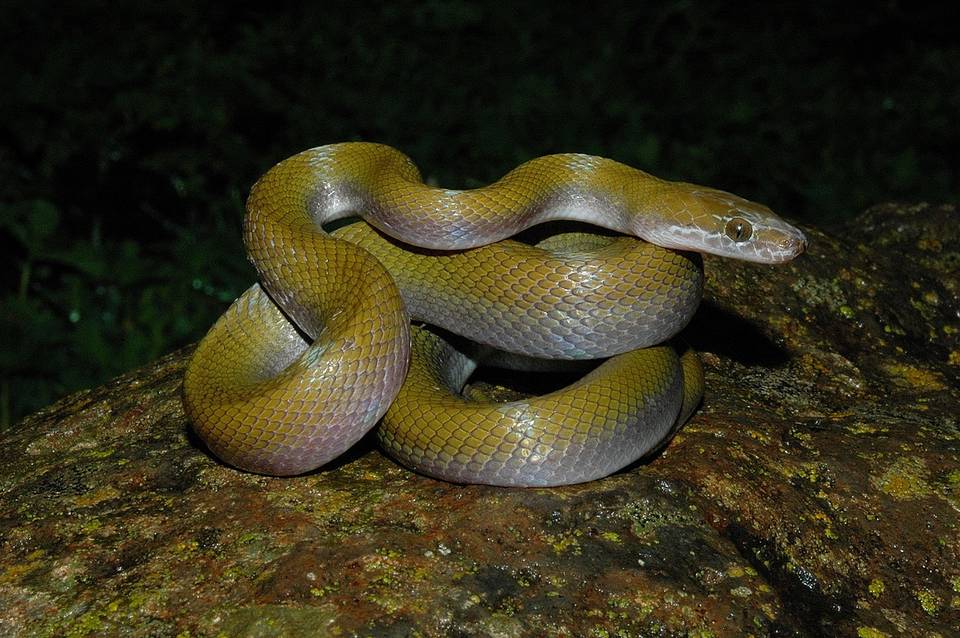 A Boaedon broadleyi, or Broadley’s African house snake. Photo from Petr Nečas, shared by Jakob Hallermann When a traveling biologist kept a snake he found back in the 80's and made it a specimen when it did not survive, the last thing he would have expected was decades later it would be identified as a new species, but that is exactly what happened! Using DNA samples from a variety of specimen samples, attempting to better understand the African House snake grouping, researchers, Jakob Hallermann and Oliver Hawlitschek, discovered a new 4 foot species. In hopes of identifying some overlooked species, researchers collected DNA samples from museums in several different countries and from newly caught snakes, the study said. The analysis showed that some of the snakes from Ethiopia were genetically distinct. To read the full article, visit the Miami Herald here. Friday, January 10 2025The social lives of Pythons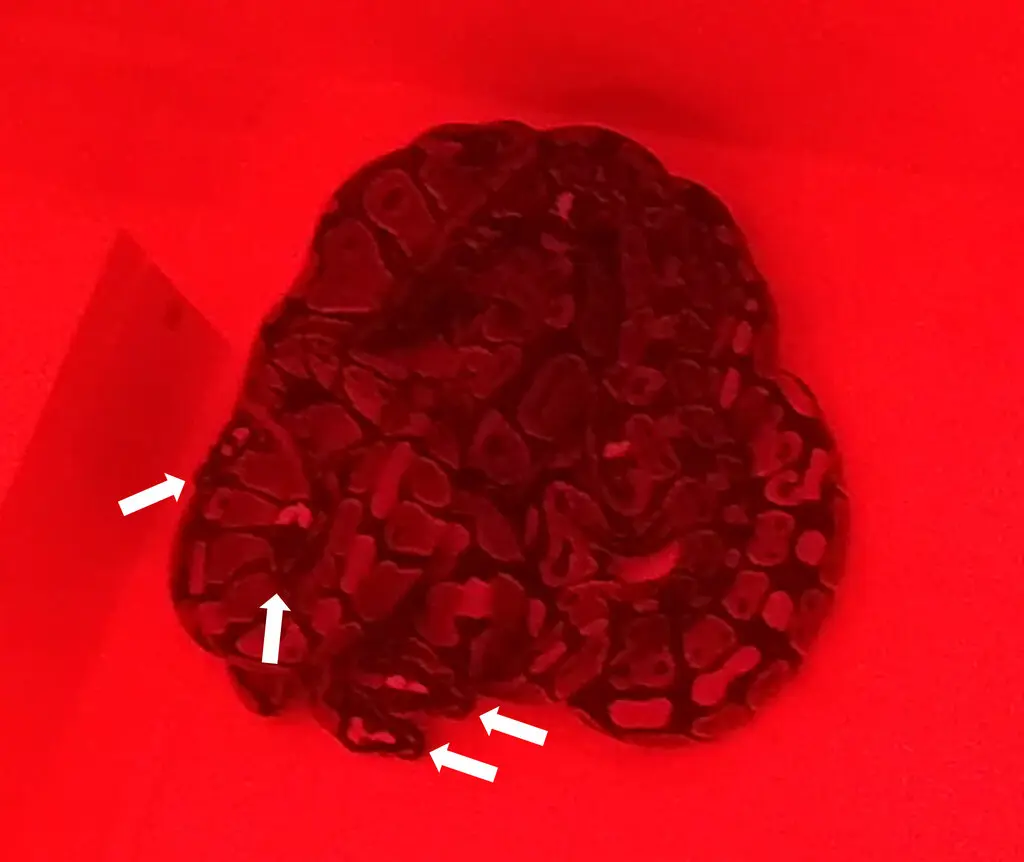 Ball pythons in a huddle, with white arrows to indicate their heads.Credit...Noam Miller and Morgan Skinner/Wilfrid Laurier University We have learned that a variety of snakes from rattlesnakes to some colubrid species have social lives in the wild and now a recent study is showing that pythons are social creatures too! Morgan Skinner, a quantitative ecologist who studied at Wilfrid Laurier University in Ontario created an environment with 4 hides and set to work with several different ball pythons to see exactly what happened. He published his results in Behavior Ecology and Sociobiology in November. Because ball pythons lay eggs and don’t have live births and have no need to hibernate, they seemed like the perfect study candidate. In 2020, Dr. Skinner and his colleague Tamara Kumpan placed a mixed-sex group of six pythons for 10 days in a large enclosure — one with enough plastic shelters for each snake — and left a camera running. To read the full article and see the video, be sure to visit the New York Times here. There is a link to the study in the article. Thursday, January 9 2025Salamander rule finalized In 2016 the US Fish and Wildlife Service published a temporary rule on 201 Salamander species and as of this January that rule is finalized. The 201 species covering 16 genre are now listed as injurious under the Lacey Act meaning they no longer can be imported into the country or transport or sold across state lines in the US. From the USARK Alert: The interim rule applies to all species in these 16 genera: Ambystoma, Andrias, Aneides, Aquiloeurycea, Calotriton, Chiropterotriton, Cryptobranchus, Desmognathus, Ensatina, Eurycea, Laotriton, Ommatotriton, Pachytriton, Proteus, Pseudobranchus, and Pseudotriton. You can read the full action alert here on USARKs page. Thursday, December 26 2024Raw Pet food recalled due to Bird Flu contamination A cat death in Oregon being linked back to the raw cat food made by Northwest Naturals, they are issuing a voluntary recall of their 2 lb raw turkey meals. I know many people often will use these premade diets in a rotation for some of their lizard species, so I did want to make sure reptile owners are aware. From Newsweek: Oregon Department of Agriculture State Veterinarian Dr. Ryan Scholz said in a press release on Tuesday that his organization is "confident" the pet cat contracted the bird flu by eating Northwest Naturals raw and frozen pet food. The full press release can be seen after the jump or you can visit Northwest Naturals website here. Continue reading "Raw Pet food recalled due to Bird Flu contamination" Friday, December 13 2024To save Rattlesnakes, we must change how their narrative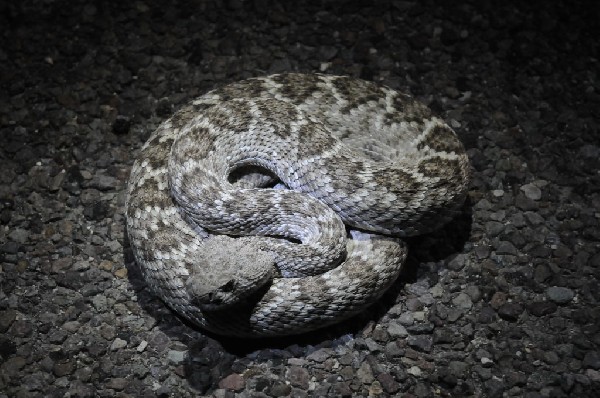 Inset photo by Jeff Barringer of my first Western Diamondback ever seen in the wild. Animal was seen at an event hosted in Sanderson Texas called Snake Days which was a conservation and educational event that brought reptile people from all over the world. I used this photo to respect the nat geo copywrites. They have amazing shots in the article! Rattlesnakes are one of the most demonized animals on the planet. Deeply beloved by their fans and often hated by others. National Geographic author Elizabeth Royte spent a great deal of time traveling the country and looking into how to change the perceptions of rattlesnakes. She learned a bit about them in nature along the way and a bit about our battle as those who love rattlesnakes on changing perceptions. At a time when populations of animal species globally have declined by an average of nearly 70 percent, wanton disregard for life—in the absence of imminent threat to humans—bothers Texas A&M University herpetologist Lee Fitzgerald. “The roundups do send a twisted message,” he says. “They’re not helping the way we think about biodiversity. We care about polar bears, but these snakes are worthless?” From working with field researchers to a visit to the hell that is the Sweetwater round-up, this is an amazing read. The hardest part to saving these species is changing perceptions on the animal itself. For the full article, visit Nat Geo here. Tuesday, November 19 2024ACTION ALERT SOUTH CAROLINA: The first wave of laws come to Florence In a move that will shock no one, the first what we can assume will be many laws relating to the Leibowitz/Taipan bite case has happened. Florence, S.C. has released new proposed exotics laws that impact more than reptile owners. From the USARK Action alert the proposed banned reptile portion is: Crocodilians twelve (12) inches or larger; You can read the full action alert on USARK's page here. Now one thing of note is the snake law is somewhat vague and can be easily adjusted to include any larger snake unfortunately. Simply using the wording large, dangerous OR rather than AND is hugely problematic from someone who has worked in animal control and seen how people will twist those words, but that is just my opinion and experience. I would expect to see far more of these laws popup in South Carolina over the next year. The damage one person can do to our hobby is immense. Thursday, October 31 2024Oldest tadpole fossil discovered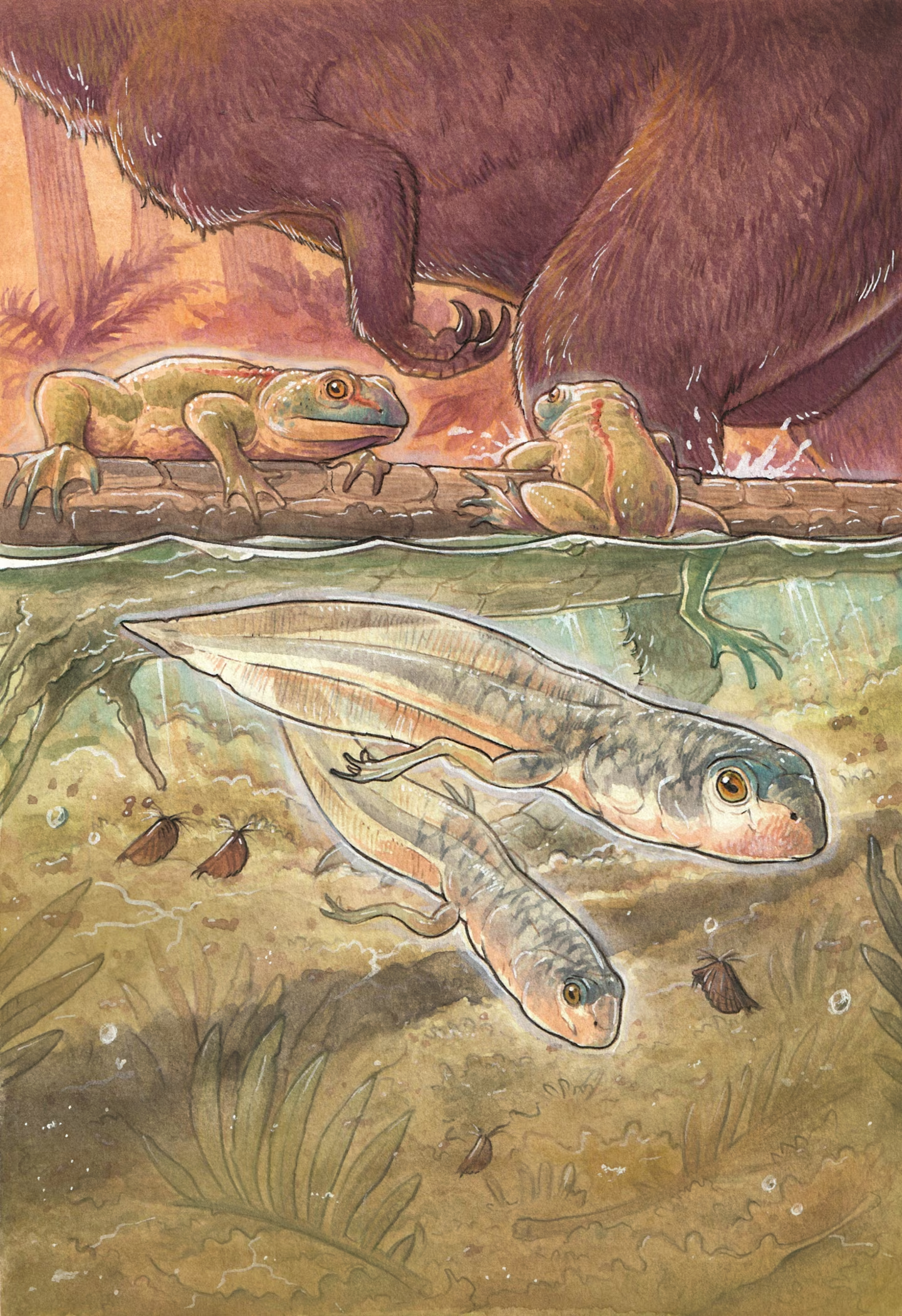 Tadpoles and adults of the extinct frog species Notobatrachus degiustoi (illustrated) lived in temporary ponds in what is the Patagonia region of Argentina today. Illustration by Gabriel Lío While searching for dinosaurs in the sediment and soft ash, Palentoligist Federico Agnolín and his colleagues kept stumbling across frogs at their site at Estancia La Matilde in the Santa Cruz province of Argentina. They were finding all adult Notobatrachus degiustoi, which is an extinct species. They believed that the frogs at the time did not have a tadpole stage, but they were about to learn otherwise in a very exciting discovery! The researchers who described the fossil in Nature today estimate it to be between 161 to 168 million years old, beating the previous record holder by around 30 million years. The find provides solid evidence frogs have had a tadpole stage for at least that long. “It’s a beautiful confirmation of what many experts had suspected,” says herpetologist Alexander Haas of the Leibniz Institute in Bonn, Germany. Reconstructing tadpole evolution based on their diversity today, Haas and others previously predicted that tadpoles would have existed this early on. The tadpole was surprisingly similar to modern tadpoles! To read the full story, visit National Geographic here! Wednesday, September 18 2024For the Love of Crusher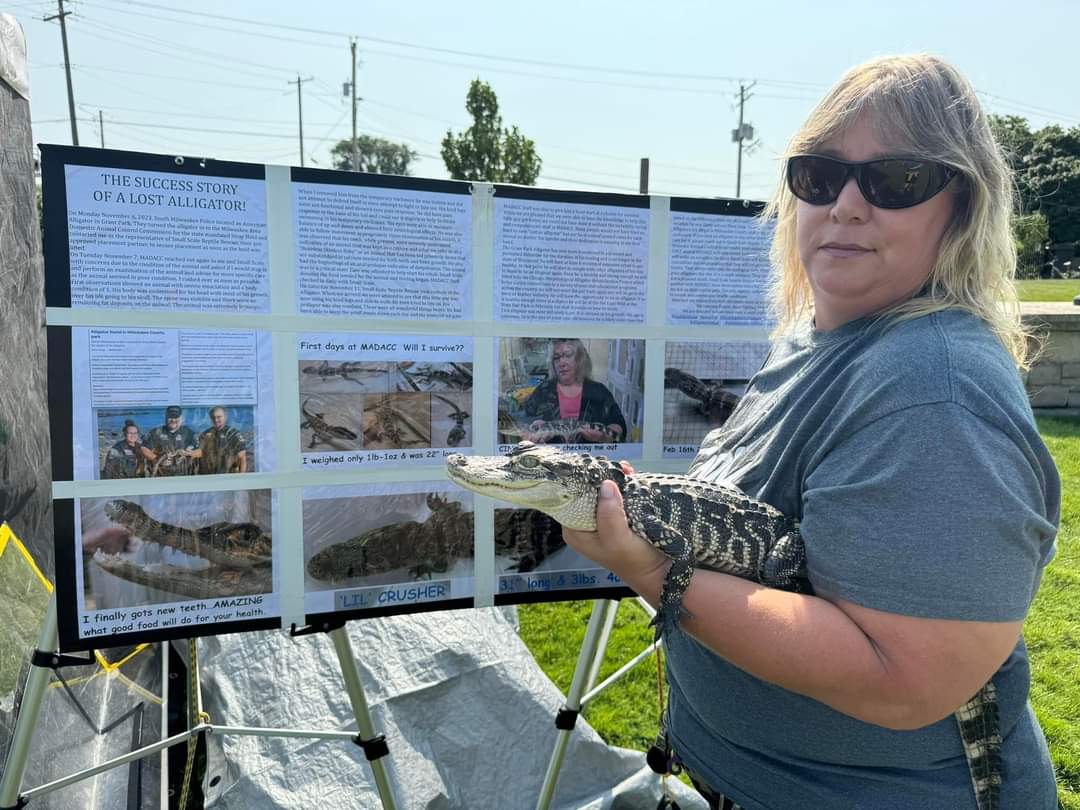 Photo of Lil Crusher and I in August at an educational event. He is well on his way to being healthy here. When I got the text about the alligator that was found by Lake Michigan in November I never realized how attached to him I would become, but ya know, I should have. When the grizzled shelter manager tells me I need to come in because he is worried about the alligator, I should have figured that I would fall head over heels for an animal that I never would live with. He is named Lil Crusher, after Reginald "The Crusher" Lisowski a famous wrestler from our area and if you know me it makes even more sense that this guy is one of my special ones. On that cold November day, 3 South Milwaukee police officers made waves in our local media when they found an American Alligator in a park in Milwaukee WI on the shores of Lake Michigan, the local media went RAMPANT with stories. We had just had the flamingos blown off course by a hurricane, did the alligator come that way too! Did it maybe swim up here? The stories were simply ridiculous. Continue reading "For the Love of Crusher" Friday, July 19 2024Wednesday, June 19 2024Vans pulls misguided ad Over the weekend Vans dropped their new ad featuring their new Cult X Diamonback BMX shoes with a very emaciated ball python. The Reptile Community was outraged and rightfully so. The animal was in poor condition. By Tuesday however, I had a very hard time locating the advertisement anywhere other than social media sites. Rather than adding to the millions of shares, I instead reached out to Vans to inquire if they pulled it and if so to thank them. I also offered to arrange for them to get a photo shoot with an actual diamondback. Today when I clicked the link via email and anywhere else I could find that would directly link it to Vans and the original ad, this is what I saw. They heard us loud and clear. While I don't expect Vans to know what a healthy snake looks like, I would expect their photographer and ad agency to know and to do better. I sincerely hope they hire a different team in the future and never use this one again. They heard us loud and clear. I'm quite sure it will be a few days before I hear back if ever, I am quite sure they have been inundated with messages from our community. I would love to see a statement from them. Hello Vans? Ya Got one? Tuesday, April 16 2024Reintroduced Siamese Crocodile exhibits first time nesting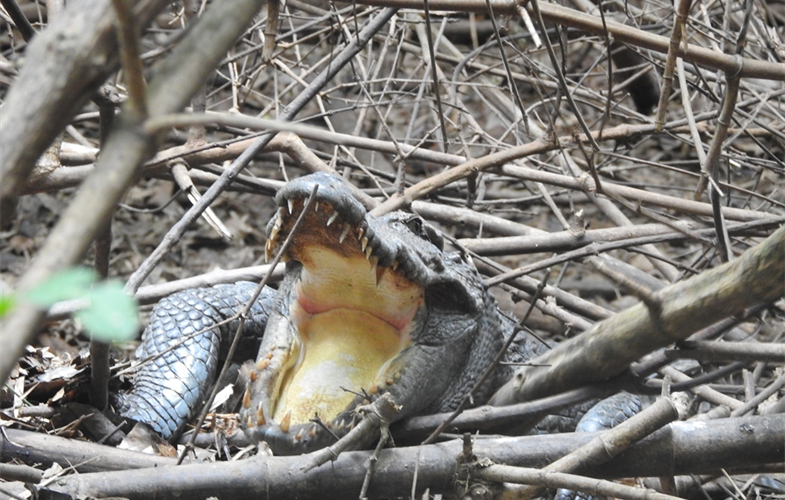 Photo Credit: ©WCS A head-started female Siamese crocodile nesting in the wild In a huge win for conservation, the first ever nesting behavior has been observed by reintroduced female Siamese crocodile that resulted in two hatchlings! The hatchlings are now being headstarted by the Wildlife Conservation Society. The authors note: “While collecting eggs for incubation in May 2022, we were able to identify a unique series of notched tail scutes on a female C. siamensis as she aggressively defended a nest. They have managed to reduce the mortality with their headstart program by an amazing 90%! To read the paper and full story, click here. Monday, April 15 2024Can a virus save Frogs from fungal disease?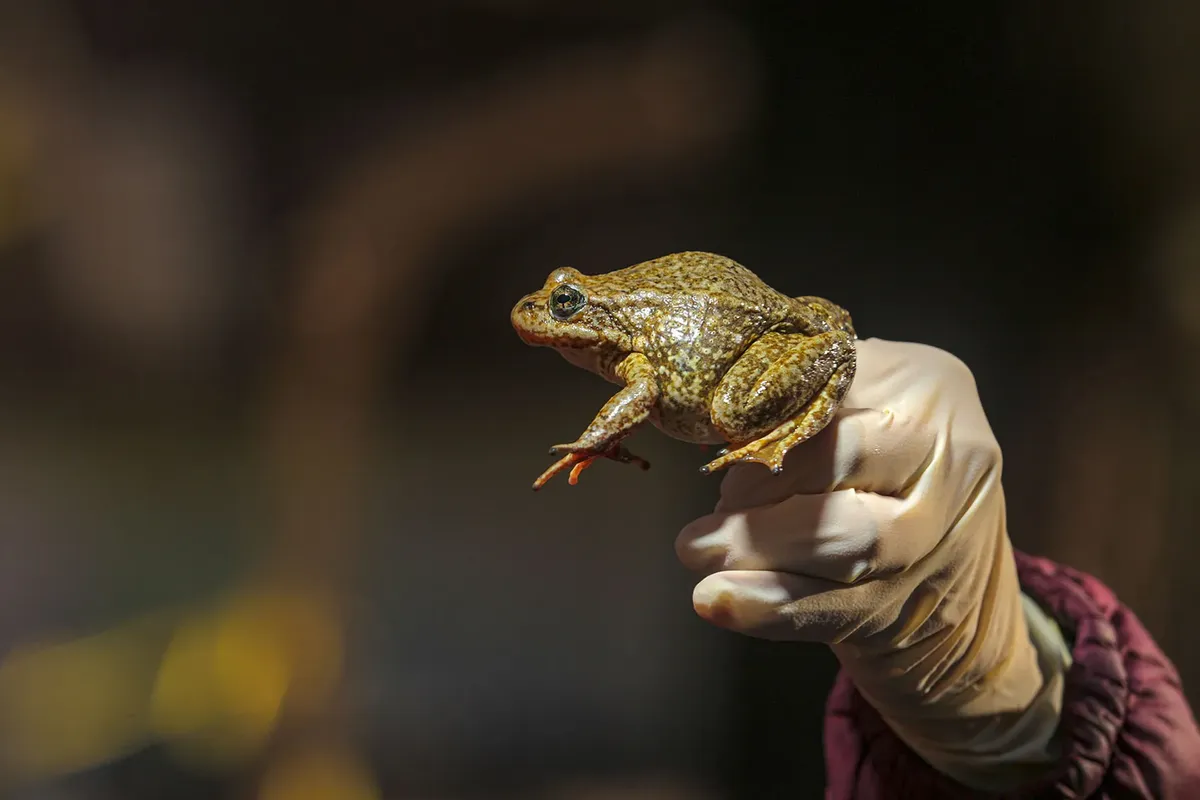 USGS biologist holds an endangered yellow-legged frog recovered from a fire-ravaged stretch of Little Rock Creek, just off Angeles Crest Highway 2 near Wrightwood in the San Gabriel Mountains. (Irfan Khan / Los Angeles Times via Getty Images) USGS biologist holds an endangered yellow-legged frog recovered from a fire-ravaged stretch of Little Rock Creek, just off Angeles Crest Highway 2 near Wrightwood in the San Gabriel Mountains. (Irfan Khan / Los Angeles Times via Getty Images)For over 500 species of frogs, Batrachochytrium dendrobatidis or more easily BD has been devastating. It has decimated populations worldwide and lead to extinctions of of 90 possible species threatening more world-wide. Scientists have been struggling to come up with a cure of any sort and have started to look at the possibility of infecting the fungus with a virus. Meet BdDV-1, a viral fragment discovered by scientists whose paper was recently published by the journal Current Biology. The researchers found it in much the same way that one disentangles a knot, by pulling on individual threads to see where they lead. While examining the BD fungus to learn about weaknesses, they discovered a single-stranded DNA virus trapped within the genome of the fungus. Although this only applied to certain strains, when infected they produced fewer spores than the uninfected fungi. Now the next step is to see if researchers can clone and engineer this virus so that it kills BD and saves the frogs. Now the question remains if they can reenginer the virus to change how it impacts the virus. To read more about the process, visit Salon here. |
Our Sponsors CategoriesSubscribe |

|

|

|
|

