Reptile and amphibian newswrap: Pole dancing with gators and pot, new species of snake discovered, peripatetic Galapagos giant tortoise
By kingsnake.com · November 28, 2012 10:52 am
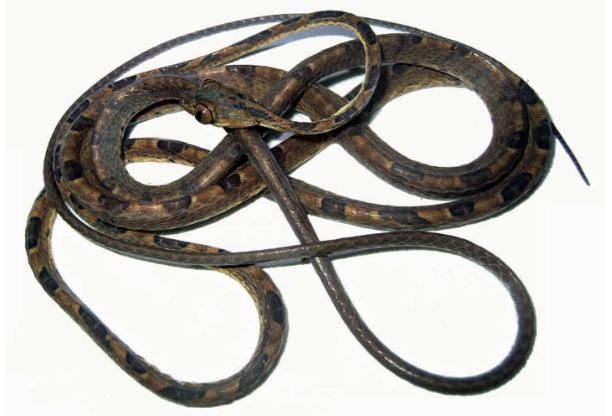 Scientific American reports a new species of snake, Imantodes chocoensis, has been identified in the tropical region of Chocó:
Discovered by a group of zoologists led by Omar Torres-Carvajal from the Museo de Zoología QCAZ in Ecuador on 24 April 2007, I. chocoensis was described based on several live individuals and preserved specimens that have been sitting in a number of Ecuadorian and American natural history museums, unidentified since 1994. Also known as the the Chocoan blunt-headed vine snake, it was distinguished from its relatives through an analysis of its DNA, morphological features, and colour patterns. Read more...It's like an Onion story, but it's real life. Police raided an indoor pot growing facility in Washington State, only to find it being guarded by alligators. Also present: An exotic pole dancer and her pole. The cops put the gators in a tub, and fed them some raw chicken before removing them. No, really. This happened. Read more... Charles Darwin predicted it, and modern GPS technology proves it: The Galapagos giant tortoise sure gets around:
[S]cientists with the Max Planck Institute for Ornithology and the Charles Darwin Foundation have used GPS technology and 3-D acceleration measurements to find out that the dominant male tortoise will wander up to 10 kilometers into the highlands of the island - but only the fully grown animals migrate, the young tortoises stay in the lowlands. Why? And why don't they rest during the dry season? It's a Chelonoidis nigra mystery of science. Charles Darwin anticipated that the giant tortoises wandered large distances. In the cool dry season, the highlands of Santa Cruz are engulfed in fog which allows the vegetation to grow despite the lack of rain. In the lowlands, however, there is no thick layer of clouds and the tortoises' vegetation is not available year round. Adults, which can weigh up to 250 kilograms, spend the dry season in the higher regions at an elevation of 400 meters above sea level. However, since the food is not as nutritious there, they trek back to the lower zones where there is succulent vegetation, as soon as the rainy season begins. Read more...