


Yellow-bellies and Redears
By Richard Bartlett · April 3, 2023 7:41 am
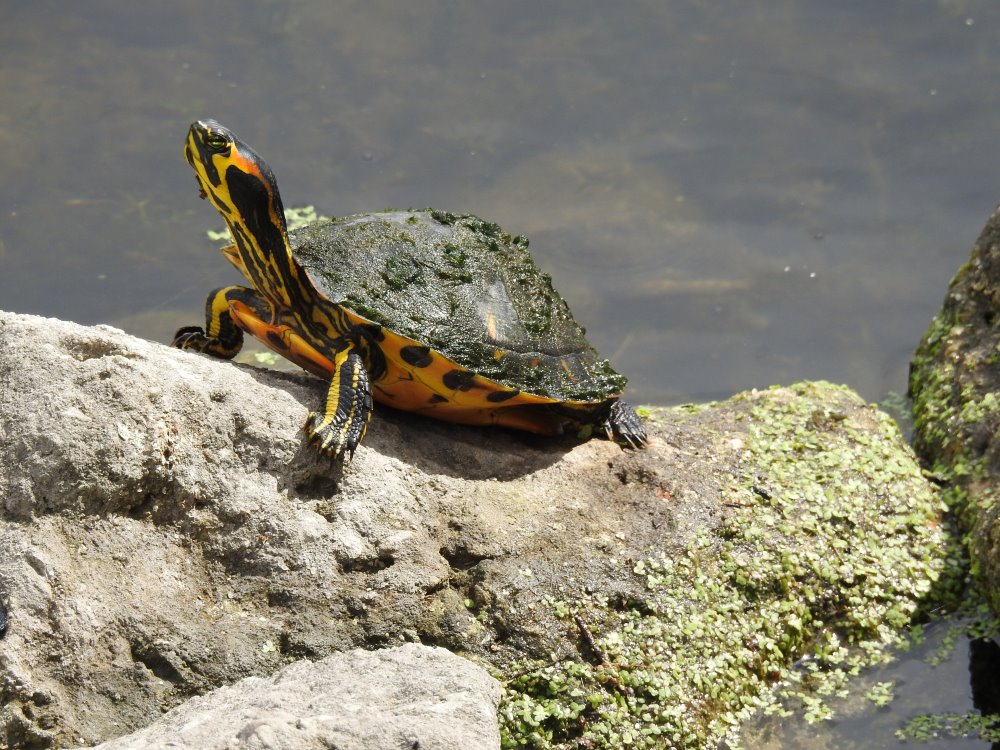
Yellow cheeks and reddish ears. We can only guess at the genetics. Yellow-bellied Sliders, Trachemys scripta scripta, are among the more abundant of the sliders in the southeastern USA. At the northwestern areas of their extensive range they intergrade with the “once” more westerly Red-eared slider, T.s. elegans. I placed the word once in quotations simply to draw attention, for nowadays, due to releases and escapes, the Red-ear may be found not only throughout the range of the Yellow Belly but also far to the north and south of it as well. The two subspecies have much in common, not only genetically but in general appearance—they’re brightly colored as juveniles, have much the same carapacial appearance, darken appreciably (males the most) with age, attain the same adult size, and have plastral markings are almost the same. One sub species has red ear markings, the other has yellow facial blotches that are often suffused with some degree of red. When Patti and I go across the street to the Wetland Park, one of the first herps we see are the Yellow-bellied Sliders. In early summer we can find hatchlings amidst the sedges at the shoreline. Throughout the days during all 4 seasons, as long as the sun is shining, we can usually scout out a half dozen or more adults basking atop floating vegetation or straddling emerging logs or floating alligators (‘gators also eat turtles). As I said, the taxon is common to the point of abundance, and we are glad this is so.
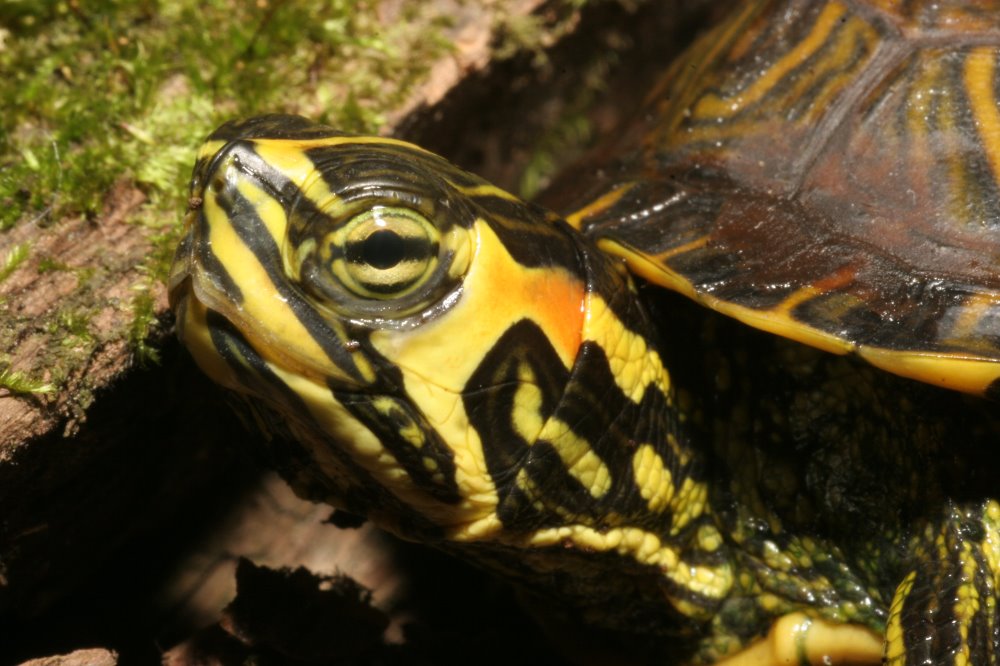
This baby slider was surrounded by both Red-ears and Yellow-bellies. It's probably a Yellow-belly, but who knows?
Yellow-bellies and Florida Red-bellies. Were the 'gator larger it'd probably be thinking of turtle soup.