
mobile - desktop


  |
| mobile - desktop |
|
 |
 Contact Sales! |
News & Events:
|
|
Reptile & Amphibian
News Blog Keep up with news and features of interest to the reptile and amphibian community on the kingsnake.com blog. We cover breaking stories from the mainstream and scientific media, user-submitted photos and videos, and feature articles and photos by Jeff Barringer, Richard Bartlett, and other herpetologists and herpetoculturists.


Thursday, February 26 2026Wednesday, February 25 2026Friday, February 20 2026Meet The Baroness - The world's longest snake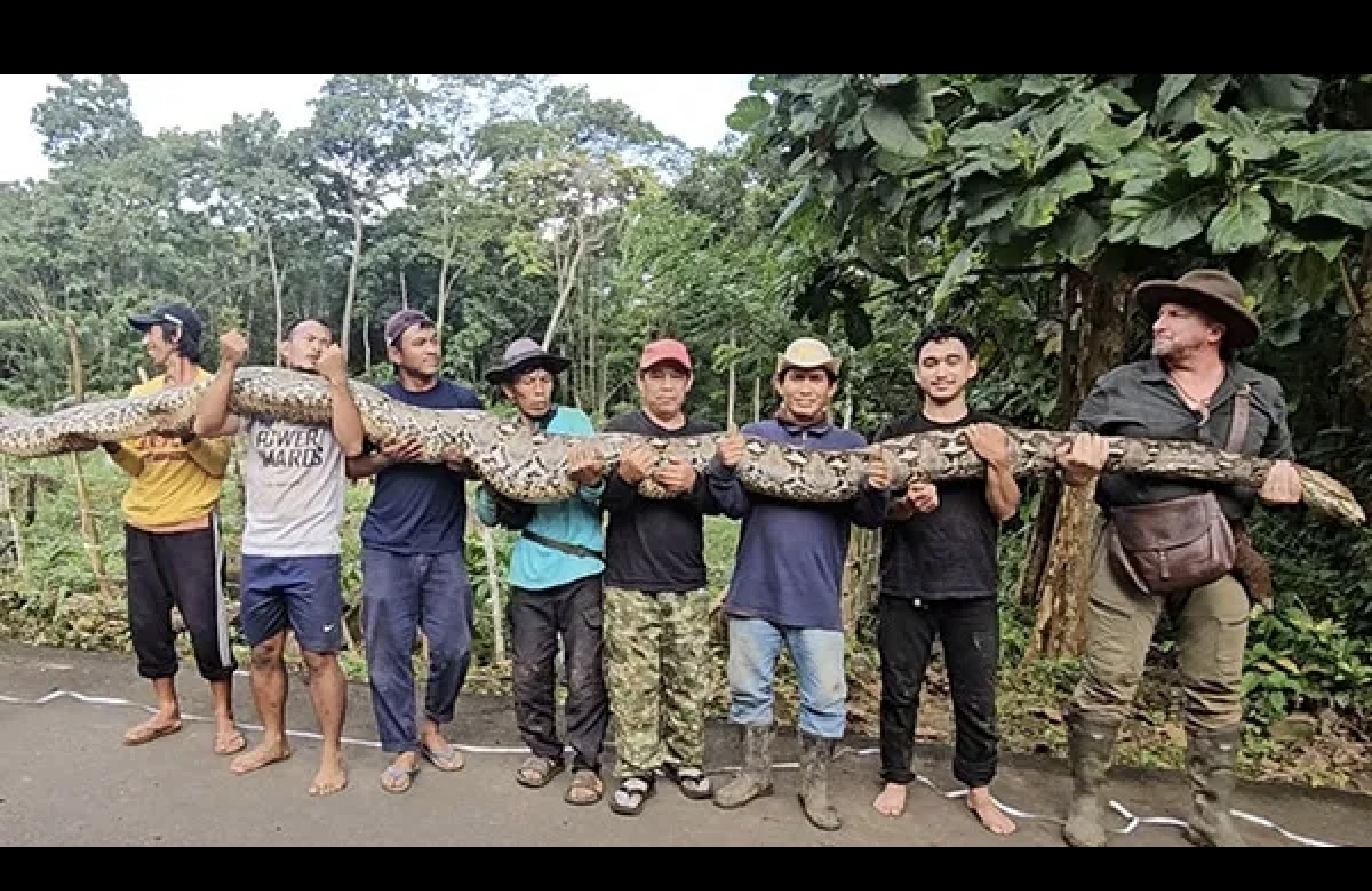 Ibu Baron aka "The Baroness" and the crew In late 2025, in Sulawesi, there were reports of a giant snake roaming. It was reported to be the biggest ever seen! Licensed snake handler Diaz Nugraha and natural history photographer Radu Frentiu headed out on an expedition to confirm the rumors of the snake! There they found Ibu Baron or "The Baroness". According to Guinness World Records, the snake measured 7.22 meters using a surveyor’s tape. She was also weighed inside a canvas sack on scales normally used for rice, coming in at 96.5 kilograms, or about 213 pounds. She hadn’t recently eaten, which is worth noting, since a large meal can dramatically inflate a python’s weight. Ibu Baron is now living in captivity with Conservationist Budi Purwanto. To read the full story, click here. We have video of her measuring for the official Guinness World Record after the bump so check that out too! Continue reading "Meet The Baroness - The world's longest snake" Wednesday, February 18 2026Tuesday, February 17 2026Monday, February 16 2026Friday, February 13 2026The mechanics behind the viper strike By the time a human brain registers danger, a viper’s strike is already over. Here’s how these snakes can move faster than mammalian nervous systems can respond. getty For years people have been fascinated with the speed of a snake's strike, especially that of a venomous snake. The question of which is fastest is always the biggest, it's the viper btw. But what really are the mechanics behind the how and is there a way that we can avoid it? In practical terms, this gap between perception and movement creates a hard physiological limit. No amount of training, vigilance or experience can meaningfully overcome it once a strike has begun. Want to geek out and learn about how snakes move? Click here to learn more. Thursday, February 12 2026Snakes on a Train? 1 / 1Do Western Ghats King Cobras, Ophiophagus kaalinga, take the train? (a) View of Chandor Station, Goa, India, from below the platform, showing the vegetation and the concrete pillars, where the snake was found. This location is atypical and unsuitable for king cobras. (b) Laborer accommodations lie just a dirt path away from the concrete pillars where the king cobra was recorded. (c) The snake emerged from beneath a pile of railway tracks stored at the site for ongoing railway maintenance and repair. (d) An Indian Cobra (Naja naja) on a windowsill in the moving Lokshakti Express train near Valsad, Gujarat State, India. Photos by Dikansh S. Parmar (a, b), Sourabh Yadav (c), and Sameer Lakhani (d). Credit: Biotropica (2026). DOI: 10.1111/btp.70157 We all have laughed at the movie "Snakes on a Plane" but now the reality of snakes on a train is all too true for the cobras in India! Many travelers started reporting, with photos, the Western Ghats King Cobra (Ophiophagus kaalinga) riding on the train. These vulnerable snakes started popping up in odd locations in the country, in ranges that are not hospitable to their needs. In 2017, study author Dikansh Parmar was volunteering with a local animal rescue group that received a call about a snake onboard a train. The incident is now included as part of this study. Another train rescue occurred in 2019, which ended up in a newspaper report in Uttarakhand. An incident occurred in 2023, in which a snake catcher from Gujarat State snapped a picture of an Indian Cobra sitting in a train window. To read more about the study, click here! Wednesday, February 11 2026Tracking the animals in the Florida Everglades - Meet the Croc Docs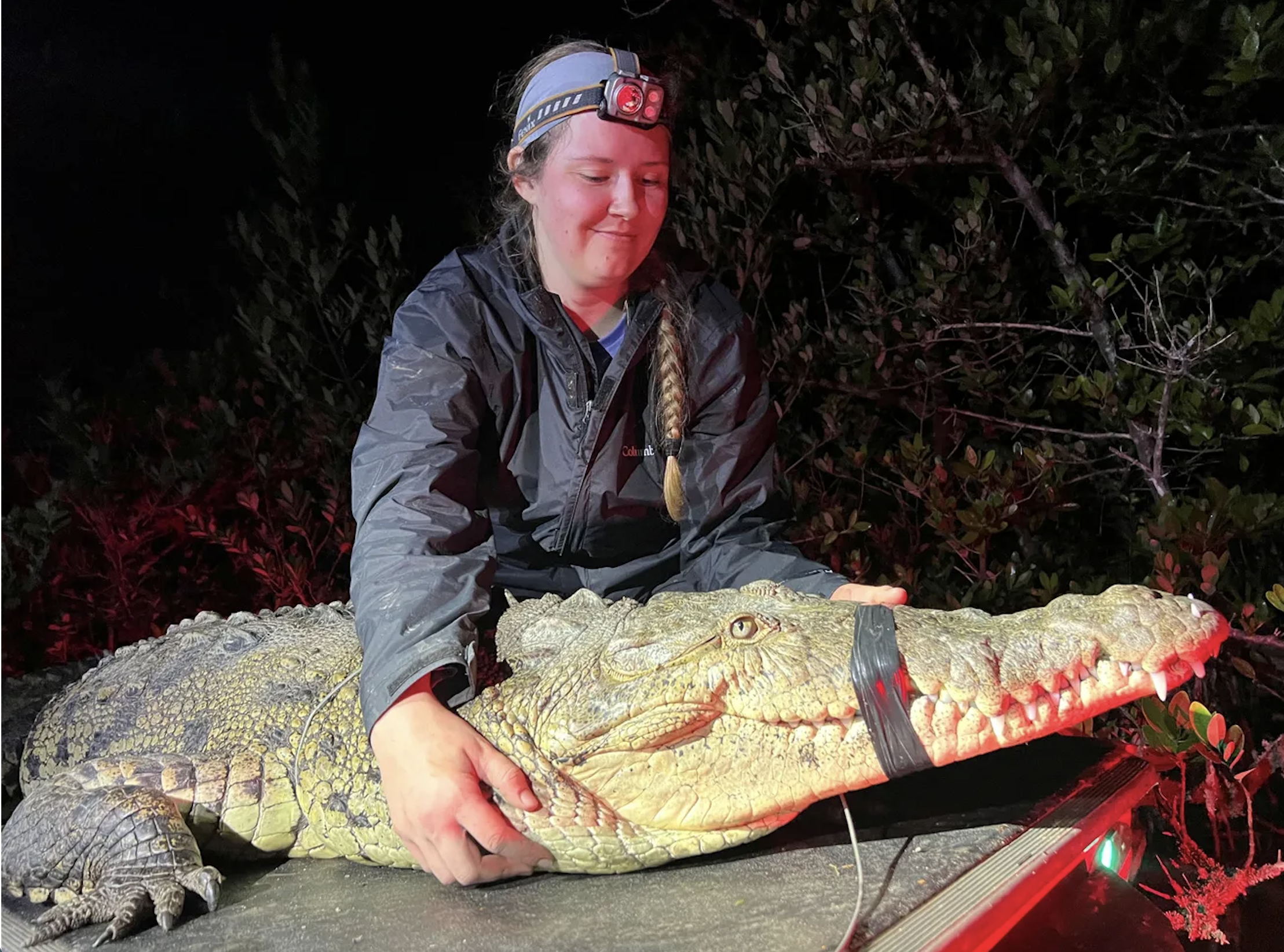 Bryna Daykin, crew leader, is on an airboat during an American crocodile capture survey. (Photo by UF/IFAS Croc Docs) Today is International Women in Science Day and what better way to celebrate than to highlight some of the "Croc Docs" who track and research the alligators and even burmese pythons in the Everglades. The "Croc Docs" is a program through University of Florida Institute of Food and Agricultural Sciences (UF/IFAS) carry out overnight conservation research projects that checks data on alligator populations as well as tracking invasive species. For Pupo, a South Florida native, a career in science once felt unrealistic. Like many women in her family, she briefly considered medicine before rediscovering biology during her undergraduate years, inspired by female wildlife professors and peers who shared her passion. To read the full article about the work these women herpetologists are doing, click here. Monday, February 9 2026Reintroduction attempts give San Francisco Garter a second chance Jamie McNellis, a Conservation Specialist at the San Francisco Zoo, holds four-month-old garter snakes kept in enclosures at the San Francisco Zoo in San Francisco, Calif., on Thursday, Dec. 4, 2025. (Ray Chavez/Bay Area News Group) The San Francisco Garter Snake is amazingly beautiful and also very endangered, but now with the help of the conservation program at the San Francisco Zoo, they may get a chance at re-establishing their population! The largest current population of the snake lives on the property of the San Francisco airport and is quite protected but there is another area in Pacifica that conservationist from the Zoo have been preparing to help headstart a population of 115 babies for a spring release with more planned for the future! Those destined for Pacifica will be released into a habitat that has been upgraded for their arrival. The project included creating a new pond for snakes and red-legged frogs to thrive, and removing invasive Monterey Cypress and Monterey Pine trees. The work that went into this project is amazing and hopefully provides for a successful recovery for these gorgeous snakes! To read the full article, please visit The Mercury News here. This project was extensive and impressive! Kudos to the San Francisco Zoo for their work! Friday, February 6 2026Promoting Reptiles is Our Jam Man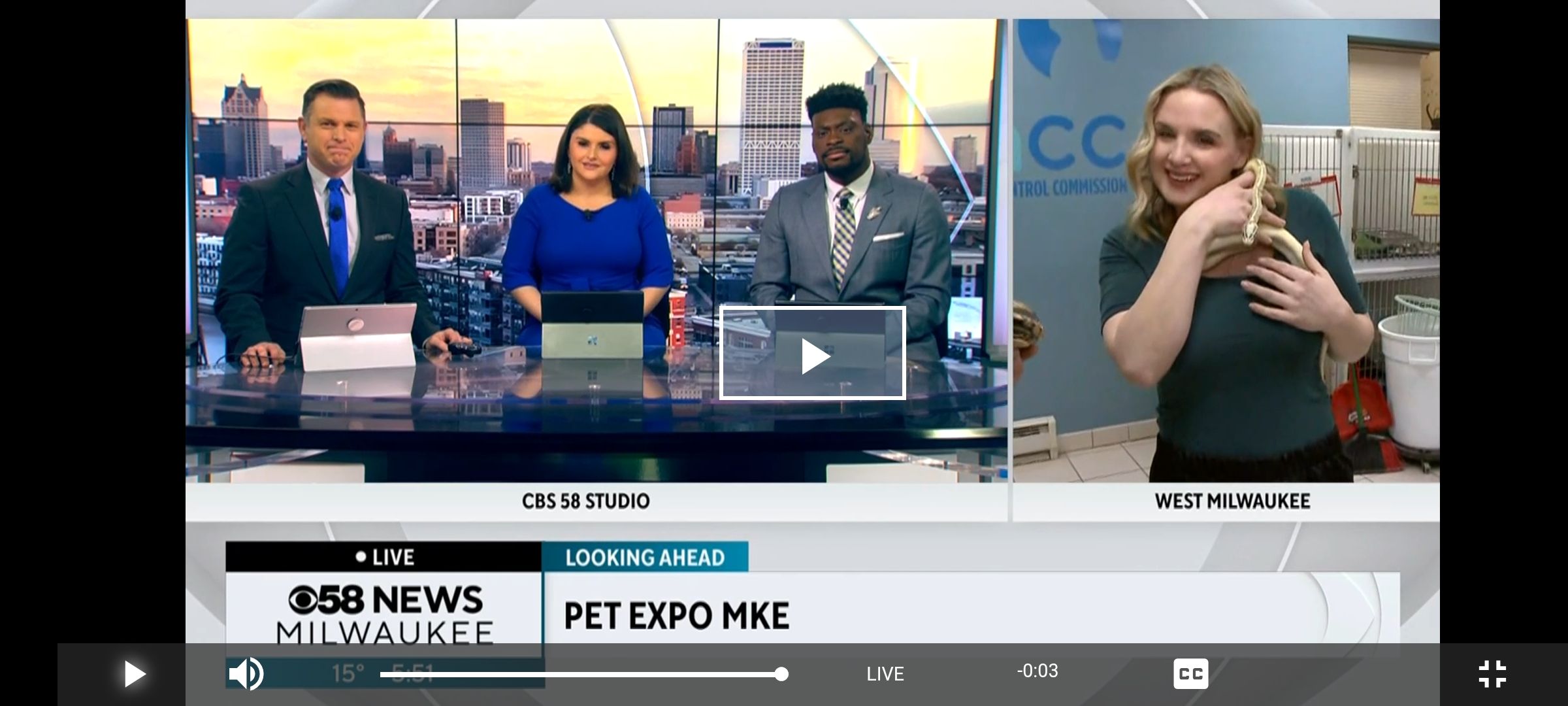 There is a Testament song that I adore called "Practice What You Preach" and I do. Going back in our blogs as far as 2011 (check it out here and take the pepsi challenge), you can see me talking about the importance of public outreach and having positive public outreach. With rescue, I have been doing that for 32 years because honestly, that is how you find animals homes. This weekend however marks the 21st year of Pet Expo MKE, a huge pet event with a focus on rescue where no animals are sold or adopted out. It is dry goods only. I have run the reptile exhibit for 20 of the 21 years and we bring it bay bay! Our event usually averages around 10,000 people through the door in one day. Reptiles always get people excited so I always end up on the news. You can check out the news piece here, I have two shots, the first one pops up right away and is a general one. Please forgive my poor ball python who started shedding yesterday and well, it's very hard to get the humidity up right now and he does not like humid hides. However, I got a reporter to snuggle that ball python. Typically, we just share the press tease of the event because I do a TON of press for it and usually do something goofy like this and just leave it at that, but I thought I would share a little about what exactly we do. Continue reading "Promoting Reptiles is Our Jam Man" Thursday, February 5 2026Origins of Chytrid discovered A devastating fungal pathogen has reshaped amphibian populations worldwide, but its true origins have long remained uncertain. By combining historical museum specimens, genetic evidence, and global trade records, researchers traced one major strain of the fungus back to Brazil, well before international frog farming began. Credit: Stock The devastation of Batrachochytrium dendrobatidis, otherwise known as chytrid fungus, to frog populations worldwide has been absolutely devastating, even wiping out entire species. How did it exactly start? Researchers think they finally have the clue. Researchers believe the worldwide movement of Bd is closely tied to the commercial trade in bullfrogs (Aquarana catesbeiana), a species native to North America that is raised for food in many countries. Bullfrogs were first brought to Brazil in 1935, followed by another introduction several decades later during the 1970s. To learn more and how they are working to stop more spread, read the full article here. Wednesday, February 4 2026Wisdom Wednesday - The Forums - The water is warm... Come on in! Actual photo of author working on forums, circa 2010 in either Tinley Park or Daytona I don't know about you but the world has been extra heavy lately. I find myself coming home and just locking down with my boyfriend, the animals and my music. Let's be honest, that is not healthy. I am having entire conversations with the bathroom frog y'all! Everywhere you turn it is gloom, doom and people want to fight. So you know what, I am going to be surfing our forums. We are still working on a lot of things behind the scenes and the forum update is still down the road a bit, but I am looking for people who just want to talk about their animals and leave the other stuff behind. Do you have some awesome pairings coming up this season? What are you keeping? Heck, how did you survive this cold? And while I don't want to deal with the fighting, I am game for a good debate so tell me what do you think of kingsnake hybrids? Yeah, it is a bit outdated, but that is a nostalgic charm. Let's give ourselves the escape to a simpler place where the biggest fight we had was over localities and hybrids. I hit the test forum to play a little and grabbed a few screen shots of our tips and toys section and the body of a message I posted. You will find that after the bump. PHFaust is in Da House. Let's play my kiddies. I'll see you on the forums. Continue reading "Wisdom Wednesday - The Forums - The water is warm... Come on in!" Tuesday, February 3 2026Kingsnake.com Past, Present and Future
Clint and Zac of Colubrid and Colubroid Radio will chat with Jon to discuss Kingsnake's past, present and future.
4:30pm Pacific Time Check it out!  Monday, February 2 2026 |
Our Sponsors CategoriesSubscribe |
|
|

|

|
|


.jpg)


