October 21, 2025
In 1995 I, along with some other reptile enthusiasts (Joe Forks,Gerry Salmon, Troy Hibbitts, and others) created a web page for gray-banded kingsnake hobbyists called The Alterna Page. By 1997 one thing led to another and it had morphed into what today is kingsnake.com.
That marks 30 years building and maintaining web communities for reptile hobbyists around the world. That is almost half my life. But all good things eventually must come to an end and after discussing it with our sponsors and staff I have concluded it is time for me to retire to pursue other things in my life, and for kingsnake.com to retire as well.
I want to thank kingsnake.com's primary sponsors, LLLReptile.com and RodentPro.com, along with the staff, Cindy Steinle, Melody Golubski, Mark Kennedy, Gerry Freymann, Dick Bartlett, and Ted Hatfield who volunteered his time looking after our servers. Special thanks go to Christie Keith. It is because of their dedication that kingsnake.com has lasted so long. As well there are literally thousands of other advertisers and community members that made kingsnake.com the place to be for herpetologists and herpetoculturists during its great years, from 1999-2016, when some would say the reptile culture was at it's peak. I met many of these thousands of people at countless reptile expos and consider many of them my friends.
Along the way kingsnake.com pioneered many new things for the reptile community and industry, such as topic/species based message boards (forums), live chat symposiums, reptile blogs, podcasts, and video interviews. Many of the fights in the forums were epic.
Most remembered will be kingsnake.com's classifieds, for many years the Internets most popular reptile and amphibian sales tool. It helped turn a random group of like minded hobbyists into a real industry. At it's peak there were over 2200 active classified accounts.
Officially kingsnake.com will close down on October 31,2025. If you have your pictures on the site, or forum posts or other content that you want to save, please do so now, they will not be available on our systems after October 31. If you have a paid classified or other advertising account your account services will still be functional until October 31, or when your contract runs out if sooner.
If you would like to continue to post classified ads until the close date of October 31,2025 please feel free to register for a free classified account and post away. We will be disconnecting our advertising purchase system this week.
Though we are closing we are not filing bankruptcy. We go out clean, all our debts settled and all our bills paid. And if someone is interested in continuing kingsnake.com's legacy I will entertain offers until October 31
This has been a very hard decision, but it is the right one, and it is the right time. I will miss being an integral part of the reptile hobby and culture.
- Jeff Barringer
February 20, 2024
Gallery photo by Doug Beckwith
A Colorado man illegally keeping 2 Gila Monsters as pets was killed after being bitten by one of them last week. The 12 inch Gila, a juvenile, was confiscated by Colorado Parks and Wildlife and will be transported this week to a lab in Greeley at the University of Northern Colorado, known for researching reptile venoms for use in pharmaceuticals.
Gila Monsters,
Heloderma suspectum, are the only venomous lizard in the United States and bites from them are quite rare, deaths even moreso, the last recorded death being in 1930. While it is illegal to collect wild Gila Monsters everywhere in their natural range in the United States, Gilas are relatively uncommon in the pet industry, but captive bred specimens are available to those that can obtain the proper licenses and paperwork.
Gila Monsters venom and their unique blood chemistry, have long been subjects of research by the pharmaceutical industry, and research has led to the Semaglutide diabetes drugs Ozempic, Rybelsus, and others.
Read more at:
Gila Death News Article LinkDecember 3, 2023
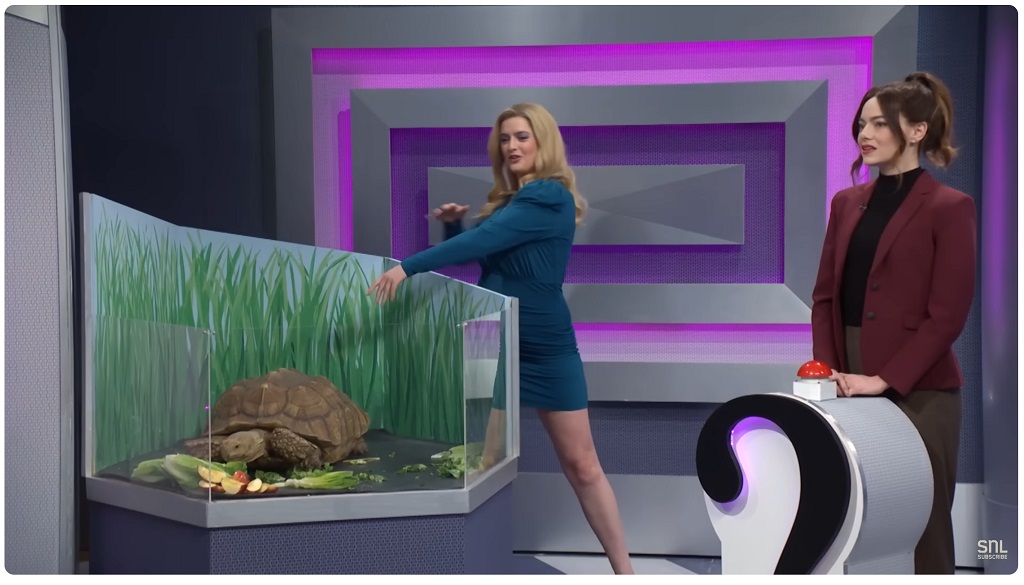
Not really, but this sketch, from the quiz show Question Quest on this weekends Saturday Night Live, is pretty much on point when it comes to the responsibilities that attach when you suddenly acquire a pet that will likely outlive you, your children, and your children's children.
Being a long time owner of a 70lb Sulcatta tortoise this sketch really speaks to me.
Read full article
April 20, 2022
Gallery Photo by user liamsherps
According to Stew Peters film ‘Watch the Water’ he makes the outrageous claim COVID-19 is snake venom.
"COVID-19 is a synthetic version of “snake venom” that evil forces are spreading through remdesivir, the COVID-19 vaccines and drinking water to “make you a hybrid of Satan.”
Seriously people. I don't even know where to begin with this but I will try.
COVID-19 is a VIRUS, specifically one of the family of Coronaviruses. It attacks the respiratory system and is spread by person to person contact.
Snake venom is a TOXIN. It is a toxin that contains different levels of hemotoxins, which destroy tissue and cells, and neurotoxins which attack the nervous system. They can only be transmitted through direct contact with tissues, usually via snakebite.
Toxins and viruses operate completely differently in the human body, both can make you ill, or even kill you,
but neither will make you a "hybrid of Satan". Whatever that is.
Read more here.
https://www.politifact.com/factchecks/2022/apr/19/watch-water/stew-peters-film-watch-water-ridiculously-claims-c/
I can't believe I even have to address this.
March 15, 2022
kingsnake.com has been hosting reptile businesses from around the world for over 25 years and for a number of years Bion Terrarium Center has been one of those businesses. Located in Kyiv Ukraine Bion has been the source for many unique specimens found in breeding facilities and zoos around the world, as well as supplying reptile keepers in Ukraine with feeders and supplies. With the Russian invasion of the Ukraine the company and it's employees are in dire need of support from the reptile community. If you are looking for someplace in the Ukraine to support with your donations we recommend that you reach out to Bion and offer them what assistance you can. Below is a message from Dmitri Tkachev, owner of the Bion Terrarium Center.
Dear Colleagues, Friends and Partners of BION all over the world,
As a result of unprecedented invasion of Ukraine from Russian Federation, BION’s activities have been paralyzed for an indefinite period of time and we lost all sources of subsistence.
BION Terrarium Center possesses a unique collection of animals (consisting of 2000 heads of breeding stock only), a number of successful long-term and promising breeding programs for many rare species, as well as a team of 30 employees; many of them have been working for more than 15 years. We would be grateful for any support you can provide!
Pls share this info as much as possible!
Read full article
June 7, 2021
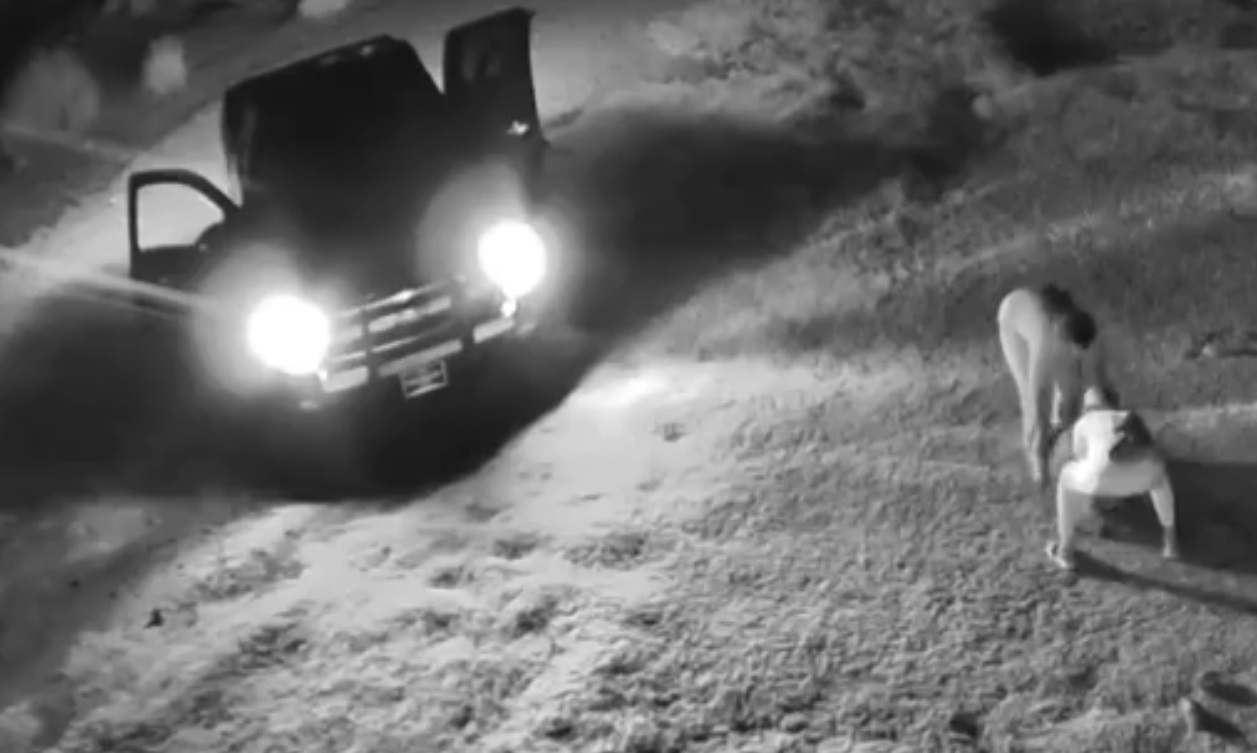
Two thieves in a Chevrolet Pickup Truck attempted to steal
this adult Galapagos tortoise from Gerry Fife's breeding facility in Arizona
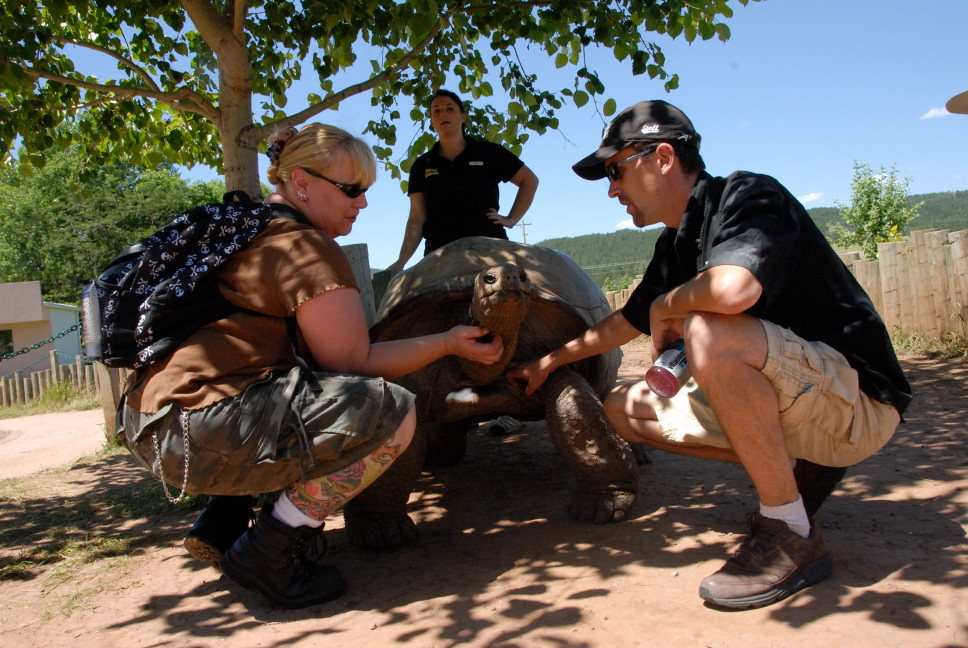
At 2:30a.m this morning two thieves attempted to steal an adult Galapagos Tortoise from the tortoise breeding facility in Arizona run by long time tortoise breeder Jerry Fife. The breeder sized female tortoise, a critically endangered species, was severely injured in the process and the decision was made to humanely euthanize her. A reward is now being offered to bring the two thieves to justice and video of the attempt is available on
Jerry's facebook page. It is hoped that between the herp community and the law enforcement community the miscreants can be identified and arrested. This is a devastating loss for Jerry who is one of the few successful private breeders of the species in the United States. Captive Galapagos tortoises, natives of the Galapagos Islands, can live up to 177 years in captivity and are the largest species of tortoise in existence. Some may weigh over 900lbs.
This is just one of a number of recent reptile thefts in the United States from outdoor captive reptile breeding facilities, causing many of those facilities to tighten their security.
Read full article
February 22, 2021
For the first time since launching in February of 1997 kingsnake.com's servers were knocked offline several times for long periods during last weeks polar vortex. The servers, located in Austin Texas, were victims of state mandated rolling blackouts that impacted many areas of Texas. Though the servers were backed up by a large uninterruptible power supply and a commercial generator system, those systems themselves eventually ran out of power. Additionally upstream internet switches also failed due to power issues thus causing a double-whammy, so when power was restored the servers were still unreachable. Those systems have all been restored for several days now and operations are mostly back to normal. Kingsnake.com will be totaling up the downtime and offering our advertisers credit to their accounts once we have determined the extent the outage. We apologize for not being able to provide you the level of service that you have come to expect for the last 24 years, but the situation was beyond our control.
That being said over the last 2 months kingsnake.com has been upgrading to a new set of Dell PowerEdge servers that are bigger, faster, and more capable than our old fleet of PowerEdge servers. For the first time our servers will be "viitualized", utilizing the multiple cores that the more current generation of Intel processors offers. This has required us to upgrade the core software that runs our servers several generations at once, causing a few bugs here and there that need to be squashed. We have gotten most of them but every once in a while a new one unexpectedly crops up. If you hit one of those bugs please let us know by using our contact form.
Read full article
October 31, 2019
kingsnake.com gallery photo
Police say a woman has been found dead with an 8-foot-long python wrapped around her neck at a snake-laden home 20 miles northwest of Lafayette. Details are sketchy at the moment and police have yet to point the blame at the Reticulated Python in question. The woman’s cause of death remains under investigation, with an autopsy scheduled Friday. About 140 snakes were found in the home, the woman owned about 20 of them and had visited the home about twice a week.
The reticulated python (
Malayopython reticulatus) is native to South and Southeast Asia, including India, Burma, Vietnam, Thailand, Malaya, Indonesia, and the Philippines. The worlds longest constricting snake, some specimens are known to exceed 20 ft. in length. An ambush hunter, it waits until prey wanders within strike range before seizing it in its coils and killing by constriction. Its natural diet includes mammals and occasionally birds. Small specimens eat mainly rodents such as rats, whereas larger individuals switch to larger prey including deer and pigs weighing more than 130 lb.
A popular species among reptile hobbyists Reticulated Pythons are common in captivity and have been bred in many different color varieties.
Human fatalities attributed to large constrictors are exceedingly rare but do happen. kingsnake.com wants to emphasize that people working with large or venomous species should always work with a partner to avoid mishaps and injury. No matter how well you think you know an animal it only takes one mistake to have disastrous and sometimes fatal consequences.
For more information on this story please check out
https://fox8.com/2019/10/31/indiana-woman-found-dead-with-8-foot-python-around-her-neck/.
August 15, 2019
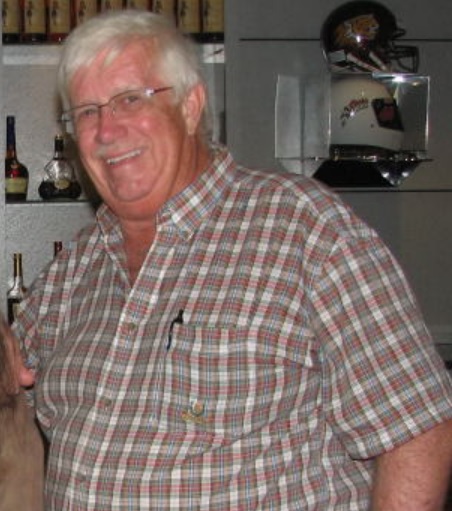
It is with much sadness that kingsnake.com has learned of the passing of reptile industry pioneer Don Hamper.
I first heard Don Hamper's name mentioned by John Hollister in the late 80s while taking a roadside break while hunting for reptiles out near Langtry Texas. It was all "Hamper had those" or "Hamper bred those" or "Hamper can get those". In the days before the internet word passed from herper to herper about other reptile people across the country(and around the world). Don Hamper's name was prominent among them and it seemed that in some way all herp roads led to Don Hamper. I finally actually met Don Hamper at an International Herp Symposium in the early 90s, where most of the reptile illuminati would gather to listen to lectures and compare keeping and breeding notes. By then Don was famous for hosting one of the few regular reptile expos, the All Ohio Reptile Show, as well as for his pioneering work captive breeding many of the species commonly found in the trade today, and through his work introduced literally thousands of midwesterners to the reptile hobby. Don's pioneering work both in reptile breeding and reptile expos dramatically helped expand the hobby into a true industry and his impact can still be seen in the many reptile breeders that sprouted up in America's heartland in the 90s and early 2000s, many of which are still active to this day.
Read full article