
mobile - desktop


  |
| mobile - desktop |
|
 |
 Contact Sales! |
News & Events:
|
|
Reptile & Amphibian
News Blog Keep up with news and features of interest to the reptile and amphibian community on the kingsnake.com blog. We cover breaking stories from the mainstream and scientific media, user-submitted photos and videos, and feature articles and photos by Jeff Barringer, Richard Bartlett, and other herpetologists and herpetoculturists.


Tuesday, January 31 2012Radio debate - Exotic Animal Industry in the U.S. A radio debate over whether citizens of the United States should have the right to own exotic pets is scheduled for tomorrow's The Diane Rehm Show on NPR at 11 AM Eastern Time. A radio debate over whether citizens of the United States should have the right to own exotic pets is scheduled for tomorrow's The Diane Rehm Show on NPR at 11 AM Eastern Time. For more information on the show and how and where to tune in, check out the Diane Rehm Show web site. The right to own pythons, tigers, chimps and other exotic pets depends on where in the US you live. The legal US wildlife industry doesn’t get much national attention unless someone is hurt, an exotic pet gets loose or an ecosystem is damaged. A new report links Burmese pythons released in the Florida Everglades to the severe declines of in the region's mammals. In Ohio police shot and killed dozens of exotic animals including wolves, lions, and bears reportedly set free by their distraught owner. As some fight for more regulation, breeders, brokers and owners of exotic pets say they are being unfairly targeted. Guest host Susan Page and a panel discuss battles over the legal wildlife trade. UPDATE: Feb 1, 2013 2:15pm - To listen to an archive of today's Diane Rehm Show you can stream it at http://thedianerehmshow.org/audio-player?nid=15416 Saturday, January 28 2012Wednesday, January 25 2012Rhode Island moves to ban Pythons, Boas and more Rhode Island is the latest entity to introduce legislation aimed at reptile owners and hobbyists. Introduced by Senators Tassoni, Lynch, Perry, and Pinga Senate Bill 2033 proposes a ban on the ownership of pythons and boa constrictors in Rhode Island, giving reptile hobbyists in the tiny state a double dose of regulation indigestion. Should it become law, anyone found in possession of these animals will face fines of at least $1,000. The bill as introduced prohibits ownership of the following: Alligators. Crocodiles. Pythons, and Boa constrictors. Rhode Island is the latest entity to introduce legislation aimed at reptile owners and hobbyists. Introduced by Senators Tassoni, Lynch, Perry, and Pinga Senate Bill 2033 proposes a ban on the ownership of pythons and boa constrictors in Rhode Island, giving reptile hobbyists in the tiny state a double dose of regulation indigestion. Should it become law, anyone found in possession of these animals will face fines of at least $1,000. The bill as introduced prohibits ownership of the following: Alligators. Crocodiles. Pythons, and Boa constrictors. To read the bill as introduced, click here. Although Rhode Island is a pleasant enough vacation spot, it is hardly habitat that would allow any of the proposed species to sustainably reproduce and become invasive. Additionally the bill as written provides no direction as to what to do with the animals currently in public hands, nor provisions to grandfather them in. Thanks to PIJAC for the heads up ~ Long-lost tortoise species not extinct after all, says genetic analysis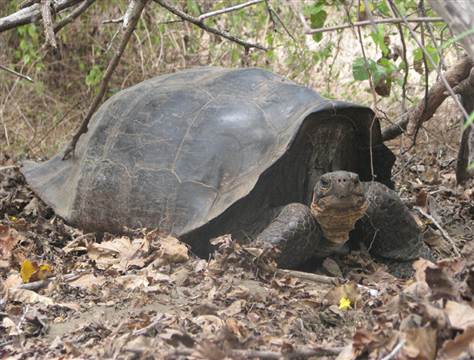 The Chelonoidis elephantopus tortoise was thought to be extinct, but the presences of its genes in hybrid stock tell a different story. The Chelonoidis elephantopus tortoise was thought to be extinct, but the presences of its genes in hybrid stock tell a different story.A genetic analysis, published in the latest Current Biology, found that DNA footprints of the long lost tortoise species, Chelonoidis elephantopus, exist in the genomes of its hybrid offspring. These tortoises turn out to be a mix of C. elephantopus and another giant tortoise from the area, C. becki. To read the full article, click here. Tuesday, January 24 2012Monday, January 23 2012Water monitor faces extinction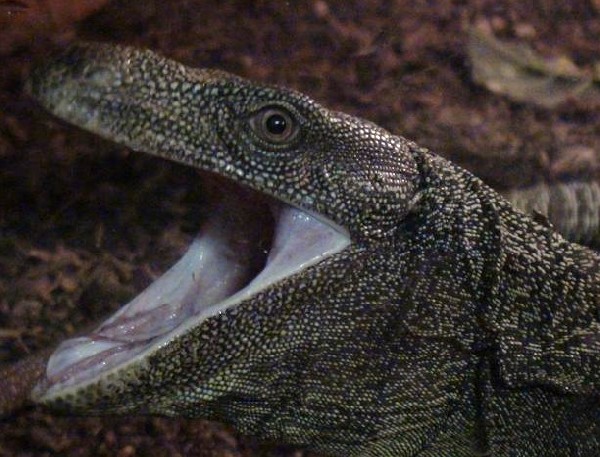 The Water Monitors (V. salvator) of Malacca are being hunted to extinction for meat, leather and medicine. The Water Monitors (V. salvator) of Malacca are being hunted to extinction for meat, leather and medicine. “Fifteen years ago, these reptiles could be easily spotted lazing along the river bank of scenic Malacca River. Now, they are hard to come by,” said city councillor Ronald Gan Yong Hoe. To read the full article, click here. Inset photo from our photo gallery, posted by VolleyBallJoe Saturday, January 21 2012Reptile world loses 2 days apart - Joseph Collins and Andy Price The reptile world is in mourning this week after losing two of it's own, people that changed the reptile world for everyone in a good way and whose loss leaves big holes in our communiuty. The reptile world is in mourning this week after losing two of it's own, people that changed the reptile world for everyone in a good way and whose loss leaves big holes in our communiuty. Center for North American Herpetology Co-founder and Director Joseph T. Collins suffered a heart attack and died on 14 January 2012 in Florida. Joe Collins was the driving force behind the Center for North American Herpetology. The CNAH brings a variety of herp news, some of it shared here on this page, and provided a data bank for researchers and professionals across the country a central networking data base. His list of books that he authored is immense and I would venture to say most herpers own at least one. His passion for the field was obvious and it was in the field herping that he left this community. But for others who knew him more intimately, Joe was a major inspiration. Mike Rochford, a wildlife research assistant for the University of Florida, knew Joe, and his life's path was forever changed because of that. From Mike: He was just an all-around great guy. He could always make you smile, laugh, or get excited about the future. He was the brains behind the Kansas Herpetological Society, the number one state herp society in the nation. And he had the ability to excite a passion among people in that state that will never be rivaled. In fact, KHS field trips brought in many people from other states as the reputation for a good time and great herping became more and more well-known. The state of Kansas really lost a champion for wildlife. Joe was "The Crocodile Hunter" before that ever became cool. And by that I mean he inspired a lot of people with his enthusiasm.  Andy Price, former state herpetologist for Texas Parks and Wildlife died January 16th, 2012, at Christopher House in Austin, TX, after a long fight against Multiple Myeloma. He was an avid field herpetologist and worked for Texas Parks and Wildlife Department from 1986 to 2008. From 2009-2010, Andy worked with the Texas Natural Science Center and taught at Southwestern University. Andy was passionate about fieldwork and was granted awards for his lifetime efforts in conservation of Texas reptiles and amphibians by the Southwestern Association of Naturalists and Texas Herpetological Society. He was given the Southwest Book Award for Literary Excellence for his book, Amphibians and Reptiles of New Mexico. He was Editor- in-Chief for the Catalogue of American Amphibians and Reptiles from 1994 to his death. Andy Price, former state herpetologist for Texas Parks and Wildlife died January 16th, 2012, at Christopher House in Austin, TX, after a long fight against Multiple Myeloma. He was an avid field herpetologist and worked for Texas Parks and Wildlife Department from 1986 to 2008. From 2009-2010, Andy worked with the Texas Natural Science Center and taught at Southwestern University. Andy was passionate about fieldwork and was granted awards for his lifetime efforts in conservation of Texas reptiles and amphibians by the Southwestern Association of Naturalists and Texas Herpetological Society. He was given the Southwest Book Award for Literary Excellence for his book, Amphibians and Reptiles of New Mexico. He was Editor- in-Chief for the Catalogue of American Amphibians and Reptiles from 1994 to his death.I was long time friends with Andy, we sat on many committees, panels, and discussions groups together and I and all the other Texas herpers that had a close bond with him will miss him greatly. And Andy was a friend to kingsnake.com, participating in the site in many ways. Andy was a kingsnake.com chat week guest way back in 2002. You can read the transcript here. I will miss Andy deeply. His sense of humor got me through some bad times and long meetings. Both Joe and Andy will be missed greatly by our community and their loss will be felt by all in many ways. Donations in Andy's name should be sent to support the “Field Research” section of the Society for the Study of Amphibians and Reptiles, Grants in Herpetology program: Dr. Kirsten Nicholson, SSAR Treasurer, Museum of Cultural and Natural History, 103 Rowe Hall, Central Michigan University, Mount Pleasant, Michigan 48859. Thanks to Cindy for helping with this post ~ Thursday, January 19 2012Burmese Python listing to appear in tomorrows Federal Register The USF&W Invasive Species Listing for the Burmese Python, Yellow Anaconda, and Rock Pythons will appear in tomorrows Federal Register, and here at kingsnake.com we have received a pre-release copy. At 161 pages the document is not light reading and is bound to make many in the reptile world upset. The USF&W Invasive Species Listing for the Burmese Python, Yellow Anaconda, and Rock Pythons will appear in tomorrows Federal Register, and here at kingsnake.com we have received a pre-release copy. At 161 pages the document is not light reading and is bound to make many in the reptile world upset.One of the nuggets gleaned in a quick scan is this gem - Many commenters stated that responsible owners would release or euthanize their snakes if this rule passed. We do not believe that this would be the case since pet owners will still be allowed to keep their snakes and sell or give them away within their State. Considering the whole premise of the Burmese Python "problem" is based on the governments repeated statements that these are animals that have been released into the wild by exactly those same people, that makes this claim hard to justify. To download and read the whole document, click here. Crocs behaving badly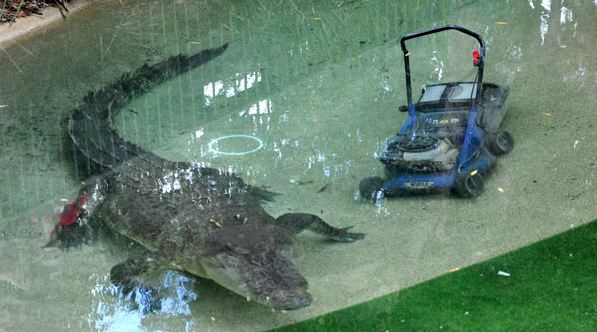 Elvis, a Saltwater Crocodile at the Australian Reptile Park, decided that he didn't want his grass cut one day. And really, once an 1100-pound animal decides what it wants, very little can be done to change his mind. Elvis, a Saltwater Crocodile at the Australian Reptile Park, decided that he didn't want his grass cut one day. And really, once an 1100-pound animal decides what it wants, very little can be done to change his mind."Before we knew it, the croc had the mower above his head," Mr Faulkner said. "He got his jaws around the top of the mower and picked it up and took it underwater with him." To see video footage, click here. Recently an Australian family had an unwanted house guest. A 1.7-metre (around 5.5 foot) Saltwater Crocodile was lounging in their living room! Jo Dodd said she was first alerted to the reptilian intruder by the frantic barking of their family dog. This croc was a wee baby; they can easily grow larger than 7 meters. Tuesday, January 17 2012DOI's Salazar announces 4 snake species to be bannedThis morning United States Secretary of the Interior Ken Salazar announced that the Burmese python, the yellow anaconda, and the northern and southern African pythons would be added to the Lacey act as injurious wildlife in order to restrict their spread in the wild in the United States.“Burmese pythons have already caused substantial harm in Florida,” said U.S. Fish and Wildlife Service Director Dan Ashe. “By taking this action today, we will help prevent further harm from these large constrictor snakes to native wildlife, especially in habitats that can support constrictor snake populations across the southern United States and in U.S. territories.” To read the official release, please see http://www.doi.gov/news/pressreleases/Salazar-Announces-Ban-on-Importation-and-Interstate-Transportation-of-Four-Giant-Snakes-that-Threaten-Everglades.cfm Monday, January 16 2012U.S. to approve ban on Burmese and African Rock Pythons After a five year plus battle and despite the best efforts of the reptile community, it is being reported by the Miami Herald that the U.S. is set to approve a federal ban on Burmese Pythons and most likely African Rock Pythons as well, next week during the presidents stop in Florida. After a five year plus battle and despite the best efforts of the reptile community, it is being reported by the Miami Herald that the U.S. is set to approve a federal ban on Burmese Pythons and most likely African Rock Pythons as well, next week during the presidents stop in Florida.Under a rule that has been the subject of five years of lobbying and debate in Washington, the United States intends to declare the Burmese python an “injurious’’ species, which would make it illegal to import or sell the snakes across state lines. At least one other species that has been found in the Glades, the African rock python, also is expected to be included on the “injurious’’ list that originally included nine large constrictors. As yet there is no word on the other 7 species on the proposed list, including Reticulated Pythons and Boa Constrictors, but watch this space for further news updates as they come in. For more information on the expected announcement see http://www.miamiherald.com/2012/01/16/2592593/us-set-to-approve-python-ban.html Sunday, January 15 2012Why so many snakebite deaths in India?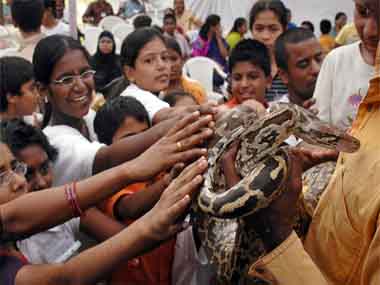 India is known as the land of the snakes, but "Land of Snakebite Deaths" might be more appropriate. With one of the highest mortality rates of snake bites in the world, what is India doing wrong? And can it be fixed? India is known as the land of the snakes, but "Land of Snakebite Deaths" might be more appropriate. With one of the highest mortality rates of snake bites in the world, what is India doing wrong? And can it be fixed?Snakebite is a major occupational hazard in a country where farmers typically walk barefoot along field bunds. While we can exhort them to wear footwear, it will take years for this long-observed practice to change. People also tend to walk in the dark without a torch. For several decades, the price of disposable batteries was prohibitive for ordinary villagers, but the use of the new, affordable Chinese-made rechargeable torches may reduce the death toll. The other habit that puts rural people in harm’s way is sleeping on the floor. When farm economy is floundering, advising them to sleep on bedsteads will only elicit blank, uncomprehending stares. If people get bitten and are rushed to the hospital, the lack of doctors, trained in treating snakebite, as well as the limited availability and effectiveness of antivenom serum, jeopardize their lives further. To read the full article, click here. After the bump, a video of a "snake girl of India" and her pet cobras. An example of non-medical treatments and improper animal management for the area. Continue reading "Why so many snakebite deaths in India?" Friday, January 13 2012Why did the salamander cross the road?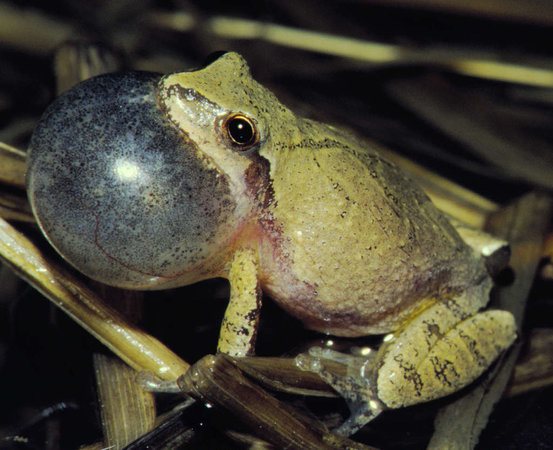 To breed, of course! One warm and rainy night, Devich Farbotnik happened upon the migration. That was six years ago and he hasn't missed one since. To breed, of course! One warm and rainy night, Devich Farbotnik happened upon the migration. That was six years ago and he hasn't missed one since.Farbotnik, an environmentalist, quickly realized that he had chanced upon - luckily, without also flattening - a surge of salamanders in the heat of their annual breeding rite. Jumping out of his truck, he kept oncoming traffic at bay as he shepherded the slithery paramours from one swampy side to the vernal pool on the other, there to hook up. To read the full article, click here. Thursday, January 12 2012Canada town relaxes restrictions on pets once deemed 'dangerous'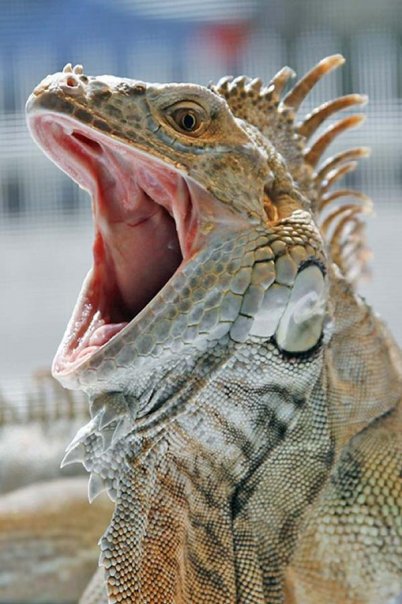 In a departure from the usual, Hamilton's Animal Control in Ontario Canada, has relaxed some of their reptile bans, while keeping others in place. In a departure from the usual, Hamilton's Animal Control in Ontario Canada, has relaxed some of their reptile bans, while keeping others in place.Hamilton’s animal control staff has loosened their initial guidelines, and will allow residents to own anacondas, pythons, and non-poisonous tarantulas. Also now allowed are three species of tarantula (the Chilean Rose, Mexican Red-knee and Pink-Toed) because of their more docile natures. It's not what we've come to expect, but does give home that local laws can be changed for the better. To read the full article, click here. Photo courtesy of Desiree Wong Tuesday, January 10 2012New ad rates page and saying goodbye to Paypal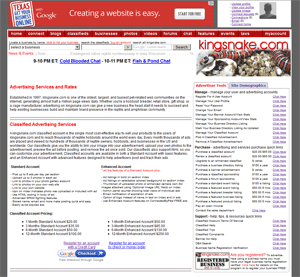 We spent some time over the holidays sprucing up and fixing a variety of pages on kingsnake.com, including building a brand new advertising rate page. We spent some time over the holidays sprucing up and fixing a variety of pages on kingsnake.com, including building a brand new advertising rate page. The new page makes it easier for our advertisers and sponsors to locate all current kingsnake.com advertising options and rates and access advertising accounts such as the classifieds, sponsorships, and banners. The new rates page includes a much more detailed overview of kingsnake.com's services and many samples and examples of our various ad platforms, including our new low cost "Featured" advertisements. Included in the new rates page is an advertiser tools tab with links not only to purchase options but also to advertising account management options and tools and third party demographic information. The advertiser tools tab is likely to appear later on other pages on kingsnake.com where it is applicable. To check out kingsnake.com's new advertising rates page, see http://www.kingsnake.com/services/ Unfortunately something you will no longer find on our rates page is a purchase with PayPal option. Due to a variety of repeated and continuing issues we have decided to suspend our payment processing with PayPal, once again, and for now will be utilizing Google's Checkout/Wallet system to process credit cards. It will take a few days to completely remove PayPal from all our systems, so until then please continue to use PayPal if you wish to do so. Monday, January 9 2012Venom research into cancer spans the world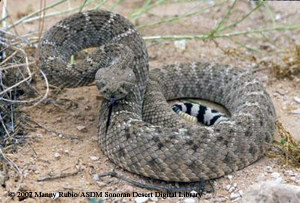 Rattlesnakes from the Albuquerque Bio Park are the newest research assistants in the fight against cancer. From KOAT in New Mexico: Rattlesnakes from the Albuquerque Bio Park are the newest research assistants in the fight against cancer. From KOAT in New Mexico:“We know the protein out of the rattlesnake venom kills these cancer cells in their tracks. Cancers may become a thing of the past thanks to these rattlesnakes,” Doug Hotle, with the Albuquerque BioPark Zoo, said. Doug and the Bio Park are also organizing the 2012 Venom Workshop to help aid in research techniques, captive management as well as serving as a way to certify proper hours for private ownership. Check out the workshop here -- and kingsnake.com will be there! Saturday, January 7 2012Biodiversity and habitat destruction clash along Mekong River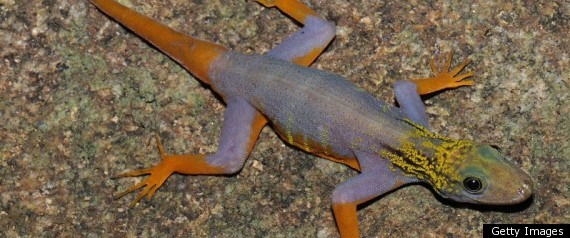 Amazing biodiversity along the Mekong River in Southeast Asia has led to the description of 208 new species, including the adorable gecko to the right. Amazing biodiversity along the Mekong River in Southeast Asia has led to the description of 208 new species, including the adorable gecko to the right.The newly described species include a "psychedelic gecko" in southern Vietnam and a nose-less monkey in a remote province of Myanmar that looks like it wears a pompadour. The area is being pummeled by humans, however; habitat loss and deforestation are among the reasons biodiversity is threatened. To read the full article, click here. Wednesday, January 4 2012Endangered native reptile numbers-swap in Iowa, Wisconsin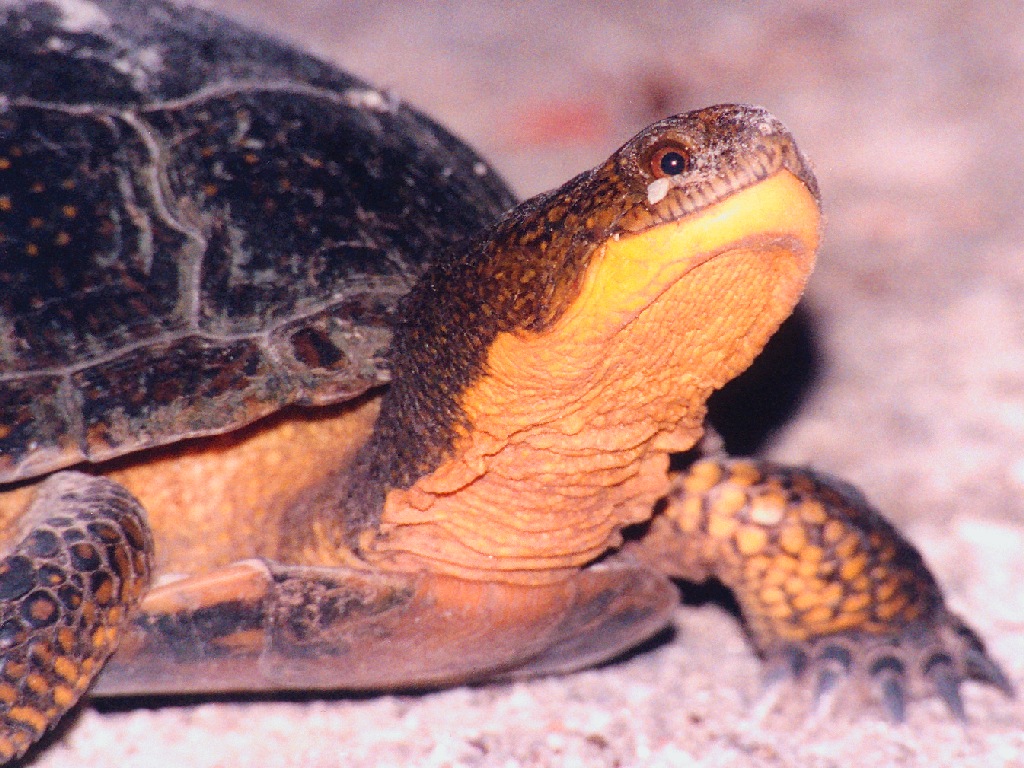 As Iowa increases the number of endangered species it lists, Wisconsin is lowering theirs.. As Iowa increases the number of endangered species it lists, Wisconsin is lowering theirs.. From the Des Moines Register: Iowa’s short list of federally protected endangered species is in line to nearly double. In Wisconsin, the Bulters Gartersnake is being delisted, along with 15 other species. The 16 species proposed to be removed from the list are the greater redhorse, a small fish; the barn owl, snowy egret, and Bewick's Wren, the Pygmy Snaketail, a dragonfly, and two reptiles: Butler's Gartersnake and the Blanding's Turtle. For the full article, click here. Tuesday, January 3 2012New frog species has unique call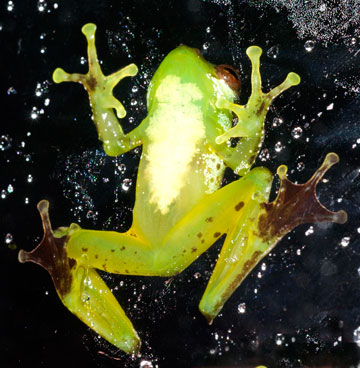 While most male frogs have one-note calls, the Quang's tree frog sings like a bird. While most male frogs have one-note calls, the Quang's tree frog sings like a bird."Quang's tree frog [...] has a hyperextended vocal repertoire—in other words, it doesn't just repeat the same call over and over, but has a number of types of calls. In fact, no two calls that I recorded were exactly the same, with each frog mixing clicks, whistles and chirps in no apparent order! It is the most variable frog call that I've heard of, and sounds a lot more like a bird song than a frog call [click here to listen to the frog's call]," lead author Jodi Rowley with the Australian Museum in Sydney told mongabay.com. To read more, click here. |
Our Sponsors CategoriesSubscribe |

|
|

|
|

