
mobile - desktop


  |
| mobile - desktop |
|
 |
 Contact Sales! |
News & Events:
|
|
Reptile & Amphibian
News Blog Keep up with news and features of interest to the reptile and amphibian community on the kingsnake.com blog. We cover breaking stories from the mainstream and scientific media, user-submitted photos and videos, and feature articles and photos by Jeff Barringer, Richard Bartlett, and other herpetologists and herpetoculturists.


Friday, September 4 2015Herp Photo of the Day: Rattlesnake Friday!
Kick off your weekend with this gorgeous Prairie Rattlesnake in our herp photo of the day, uploaded by kingsnake.com user akcoldbliss ! Be sure to tell them you liked it here!
-med.JPG) Upload your own reptile and amphibian photos photos at gallery.kingsnake.com, and you could see them featured here! Thursday, September 3 2015Herp Photo of the Day: Blue Tree Monitor
This gorgeous pair of Blue Tree Monitors can see the weekend coming in our herp photo of the day, uploaded by kingsnake.com user roadspawn ! Be sure to tell them you liked it here!
-med.jpg) Upload your own reptile and amphibian photos photos at gallery.kingsnake.com, and you could see them featured here! Texas Banded Geckos Galore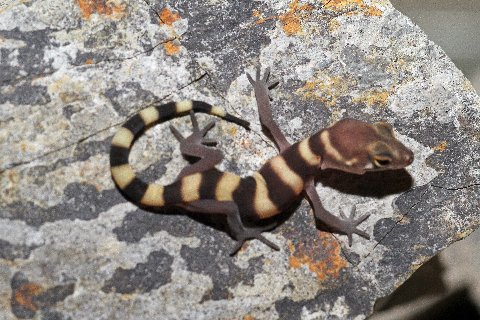 Hatchling Texas banded gecko Coleonyx brevis But on the June 2015 trip, on each of the several days allocated for nighttime road-cruising, we saw from 2 to 10 of the little geckos, more on the damp nights than on dry ones. It seemed that the sightings were back to normal in frequency. The Texas banded gecko is actually a common little nocturnal lizard. When moving they tend to stand rather high on their legs and to wag their tail. They could conceivably be mistaken for a scorpion or a mouse when in the glow of headlights the lizards are seen darting across a desert roadway. Juveniles of both sexes and adult females tend to be the more prominently banded while the bands of adult males often have irregular edges and the overall pattern may be more reticulate. In the time span we were in Texas we saw 20 or 30 of these delightful lizards. Seeing these helped transform the trip from merely mediocre to a resounding success. For more pictures, click below. Continue reading " Texas Banded Geckos Galore" Wednesday, September 2 2015King Cobra on the loose in Orlando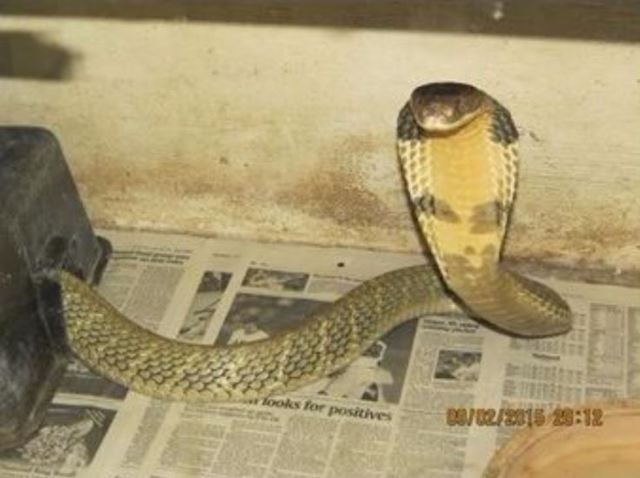 The green and yellow venomous snake was reported missing by its owner Wednesday from a home on North Apopka Vineland Road used as an exotic animal rescue, TV station WFTV reports, citing Florida Fish and Wildlife. The snake’s owner is licensed to own exotic animals and followed proper reporting procedures when it was discovered the reptile was missing. FWC officials are canvassing the area and ask that anyone who comes across the snake to call FWC’s Wildlife Alert Hotline at 888-404-3922 and urge residents not to approach the animal. To read more check out the news article at WFTV Herp Photo of the Day: Softshell Turtle
Time to have a little fun in the sun with this Florida Softshell in our herp photo of the day, uploaded by kingsnake.com user Amazoa ! Be sure to tell them you liked it here!
 Upload your own reptile and amphibian photos photos at gallery.kingsnake.com, and you could see them featured here! Sochurek’s Saw-scaled viper- The Elder Saw-scaled Viper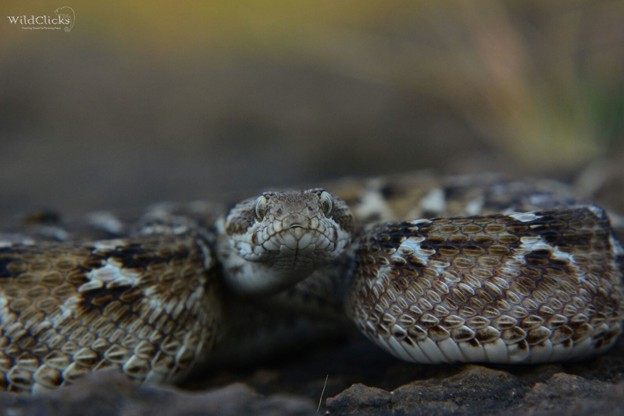 Today I want to bring to your notice the Sochurek’s Saw-scaled viper Echis carinatus sochureki, some would say the elder son of saw-scaled viper family. This tiny creature. which is a member of the big four, and responsible for many injuries, rightfully has a bad, feared reputation in India. This sub-species has similar features to that of other saw scaled vipers, it's primary difference is that it is a much larger size compared to the actual saw scaled viper Echis carinatus It also appears to be darker in color. The maximum length of this snake is 1.7ft and viviparous by nature. This snake is usually common in desert areas and can also be seen under rocks which is probably its main shelter. But there have been a few occasions that these snakes have been sighted on height of 20 to 25ft on trees. Even my friend Saleel Gharpure had been fortunate to have a meeting with this admiring creature on an unusual habitat. For me it is yet an unsolved mystery as to what is the requirement of these snakes to climb on trees when they can live a happy life on earth. This is what makes me so passionate towards snakes. Whenever I try to reach out to them they always surprise with something or the other which is an enjoyable addition to my encyclopedia of snakes. Photo: Saleel Gharpure Tuesday, September 1 2015Trogon and Black-tail Recollections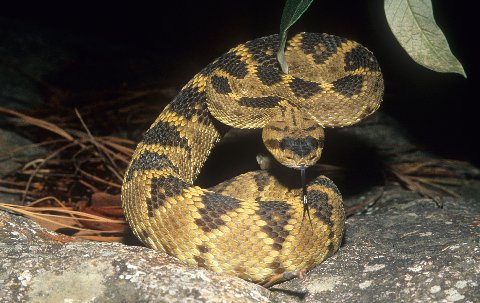 There was that rather cloudy long ago morning in Portal, AZ when I was hoping to photo black-tailed rattlers, Crotalus molossus. I had looked and looked but had found none. Then, as I was about to give up an elegant trogon (then known as the coppery-tailed trogon) flew right over my head and alit on a nearby oak limb. I immediately decided a trogon in the viewfinder was a whole lot better than a non-existent rattlesnake. So off I went, my interest now focused on the rather uncommon bird. Luckily I had managed to get just about near enough to take the bird's pic. There. Click. Got at least one pic. Deciding to try and get just one step closer, I stepped between two boulders, and BUZZZZZZZZZZZZZZZZZZ! Not good. Being wedged between two huge boulders was not an enviable position and when I looked down and saw the snake--a big angrily defensive black-tail, I realized how close I was to getting bitten. Have you ever heard of levitation. I levitated backwards over one of the boulders and somehow managed to avoid both a broken shoulder and what had seemed to be an inevitable envenomation. But, a few minutes later (I never did get that closer trogon photo), still shaking, I did go back and photograph the snake. No sense in wasting a perfectly good photo-op! Continue reading "Trogon and Black-tail Recollections" Herp Photo of the Day: Dart Frog
Tiny but stunning, this Oophaga ventrimaculatus shines in our herp photo of the day, uploaded by kingsnake.com user obeligz ! Be sure to tell them you liked it here!
 Upload your own reptile and amphibian photos photos at gallery.kingsnake.com, and you could see them featured here! Monday, August 31 2015Climate change lethal to baby lizards According to scientists at Arizona State University, climate change will be very hard on many species of lizards, driving many species to, or over, the brink of extinction. Biologists led by ASU investigators determined that lizard embryos die when subjected to high temperatures(110 degrees F) even for a few minutes. “Lizards put all of their eggs in one basket, so a single heat wave can kill an entire group of eggs,” Ofir Levy - lead investigator Embryonic lizards are immobile in their eggs and cannot seek shade or cool off when their surrounding soil becomes hot. Given the potential impacts of climate change on embryos, many more places in the United States could become uninhabitable for existing lizard populations than previously expected. To read more check out the article on the ASU News site. Gallery photo by stevereecy Deccan Banded Gecko: My first memorable reptile.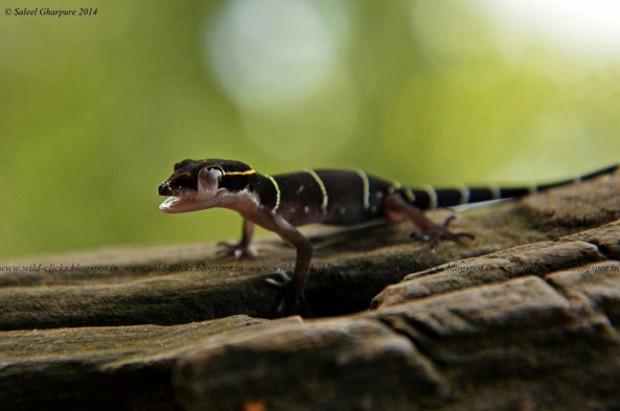 It was my first herping adventure and one of the best memories in my herpetology career. I am a snake-researcher but I also have to accept the fact that I belong to the society of herpetologists and also need to accept whatever Mother Nature throws at me. The Deccan banded Gecko or Deccan Ground Gecko Cyrtodactylus deccanensis was one of the gifts of Mother Nature which I happily and enthusiastically accepted. 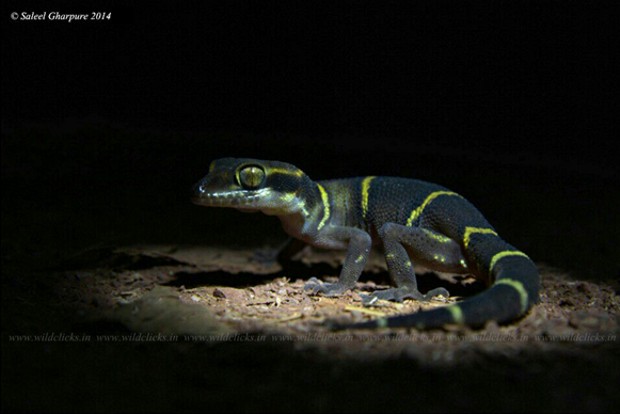 This reptile is commonly found in out-skirts of my area. Looking at the pictures of these creatures one couldn’t but stop themselves to admire the unique beauty of these lizards. The color pattern of these geckos is simply amazing, the body is reddish-brown with thin yellowish white bands and the average size of this gecko is 2.25cm. This reptile is commonly found in out-skirts of my area. Looking at the pictures of these creatures one couldn’t but stop themselves to admire the unique beauty of these lizards. The color pattern of these geckos is simply amazing, the body is reddish-brown with thin yellowish white bands and the average size of this gecko is 2.25cm.Whenever you set out for herping adventure, you never know what you are going to encounter, sometimes your wishes are fulfilled and sometimes you return empty. As it was my first herping trip I was expecting to see some snakes but I ended up finding just a lizard, a beautiful lizard, and the best part was that I found something new. Photo: saleel gharpure Herp Photo of the Day: Kingsnake
The West Alpine locality momma is holding tight to those new eggs in our herp photo of the day, uploaded by kingsnake.com user oursnakes ! Be sure to tell oursnakes you liked it here!
 Upload your own reptile and amphibian photos photos at gallery.kingsnake.com, and you could see them featured here! Friday, August 28 2015Herp Photo of the Day: Rattlesnake Friday!
Happy Ratttlesnake Friday! THis Crotalus tigris, found and photographed in AZ, is keeping her eye on you in our herp photo of the day, uploaded by kingsnake.com user kevinjudd ! Be sure to tell kevinjudd you liked it here!
 Upload your own reptile and amphibian photos photos at gallery.kingsnake.com, and you could see them featured here! Tortoise adopters needed in Arizona The Arizona Game & Fish Department is planning a large adoption event Sept. 5th to help find new homes for about 60 desert tortoises. They've had about 300 tortoises end up at their center over the past year, so many that they don't have names, but rather numbers to keep track of them all. To help make room, Game and Fish started an adoption program for the tortoises. "We've been having an issue with people breeding in their homes or people need to surrender their tortoise, and they have nowhere to go," Tegan Wolf - Tortoise Adoption Specialist There is no fee, but there is an application and certain requirements you have to meet, including having an appropriate habitat and burrow. Starting in December it's going to be illegal for captive desert tortoises to be bred in the home. For more info, click here to read the story at KPHO kingsnake.com gallery photo by TonyC130 Round-tailed horned lizards at last!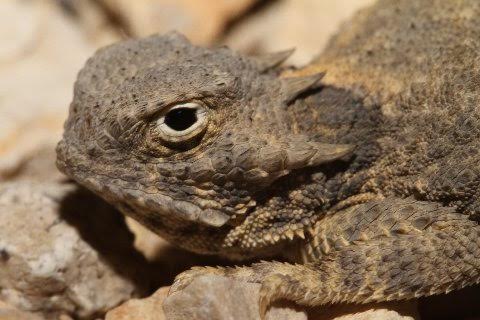 "There' one!" I slammed on the brakes, pulled a 180, and sped back to--to another rock. Another 180 and we were moving westward again. The last "turn" had brought the false sightings up to Five. Five times we had thought we had sighted a round-tailed horned lizard, Phrynosoma modestum, basking on the pavement and five times it had been a rock or a piece of flattened vegetation. I had about brought the old car back up to 65 mph when Jake screamed again. This time I didn't turn, I merely stopped at roadside and told Jake "Go get it." He hopped out, ran back a couple of hundred feet, and stooped to pick up another "rock." But unless he was taunting me he usually didn't pick up rocks. Maybe--just maybe... By the time Jake had returned to the car he was grinning from ear to ear. That last "rock" actually was the horned lizard we (and especially he) had wanted so badly to see. We had failed to find a round-tail on the first 10 of the 12 days allocated to this 2015 trip to the Big Bend and had begun to wonder whether 2015 would replicate 2014's trip when we had not found the species. We no longer had to wonder. Success, finally! Now to find my camera. More photos under the jump... Continue reading "Round-tailed horned lizards at last!" Thursday, August 27 2015The Leopard Gecko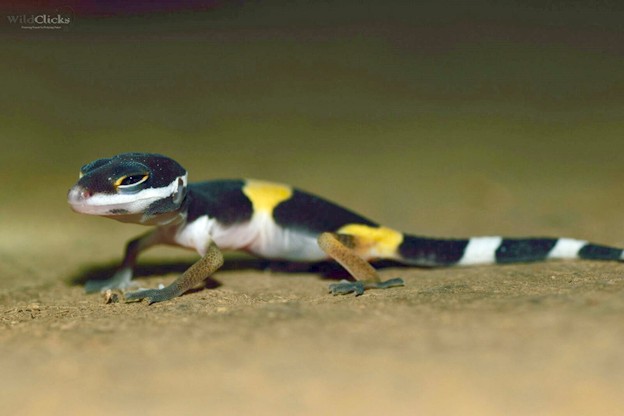 Most of the time during my herping trips if I spot lizards I usually tend to ignore them, but if it is some unique or beautiful lizard I make sure to mention them in my blogs. So today I present you one of the most beautiful reptiles from India, the Leopard Gecko Eublepharis macularis. The Leopard Gecko is a ground dwelling lizard found in India and also in Pakistan, Afghanistan and some parts of Iran. Leopard Geckos spend most of their time in burrows during the day. They become active at dawn and dusk when the temperature is favorable, so they are mostly nocturnal. These geckos are called leopard geckos because of their coloration, an adult leopard gecko having spots on its body like a leopard. I find the juveniles more beautiful than the adults, having a black body with thick yellow and white bands on it. These geckos primarily feed on crickets and earthworms and the size varies from 20-27cm. I always prefer to maintain a distance from lizards because I am a bit scared of them but if there are such beautiful species like leopard gecko, they always fascinate me. Photo: Saleel Gharpure Herp Photo of the Day: Box Turtle
One more day to the weekend when you can go out and dine with friends. Until then, the Box Turtles will save you a spot at their trough in our herp photo of the day, uploaded by kingsnake.com user boxienuts ! Be sure to tell boxienuts you liked it here!
 Upload your own reptile and amphibian photos photos at gallery.kingsnake.com, and you could see them featured here! Wednesday, August 26 2015Snake selfie takes toll on California man A California man may lose his hand after an attempt to take a 'selfie" with a rattlesnake went wrong. Alex Gomez, 36, spotted the four-foot snake in a field by his family’s ranch. Alex’s nephew, Ronnie, who was with him says the reptile gave plenty of warning. “It was really thick and had ten rattles on it, it was rattling,” “It was pretty mad.” - Ronnie After being bitten, Gomez experienced excruciating pain, his hand swelled up and his body started to tingle. To read more check out the story and video at kcal9 Photo: kcal9 Herp Photo of the Day: Rainbow Boa
The best assest of any Rainbow Boa is their iridescent sheen, which is captured wonderfully in our herp photo of the day, uploaded by kingsnake.com user curaniel ! Be sure to tell curaniel you liked it here!
 Upload your own reptile and amphibian photos photos at gallery.kingsnake.com, and you could see them featured here! Tuesday, August 25 2015Salamander in amber is a first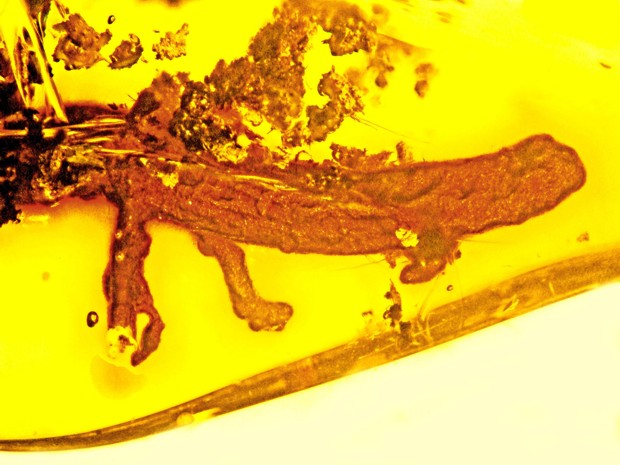 Scientists at Oregon State University are currently studying a baby salamander encased in an amber sample found in an amber mine in the Dominican Republic. There are no salamanders living on islands in the Caribbean today, but the amber-coated amphibian found shows there once were. "There are very few salamander fossils of any type, and no one has ever found a salamander preserved in amber," - OSU Professor Emeritus George Poinar, Jr. The sample containing the salamander hatchling measures under an inch in length is an extinct, and the amphibian is a previously undiscovered species, now named Palaeoplethodon hispaniolae, that dates back to between 20 million and 30 million years. For more details check out the paper published online in the journal Palaeodiversity. Photo: George Poinar, Jr., Oregon State University An aberrant long-nosed snake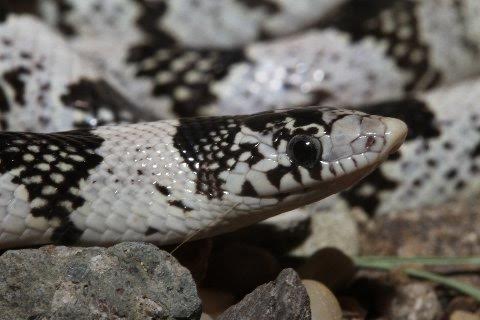 It had been a very long day in West Texas, and it was past time to call it quits. Jake and I had just driven almost non-stop from our Florida homes and following an hour of shuteye had hit the road for a little r&r (herping). We had done pretty well, photographing a pretty male Baird's rat snake at road edge and an equally pretty mottled rock rattler on a roadcut before changing venues. Now, at 3 in the morning, we had decided to call it a night and had headed back for the motel when a ring-tailed "cat" at roadside caught our attention. I slowed to watch the little mammal and was just speeding up when we saw a solfugid (sun spider) on the yellow center line. Photo time. As I stepped from the car I noticed a small snake that was lying quietly on the center line only a few feet from the solfugid. Immediately recognizable as a long-nose, Rhinocheilus lecontei, the little snake was as obviously different as it was recognizable -- it lacked even a vestige of the red pigmentation so typical of the species. It was merely black and white, anerythristic if you prefer. What a great find at the end of a long and busy day. More photos under the jump... Continue reading "An aberrant long-nosed snake" Herp Photo of the Day: Red Eft
This Eastern Red Spotted Newt is a bundle of cuteness in our herp photo of the day, uploaded by kingsnake.com user DeanAlessandrini ! Be sure to tell DeanAlessandrini you liked it here!
 Upload your own reptile and amphibian photos photos at gallery.kingsnake.com, and you could see them featured here! Monday, August 24 2015Herp Photo of the Day: Corn Snake
All that stripey creamy goodness can only start our week off right! Such a beautiful corn snake take center stage in our herp photo of the day, uploaded by kingsnake.com user draybar ! Be sure to tell draybar you liked it here!
 Upload your own reptile and amphibian photos photos at gallery.kingsnake.com, and you could see them featured here! The dark side of Nagpanchami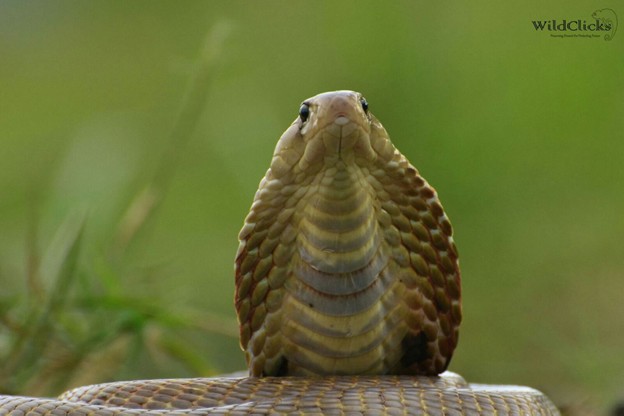 Nagpanchami, an Indian festival very true to its name, is celebrated to worship the Nagas, or Cobras, as these creatures have a great significance in Indian mythology. Strange but true, as a part of the worship ceremonies, cobras are offered milk, as well as a variety of spices, which is not food for cobras, in fact any snake in the world. At times, devotees are seen pouring bowls of milk over the snake’s head, and sprinkling the head with haldi (turmeric), kumkum (saffron) and other powdered spices that form the worship rituals. The milk and the different spices enter through nostrils into lungs often causing a slow and painful death. These religious ceremonies are difficult to stop because people have been following them for centuries, even though they have been outlawed.It's my feeling that people don’t worship them because of the spiritual connection, they worship it out of fear, the fear of getting bitten by Nag. Photo: saleel gharpure Legendary snake man's daughter continues legacy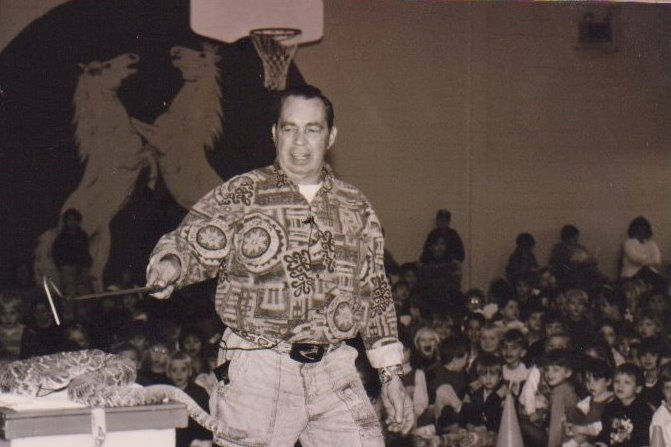 Old school. If you knew Tommy Yarborough you're pretty much old school. Tommy was old school. Tommy was a herp legend, who spent over 3 decades traveling from herp spot to herp spot, catching snakes, lizards, turtles and more for his Yarbrough Snake Ranch in Eastaboga Alabama. Back in Alabama he and his wife Mary Ann would put on reptile shows for schools, scouts, church groups and more, entertaining and educating thousands of kids over the years, and starting many a herper down the path. An early brochure for the Yarbrough Snake Ranch advertises that the "excitement and mysteries of nature are brought to life" — including "cobras (Indian, African and Taiwan), pythons, rattlesnakes, boa constrictors, cottonmouth water moccasins, copperheads, African puff adder, king snakes, rat snakes and tropical snakes." Today his daughter, Rebecca Yarbrough Tucker, continues Tommy's reptile legacy in Alabama. She has help from her husband, Ken, who helps her care for the more than 300 snakes and other animals at the family’s home in Eastaboga and two volunteers who help with the shows. She donates half of the proceeds of each show to the schools, just as her father did. The Yarbroughs will be remembered at a special "Reptiles Alive!" show on Saturday August 29 as part of the Anniston Museum of Natural History’s annual Museum Day celebration. Museum admission, programs and activities will be free. To read more, check out the full article at The Anniston Star Editors note - I met Tommy and Mary Ann several times on the River Road and in Langtry in the late eighties and early nineties. Tommy was a "fast" cruiser and would barrel down the road at 60-70 miles per hour in a big van with ammunition crates roped to the top for the rattlesnakes. Tommy was a character remembered by all that met him. Friday, August 21 2015Herp Photo of the Day: Hognose
What a week! Don't get mad like this hoggie in our herp photo of the day, uploaded by kingsnake.com user jeffb ! Go out and find some beauty this weekend and share it with us! Be sure to tell jeffb you liked it here!
 Upload your own reptile and amphibian photos photos at gallery.kingsnake.com, and you could see them featured here! Thursday, August 20 2015Santa Cruz gopher snakes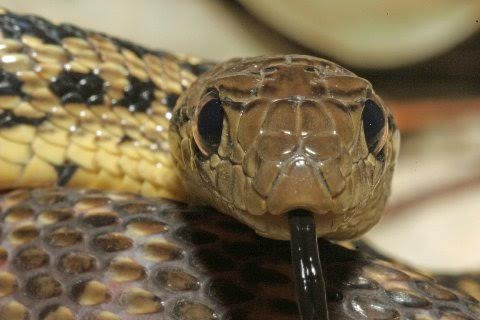 Having kept and bred Santa Cruz (Channel Island) gopher snakes, Pituophis catenifer pumila, for several years, I had become enamored with this smallest of the gopher snakes. Even though these snakes are of nervous demeanor and have an occasional tendency to huff, puff, and strike, their 28 to 34" adult size makes them an easy gopher snake to handle. Restricted in range to two of California's Channel Islands (Santa Cruz and Santa Rosa Island) there seems to still be a paucity of information on this snake's preferred habitats. However, it is probable that like other forms of the gopher snake, the Santa Cruz subspecies is a habitat generalist that utilizes most if not all of the varied insular habitats--be they montane, pastoral or littoral. The entire range of the Santa Cruz gopher snake is now under the protection of the National Park Service and/or The Nature Conservancy. Therefore this tiny gopher snake can be difficult to acquire. And how tiny is "tiny"? As mentioned above the adult length seldom exceeds 30" and hatchlings are 6 to 8" in length. For a gopher, that's tiny! More photos under the jump... Continue reading "Santa Cruz gopher snakes" Herp Photo of the Day: Wonder Gecko
Don't mind the raspberry from this Teratoscincus scincus in our herp photo of the day just love the cuteness, uploaded by kingsnake.com user zmarchetti ! Be sure to tell zmarchetti you liked it here!
 Upload your own reptile and amphibian photos photos at gallery.kingsnake.com, and you could see them featured here! Wednesday, August 19 2015Nag Panchami celebrations to honor snakes Today is Nag Panchami, a traditional day of worship of snakes or serpents observed by Hindus throughout India and also in Nepal. On the Nag Panchami day Nag, cobras, and snakes are worshiped with milk, sweets, flowers, lamps and even sacrifices. Images of Nag deities made of silver, stone, wood, or paintings on the wall are first bathed with water and milk and then worshiped with the reciting of mantras. The piety observed on this day is considered a sure protection against the fear of snake bite. At many places, real snakes are worshipped and fairs held. On this day digging the earth is taboo as it could kill or harm snakes which reside in the earth. In the past people would gather serpents, and snake charmers would bring their finest snakes to the temples, but changes in India's laws have made snake charming and snake possession illegal, changing the way the event is celebrated for most. Though some still try to celebrate the old ways, authorities keep a watch over events, confiscating and releasing snakes used by the celebrants. "It's the cobra and rat snakes that are most commonly displayed by snake charmers. We urge people to be alert and capture their pictures and alert the local police station or snake rescue helplines so that they can be nabbed and the snake be freed from torture." Nitin Walmiki - Eco-Echo To read more about Nag Panchami click here!. kingsnake.com gallery photo by BakerReptiles Summer of Serpent mother: Saw-Scaled Viper.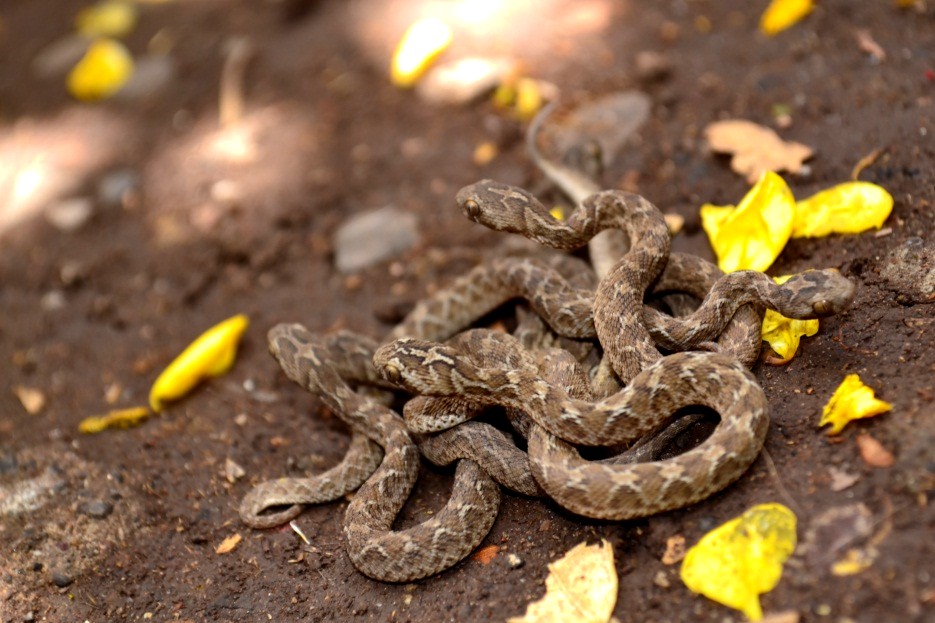 This was a time in summer when I as usual was free and always ready to go herping. Diveghat is half an hour away from my house where before the dawn deer were spotted and every Sunday I rode there in the hope to see something new. That day I was lucky enough to encounter something. 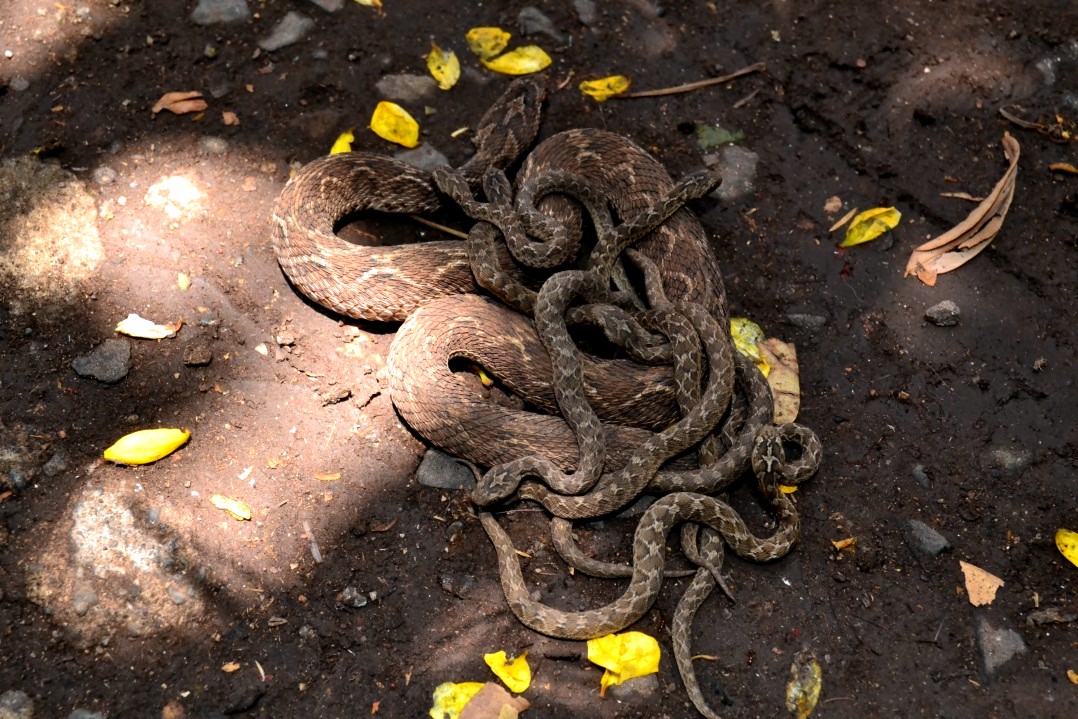 So as usual I arrived at the place, saw some deer and started with my search for scorpions and saw-scaled vipers. The best part about herping in this place is that you don’t need to observe the bushes or enter in a dense forest, the only thing you need to do is check under small rocks by lifting them so this makes your herping a bit easier. So as usual I arrived at the place, saw some deer and started with my search for scorpions and saw-scaled vipers. The best part about herping in this place is that you don’t need to observe the bushes or enter in a dense forest, the only thing you need to do is check under small rocks by lifting them so this makes your herping a bit easier.In the beginning I found a couple of scorpions and centipedes but I had a feeling that some bigger surprise is waiting for me. Within half an hour I encountered one of the bright spots of my herping, a healthy female saw-scaled viper with her six young ones. What a moment of happiness, can’t define that happiness in words. After seeing this family I was completely refreshed, the tiredness vanished within seconds. We clicked some beautiful pictures and left them. I wanted to take all of them home and nurture them but couldn’t do so because after all it was mother nature’s belonging. Photo: riyaz khoja |
Our Sponsors CategoriesSubscribe |

|
|

|
|

