
mobile - desktop


  |
| mobile - desktop |
|
 |
 Contact Sales! |
News & Events:
|
|
Reptile & Amphibian
News Blog Keep up with news and features of interest to the reptile and amphibian community on the kingsnake.com blog. We cover breaking stories from the mainstream and scientific media, user-submitted photos and videos, and feature articles and photos by Jeff Barringer, Richard Bartlett, and other herpetologists and herpetoculturists.


Wednesday, July 22 2015My reptile management lecture ends up with the best audience
I have been giving lectures and conducting workshops on reptile management and awareness for some time. I've never written about them until now because, to be frank, I never found anything special to be shared. That changed with my last workshop, however, and I would love to share it.
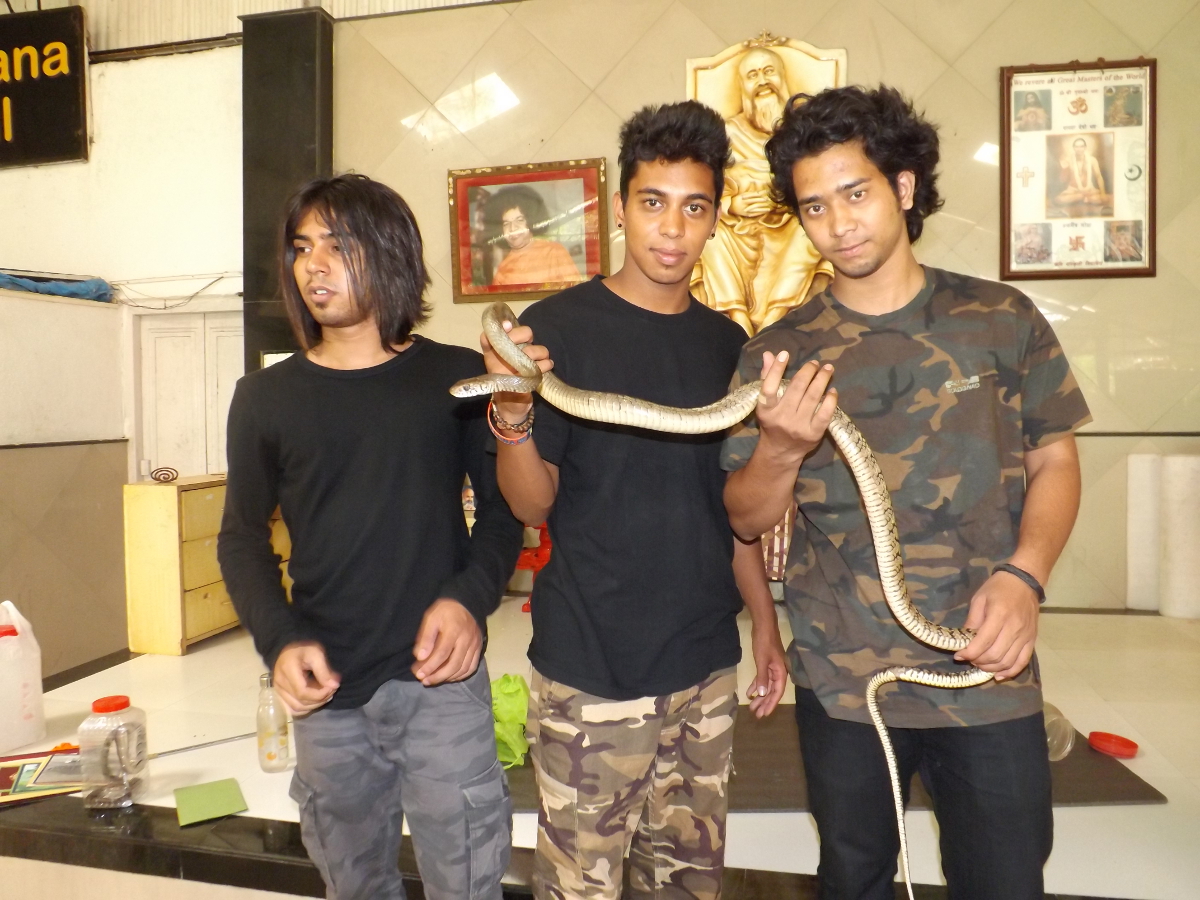 My soccer coach, Mr. Savio Dsouza, has always been supportive of my passion for snakes, and he was the one to organize the reptile management workshop. It was conducted in a boarding school named Rishi Gurukulam Ashram. The best thing about this school is that it is situated in a valley with only greenery and mountains to be seen. The lecture was conducted by me and my partners Akshay Parahlkar (Axy) and Anirudh Rathod, and we had carried four snakes to show them: The common krait, the common trinket snake, the checkered keelback water snake, and the most common of all, the rat snake. More photos under the jump... Continue reading "My reptile management lecture ends up with the best audience" Herp Photo of the Day: Cat Snake
Snakes and Cats living together, it will be anarchy! Wait what? Nah it is just a nice shot of a Cat Snake (Boiga cyanea) in our Herp Photo of the Day, uploaded by kingsnake.com user ptahtoo! Be sure to tell ptahtoo you liked it here!
 Tuesday, July 21 2015Man shot with his own gun while trying to protect sea turtle babies Apparently the friend of your enemy is your enemy, when it comes to sea turtles -- at least in Florida, where a Vietnam veteran was allegedly shot with his own gun by someone who took exception to his efforts to protect a sea turtle nest. Apparently the friend of your enemy is your enemy, when it comes to sea turtles -- at least in Florida, where a Vietnam veteran was allegedly shot with his own gun by someone who took exception to his efforts to protect a sea turtle nest.From Local10.com: A Vietnam veteran was shot while trying to save baby sea turtles at a South Florida beach. Read the full story here. Camouflaged tortoises, hiding in plain sight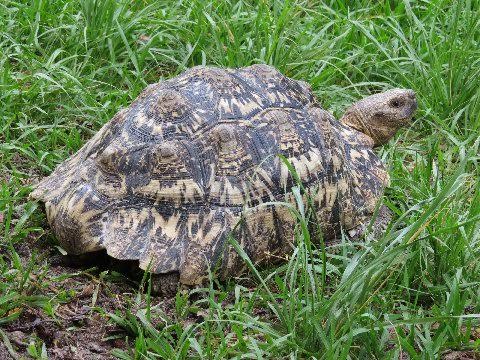 This past winter, as a cold front came barreling through, I decided to make certain that all of the tortoises were snug in their heated winter houses. I quickly scanned the pens and saw only a few desert box turtles, Terrapene ornata luteola still out. This past winter, as a cold front came barreling through, I decided to make certain that all of the tortoises were snug in their heated winter houses. I quickly scanned the pens and saw only a few desert box turtles, Terrapene ornata luteola still out. Although I probably needn't have worried about them I quickly shepherded all into their warmed quarters and then took a head count of the tortoises already slumbering soundly in the houses. Hmmmm. One missing leopard tortoise, Geochelone (Stigmochelys) p. pardalis, and 2 missing desert box turtles. Well, those shouldn't be hard to find so I began a search of pen. Under the ground level philodendron leaves? Nope. Resting quietly on the grassy substrate? Nope. Hidden by the few patches of tall grasses? Nope. No chelonians to be found. So I started over and again came up empty handed. "Patti! Could you please help me find this tortoise?" We both looked and we both failed. Still no star. Then when I looked down I was standing right next to a patch of tall grass that was about 12 x 14 inches. Way too small for a 10 inch long leopard tortoise, right? But that's where it was, smack in the middle and all but invisible. Those camouflaging carapacial markings sure are sure effective. We didn't find the desert box turtles that night but they showed up again when the weather moderated. And I won't mention the several times I've looked for an hour or more for an Indian star tortoise in their 30 x 40 foot pen. More photos under the jump... Continue reading "Camouflaged tortoises, hiding in plain sight" Herp Photo of the Day: Black Headed Python
No longer just black and white, these snakes show some of the variety in color that the Black Headed Pythons have in our Herp Photo of the Day, uploaded by kingsnake.com user Tom_Keogan! Be sure to tell Tom you liked it here!
 Monday, July 20 2015Slender Coral Snake: The shy-natured venomous snake
Reading the subject line on this post, most of my American friends might think I'm writing about the beautiful red, yellow, and black coral snake. Sorry, my dear friends; this is an Indian coral snake, and also a very beautiful one.
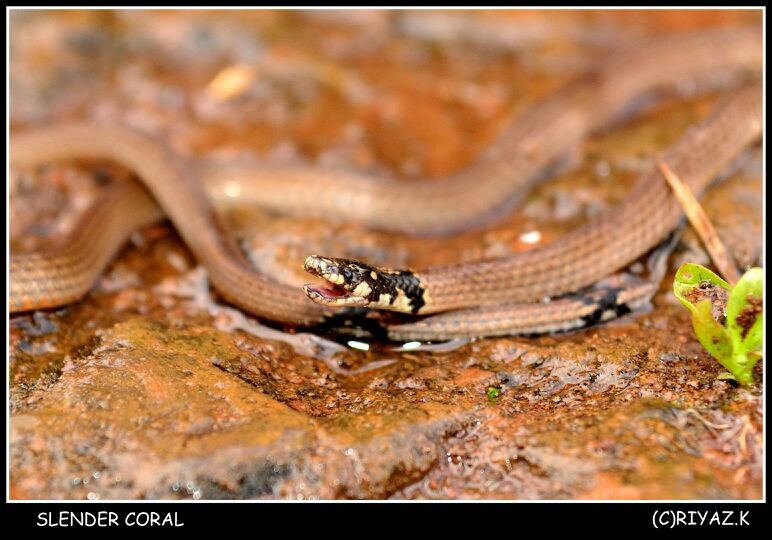 The slender coral snake, calliophis melanurus, is a species of coral snake found in India, and luckily it is also found in my state. Because it's rare, I was never able to see this snake from the day I entered into reptile world and was very desperate to see this beauty. Finally my desperation ended happily when I met this sweet fellow on my herping two weeks ago. The slender coral snake is a small and thin snake with the maximum length of 35 cm. This snake has a cylindrical body with smooth scales, and the color is light brown with black head and neck. The tail has two black rings. The underside of this snake is coral red, and the scales under the tail are greyish-blue and black. When the snake is disturbed, it curls up its tail. It usually feeds on blind snake/worm snake and lays 2-7 eggs under dried leaves or in crevices. Finding this snake was so unbelievable that when my friends saw it, I asked them two or three times, "Dude, are you sure it’s a slender coral snake?” A very sweet and gentle snake, I can’t explain the level of happiness of finding this snake, but I would say that the last weeks happiness is still impacting me. Photo: Riyaz Khoja British herpers asked to stop flipping tin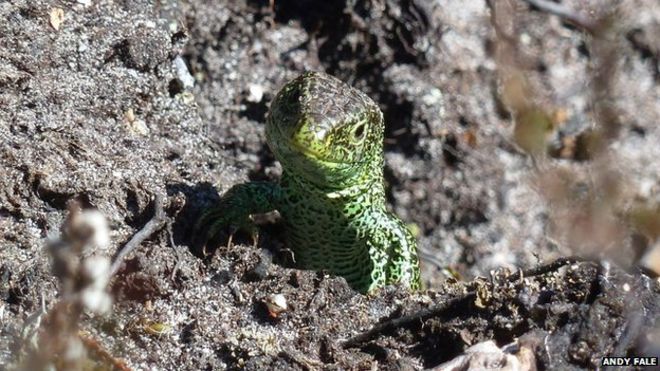 The Dorset Wildlife Trust has a message to herpers: leave tin alone. The Dorset Wildlife Trust has a message to herpers: leave tin alone.From the BBC: Reptile conservationist Gary Powell said: "If tins are disturbed outside of an official survey then it can affect the results of the research". Read more here. Herp Photo of the Day: Copperhead
This Copperhead is looking forward to the what the week hold in our Herp Photo of the Day, uploaded by kingsnake.com user HerpLvr!
 Be sure to tell HerpLvr you liked it here! Upload your own reptile and amphibian photos photos at gallery.kingsnake.com, and you could see them featured here! Friday, July 17 2015Herp Photo of the Day: Sulawesi Forest Turtle
Grumpy Turtle demands you have an amazing weekend in our herp photo of the day, uploaded by kingsnake.com user andystorts!
 Be sure to tell andystorts you liked it here! Upload your own reptile and amphibian photos photos at gallery.kingsnake.com, and you could see them featured here! Thursday, July 16 2015The Bruni dump: one man's trash is a herper's treasure
Kenny had already visited it. I had never heard of it. You'll love the Bruni dump he told me. Cool stuff. Really cool.
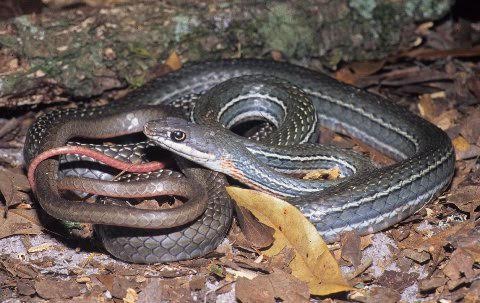 If you're a herper, you'll probably already have guessed that it was not the trash that was of interest to us. It was what had found their homes beneath the trash: the herps, and for me at least, the small mammals, that were the "cool stuff." We jogged down a couple of short blocks, paralleled the railroad tracks for a block or two and voila, instant herp habitat. Even before we left the car we were able to observe the first herp, a group of very alert and active prairie racerunners, Aspidoscelis sexlineatus viridis. We flipped a few pieces of trash and beneath a piece of tarp, we found the first snake, a beautiful Texas patch-nose, Salvadora grahamiae lineata. Cool indeed. Beneath a small piece of plywood was a pair of flat-headed snakes, Tantilla gracilis. Then our luck dried up for a while. But just before we left, beneath a huge torn and discarded tarp we found the prize of the day--a magnificent adult Schott's whipsnake, Masticophis s. schotti. Cool stuff for sure! Picture taking time now. Continue reading "The Bruni dump: one man's trash is a herper's treasure" Celebrate the snake on World Snake Day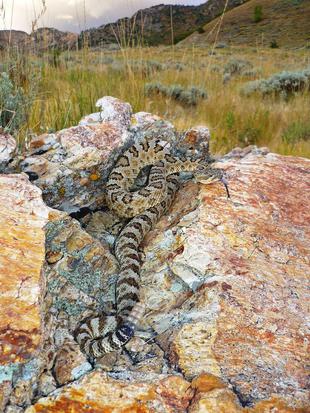 World Snake Day is a perfect time to reflect on why snakes are so amazing. World Snake Day is a perfect time to reflect on why snakes are so amazing.From the Deseret News: It is incredible that any creature can crawl, swim, dig, climb, capture prey and in some cases, glide through the air, all without the benefit of limbs, fins or wings. Rather than fear them, we should be in awe of their beauty, mystique and diversity. Read more here. Herp Photo of the Day: Drymarchon
Why stop with one, when a pile of Drymarchs are so much nicer! Check out the great variety of these snakes in our herp photo of the day, uploaded by kingsnake.com user alanB!
 Be sure to tell alanB you liked it here! Upload your own reptile and amphibian photos photos at gallery.kingsnake.com, and you could see them featured here! Wednesday, July 15 2015Fangs like a weapon: the variegated kukri
One of the species rarely found in my area is the variegated kukri snake, Oligodon taeniolatus. A non-venomous snake also called Russell’s kukri snake.
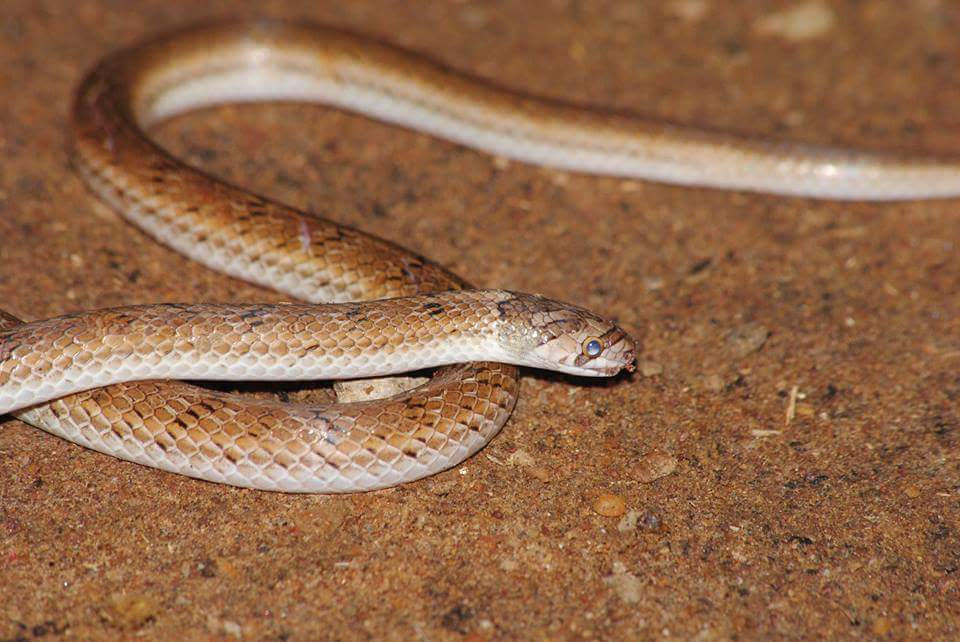 I have mentioned in one of my previous posts these snakes are named as kukri snakes because of their fangs, which looks similar to a Nepali weapon called a kukri. In India you can find 15 species of kukri snakes and I would definitely say that this is one of the largest families of snakes in India. Kukri snakes are also found in many other countries including China, Japan, Thailand and Malaysia. The variegated kukri snake is small in size with a maximum length of 59 centimeters and has slender body with short tail. These snakes are found near human settlements and prefer living on ground. They feed on geckos and even eggs of other animals. This little fellow is oviparous by nature and lays 7-9 eggs around April. It has been 5 years since I became interested in herpetology, but I never got a chance to rescue a variegated kukri snake. Luckily I have seen this snake a couple of times, thanks to the snake rescuers who showed me this beautiful slithering creature. Photo by: Kumar Rks Blanding's turtles may gain protection as endangered species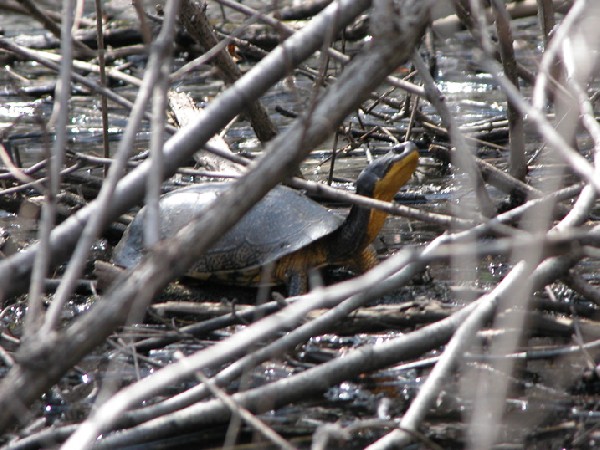 After suffering from habitat loss, the Blanding's turtle may move from "threatened" to "endangered." After suffering from habitat loss, the Blanding's turtle may move from "threatened" to "endangered."From the Pioneer Press: The sand dunes, marshes and backwaters of the upper Mississippi River, including the Weaver Dunes of southeastern Minnesota, hold one of the largest remaining populations of the Blanding's turtle, which the Minnesota Department of Natural Resources already classifies as threatened. A population in Valentine National Wildlife Refuge in northern Nebraska, where the species is classified as at-risk, is more secure but still vulnerable. Read more here. Photo by kingsnake.com user Andrew Myers. Herp Photo of the Day: Nile Crocodile
Tick Tock. The week passes quickly but today is easier starting with the smile of a Nile Croc in our herp photo of the day, uploaded by kingsnake.com user CDieter!
 Be sure to tell CDieter you liked it here! Upload your own reptile and amphibian photos photos at gallery.kingsnake.com, and you could see them featured here! Tuesday, July 14 2015Hopi rattler: an orange rattler crossing the path
The desert sun was dropping quickly behind a sizable butte. Within minutes the searing heat of the day would begin to cool. The beauty of an orange sunset spread quickly over an orange land that would soon give way to dusk. Full darkness would follow soon and we intended to be road-hunting as the changes occurred.
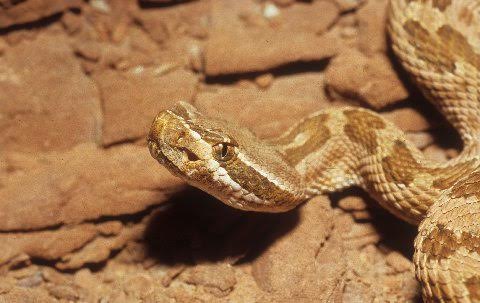 From an afternoon temperature that had neared 100 degrees Fahrenheit, by the time darkness had fallen it was 10 degrees cooler. We drove slowly in this land of cliffs and canyons. Snake! The first find of the night was a juvenile Great Basin gopher snake. Snake! Snake number 2 was a very pretty night snake. Then nothing. We drove a few miles up and a few miles back. Again and again. Things had "dried up." One more run and we'd call it a night. Up to the turning point. Nothing. Back to where the cliffs almost hugged the road and... Snake! 2 feet of sand orange snake was crossing the road slowly. And there was no mistaking it. Rattlesnake. We had found a coveted Hopi rattlesnake, Crotalus viridis nuntius. Closer examination disclosed that this was a tagged (painted rattle segments) study specimen. Today, we are told, if we were to find that same snake we should simply call it a prairie rattlesnake. Hopi has been "sunk," merged with the prairie. Subspecies are in disfavor. But guess what: it is still a Hopi to me. Continue reading "Hopi rattler: an orange rattler crossing the path" Homing lizards: how do trunk-ground anoles find their way home?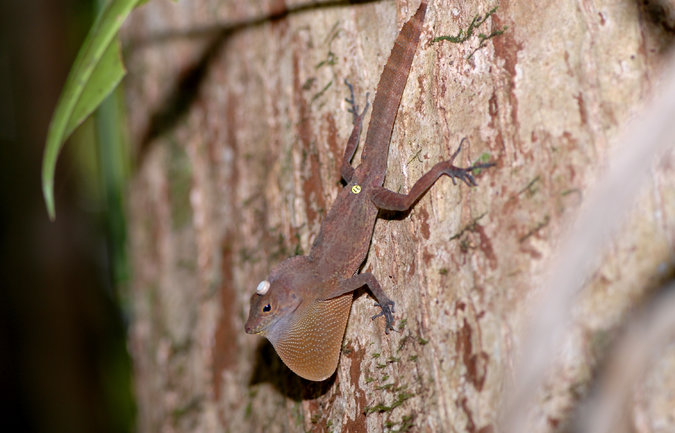 Trunk-ground anoles removed from their trees find their way back home, but now one knows how they do it. Trunk-ground anoles removed from their trees find their way back home, but now one knows how they do it.From the New York Times: Several years ago, Dr. Leal was studying competition between two species. If he removed all of the trunk-ground anoles, he wondered, would the trunk-crown lizards extend their territory farther down the tree? He ran into a problem, however. He would take the trunk-ground lizards far from their home territory to make room for their upstairs neighbors, and then release them. But in a reptilian version of the children’s song, “The Cat Came Back,” the lizards wouldn’t stay away. “Lizards kept showing up in the territory that had just been scoured for lizards,” he said. Read more here. Herp Photo of the Day: Mata Mata
A truly prehistoric looking creature, our spotlight turns on the mighty Mata Mata in our herp photo of the day, uploaded by kingsnake.com user Geo!
 Be sure to tell Geo you liked it here! Upload your own reptile and amphibian photos photos at gallery.kingsnake.com, and you could see them featured here! Monday, July 13 2015The yellow-spotted wolf snake: the krait mimic
India is home to 13 species of wolf snake, so I would like to say that this is one of the largest family of snakes in India. The yellow-spotted wolf snake is a non-venomous snake found in Maharashtra and rarely found in my area. But luckily I found it twice!
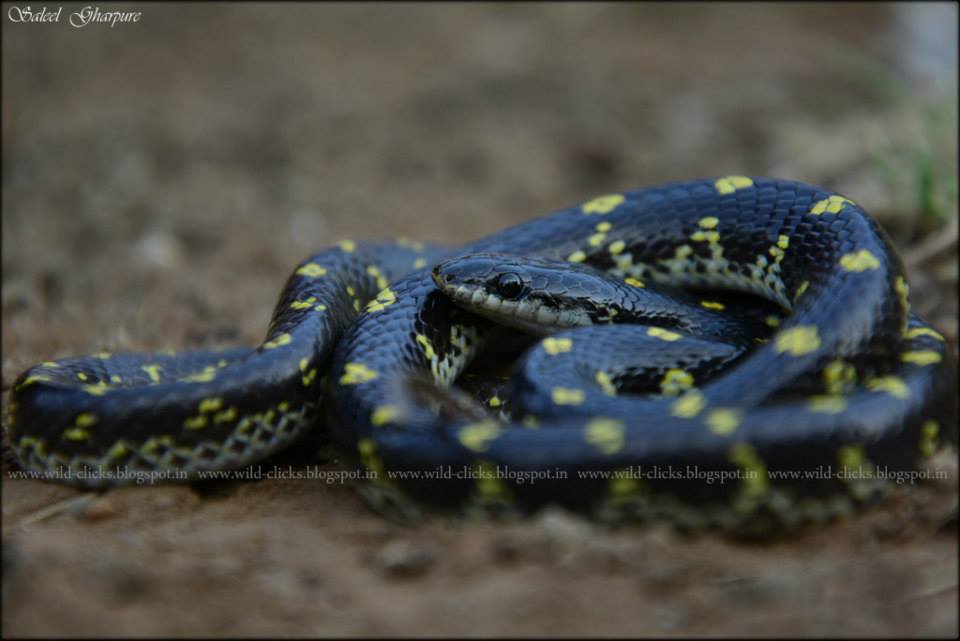 Yellow-spotted wolf snakes (Lycodon flavomaculatus) are small compared to the common wolf snake (Lycodon aulicus). I have come across 2 to 3 species of wolf snakes and I find yellow-spotted wolf snake the most beautiful because of its color pattern. Just imagine, my friends, how beautiful a snake looks with a dark shiny black color and thin yellow bands on it. The maximum length of these snakes is 52 centimeters and they are oviparous by nature. These snakes are often mistaken by people thinking that it’s a common krait (highly venomous) because the color pattern is somewhat the same. The only difference is that the bands of a krait are white in color instead of yellow. It's similar to the scarlet kingsnake and coral snake: both look the same with a slight difference, but one is venomous and the other is not. I would like to thank my friend Saleel Gharpure for allowing me to use this photograph. Photo by: Saleel Gharpure New York anti-venom sharing program introduced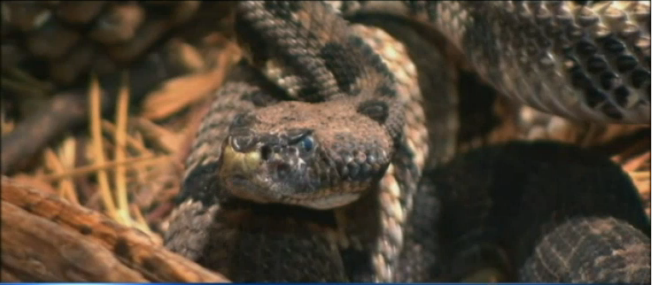 Staten Island University Hospital started an anti-venom sharing program to make sure anti-venom can reach people who need it, from zoo keepers to owners of exotic pets. Staten Island University Hospital started an anti-venom sharing program to make sure anti-venom can reach people who need it, from zoo keepers to owners of exotic pets.From NBC New York: The anti-venom comes from a sharing program launched at Staten Island University Hospital by Dr. Nima Majlesi at Staten Island University Hospital, which unites the zoo, the hospital and toxicologists. Read more here. Herp Photo of the Day: Chuckwalla
Looking forward to the new week with this adorable Chuckwalla in our herp photo of the day, uploaded by kingsnake.com user thommy!
 Be sure to tell thommy you liked it here! Upload your own reptile and amphibian photos photos at gallery.kingsnake.com, and you could see them featured here! Friday, July 10 2015Herp Photo of the Day: Boa Constrictor
Do you remember YOUR first? tjromick shares Lily, his first in our herp photo of the day, uploaded by kingsnake.com user tjromick!
 Be sure to tell tjromick you liked it here! Upload your own reptile and amphibian photos photos at gallery.kingsnake.com, and you could see them featured here! Thursday, July 9 2015Earliest helmeted lizard lived in Wyoming rainforests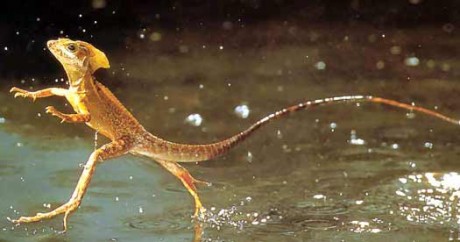 New fossils reveal that the earliest ancestor of Jesus Lizards lived in tropical Wyoming 48 million years ago. New fossils reveal that the earliest ancestor of Jesus Lizards lived in tropical Wyoming 48 million years ago.From ZME Science: The lizard was named Babibasiliscus alxi, where babi means “older male cousin” in Shoshone Native American – a tribute to the local heritage. Judging from the fossils, the lizard was likely two feet long, was active during the day and likely spent most of its time in trees. Like other casqueheads, the lizard has a ridge over its skull that likely made it look fiercer to its prey. Its teeth had three points suitable for eating snakes, lizards, fish, insects and plants. The larger cheekbones suggest it also hunted large prey. Read more here. The search for the Utah night lizard
Around us was sand in various hues of oranges and yellows and reds; above us towered sand stone cliffs in similar colors. A few miles distant we had encountered mesas, buttes, and dark, deep - perilously deep - sheer-walled canyons. Here and there a cactus, a succulent, a juniper, or a patch of drought tolerant composites was growing. But for the most part we were surrounded by miles and miles of sand and sandstone cliffs.
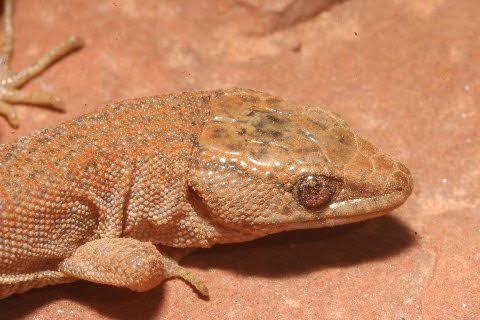 We were on a quest and the target was a tiny (up to about 3") lizard, the Utah night lizard, Xantusia vigilis utahensis. This was our second attempt. We tried a year earlier and had failed. But being either gluttons for punishment or dedicated, Kenny and I were back again. Same time of year, same place, but hoping for a different outcome. As we searched, carefully turning loose chunks of sandstone, ahead of us we could see cars inching their ways in both directions along the section of 261 called the Moki Dugway. This 3 mile stretch of road consists of narrow graveled switchbacks having grades of 10% that carry you up or down 1,100 feet of cliff face with nary a guardrail to be seen, an interesting experience to say the least. I was just about to comment to Kenny about a sizable truck coming down the dugway when he exclaimed, "lizard." And as I flipped a small chunk of sandstone in the shade of an overhang my turn came: "Lizard!" Mission accomplished or even exceeded. Both of us had found a little sandstone-orange Utah night lizard. Time for photos. Continue reading "The search for the Utah night lizard" Herp Photo of the Day: Sunbeam Snake
Sometimes you need to look outside the box! This stunning Sunbeam Snake may not be the most colorful on first glance, but as you can see in our Herp Photo of the Day, they are a truly beautiful snake, uploaded by kingsnake.com user mecdwell!
 Be sure to tell mecdwell you liked it here! Upload your own reptile and amphibian photos photos at gallery.kingsnake.com, and you could see them featured here! Wednesday, July 8 2015A spotted leaf-toed gecko interrupts our tea break
Scientific Name:
One of the moments I love during my herpings is a ‘tea or coffee break’. It is really an enjoyable moment when you are sitting with your friends, sipping your refreshing drink, and recalling the adventures that took place during the herping. 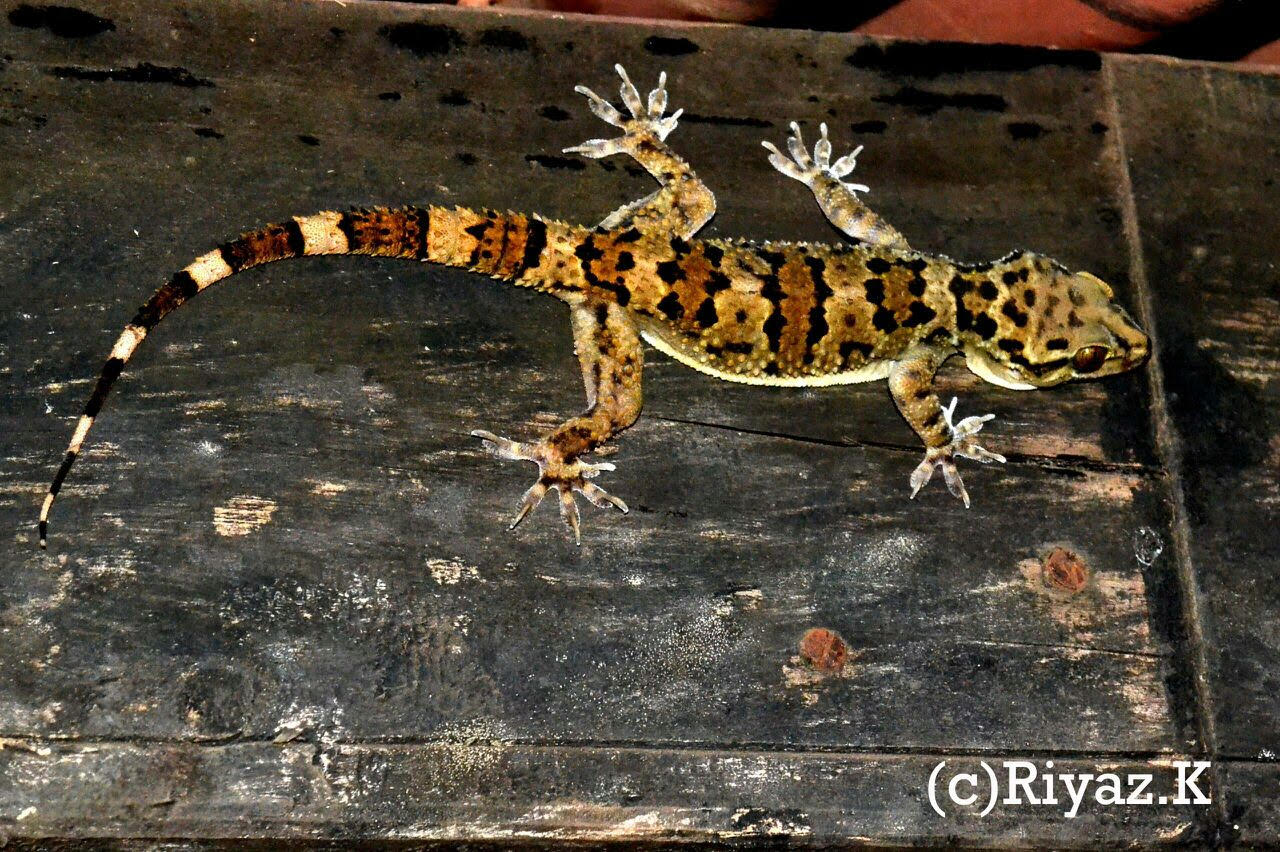 This incident happened during a trip to the Western Ghats. After herping for 2 to 3 hours, my friends and I took a break and drove to the nearest tea stall. We were sitting on wooden tables and we just had a few sips of tea when I saw a lizard on the wooden plank next to us. I ignored the lizard thinking that it might be an ordinary house gecko, but one of my friends who is studying lizards saw it and excitedly shouted, “Spotted leaf-toed gecko!” I took a close look at the lizard and it was really beautiful with an amazing color pattern. Spotted leaf-toed gecko (Hemidactylus maculatus) is a species of large gecko found in Western Ghats of India. The best part is that I was able to get this gecko easily without doing any hard work! My friend Riyaz Khoja snapped some pictures and we continued with our tea and snacks. Photo: Riyaz Khoja 150 year old Galapagos tortoise dies at the San Diego Zoo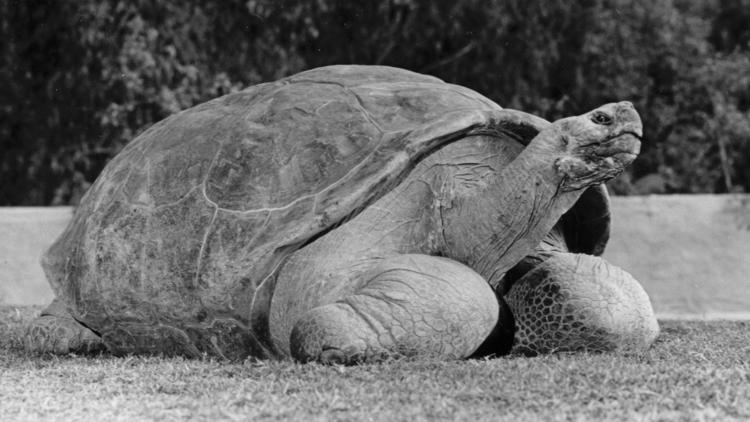 Speed, a Galapagos tortoise brought to America over 80 years ago, was euthanized last month. Speed, a Galapagos tortoise brought to America over 80 years ago, was euthanized last month.From the LA Times: At an estimated age of more than 150 years, Speed had been in geriatric decline for some time, with arthritis and other maladies. Keepers treated him with medication, hydrotherapy, physical therapy, even acupuncture. Read more here. Herp Photo of the Day: Salamander
Our Herp Photo of the Day features a cute field find of a Salamander, uploaded by kingsnake.com user cochran!
 Be sure to tell cochran you liked it here! Upload your own reptile and amphibian photos photos at gallery.kingsnake.com, and you could see them featured here! Tuesday, July 7 2015A manageable mole snake
A few years ago, for reasons that I can no longer remember, I decided to get an African mole snake, Pseudaspis cana, from Linda Switzer. It had been decades since I had last had one and as I remembered them they were big and savagely defensive.
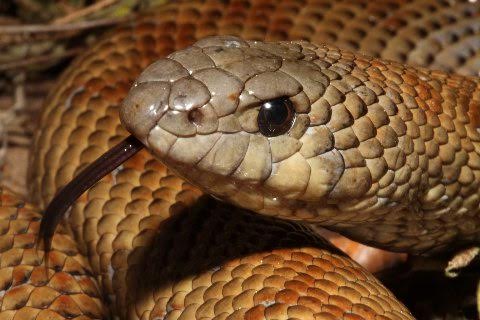 They were in no way pleasant creatures to keep. They had come, I think, from either Lofty Whitehead or Jonathan Leakey, both of Kenya. The snakes, adults all, had been wild collected, and were not the least bit hesitant to show their unhappiness about the situation. I was equally unhappy. So when Linda mentioned having a "nice" mole snake my first question was "how nice?" "Handleable," she said, "easily handleable." I wondered to myself whether the snake was actually alive. But I purchased it and when it arrived, it seemed in perfect health. Not only was it "handleable," it was docile. The big constrictor took thawed and warmed rodents eagerly but gently from forceps, and overall acted about as non-mole snake-like as any mole snake I had ever seen or heard of. As the old saying goes, you can't judge a book by its cover. This was a lesson well learned with this very atypical African mole snake. Continue reading "A manageable mole snake" |
Our Sponsors CategoriesSubscribe |

|

|

|
|

