
mobile - desktop


  |
| mobile - desktop |
|
 |
 Contact Sales! |
News & Events:
|
|
Reptile & Amphibian
News Blog Keep up with news and features of interest to the reptile and amphibian community on the kingsnake.com blog. We cover breaking stories from the mainstream and scientific media, user-submitted photos and videos, and feature articles and photos by Jeff Barringer, Richard Bartlett, and other herpetologists and herpetoculturists.


Tuesday, June 9 2015The search is on for a baby black caiman
One of my favorite pit stops whenever Gordy and I visited Florida was Tarpon Zoo, now long out of business. Located in Tarpon Springs, about mid-distance between the Everglades and the Georgia state line on the Gulf side of Florida, Trudie, Mike, and George specialized in neotropical mammals, birds, and herps. Although they billed themselves as a zoo, the facility was actually a wildlife dealership that stocked everything from tapirs and macaws to Suriname toads, anacondas, bushmasters, and black caiman.
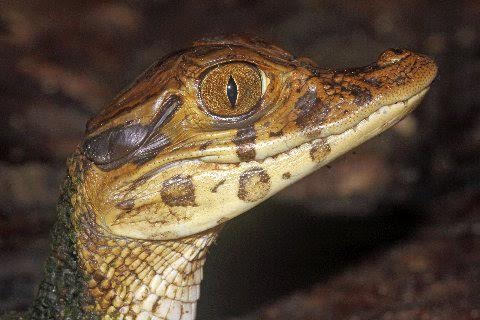 In fact, it was at Tarpon Zoo that I first saw and became enamored of baby black caiman, the most alligator-looking and by far the largest of the several caiman species. But the baby black caiman, with their yellowish faces and dark mandibular blotches, were even cuter than a baby alligator. With only a mention that over the years black caiman have become a species rarely seen in both private and zoo collections in the United States, I'll fast forward about 60 years to 2015. On our winter Amazonian ecotour of 2015, I had made the sighting of a baby black caiman one of our top priorities. And as luck would have it, crocodilian expert Flavio and a few sidekicks accompanied us on that trip. I explained to Flavio that over the years several adults of the species had surfaced next to our boats as we searched after dark for anurans, but despite several tries to find a baby at a known "nursery" locale, we had failed. Flavio and others took on the challenge. Edwin, one of our Peruvian guides, scouted out the easiest and best way to get through the varzea to the nursery pond. The route involved an arduous trek, kayaking, then portaging the craft, then more kayaking, all the while circumnavigating rainforest treefalls. And it was thanks to these Herculean efforts on the parts of others that I, over sixty years after first seeing baby black caiman in captivity, got to see a couple of dozen babies of this coveted taxon in the wild. Life is good. Continue reading "The search is on for a baby black caiman" Herp Photo of the Day: Banana pectinata
Who says reptile pets can't give us joy!? Certainly not us! Kelly's smile and joy is with his banana pectinata shines through in our herp photo of the day, uploaded by kingsnake.com user KellyP!
_(640x480)-med.jpg) Be sure to tell Kellyp you liked it here! Upload your own reptile and amphibian photos photos at gallery.kingsnake.com, and you could see them featured here! Monday, June 8 2015A friendly inhabitant of the Indian seas: The file snake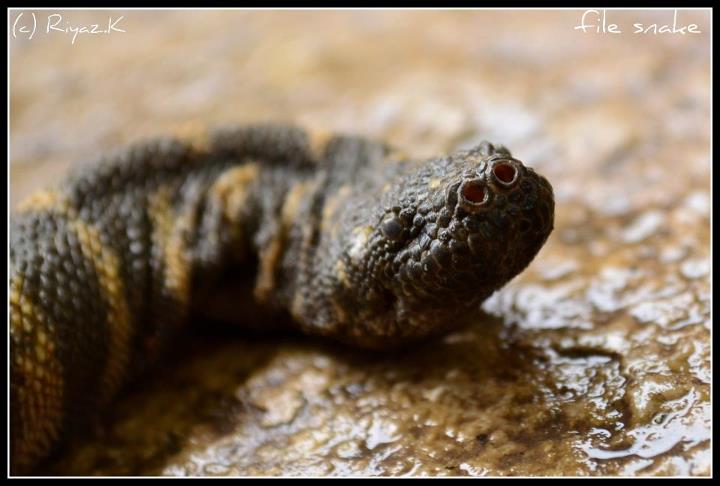 In the seas of India you can find magnificent creatures and underwater activities. In the seas of India you can find magnificent creatures and underwater activities. Found in coastal areas, the file snake, Achrochordus granulatus, is a non-venomous sea snake and an exception to my expectations that sea snakes are usually venomous -- the reason I consider it a friendly inhabitant of the sea! As the file snake is exceptional, it has a beautiful grey or black body with white or yellow bands patched, with its dark grey head and white spots embroiderd on it. This species is completely aquatic and nearly helpless on land. The most interesting thing is that this species varies between sexes in feeding habits, the males actively hunt prey whereas the females sit and wait as ambush predators. The maximum length of the file snake is 120 cm, and it is viviparous by nature. The young snakes have distinct white bands. I have encountered this beauty only once during my morning walk at beach in Mumbai. It was unable to move on dry sand so I just picked it up, handled it for a minute or two, and released it in the sea. One of the memorable morning walks of my life. Photo: Riyaz Khoja Uluru skinks don't kick kids out of the burrow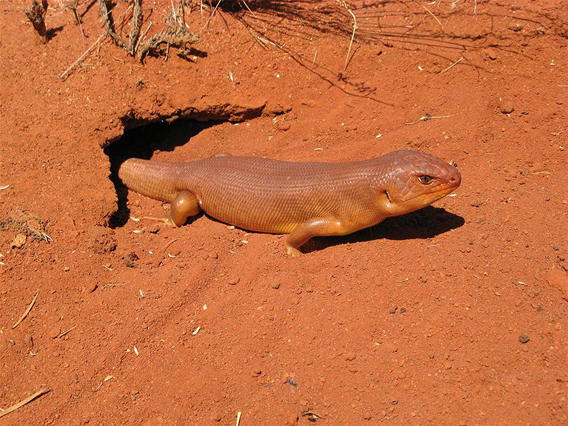 Uluru skinks are the first lizards to show familial behavior, including raising several generations of offspring in a single family home. Uluru skinks are the first lizards to show familial behavior, including raising several generations of offspring in a single family home.From mongabay.com: Adult Uluru skinks pair for consecutive years and may raise several generations in a single burrow constructed by the parents. Not unlike humans, multiple generations of skinks live in the shared home, with parents and children contributing to the maintenance and expansion of their home. The burrows are up to thirteen meters in length, have twenty entrances, and contain designated latrines. Researcher found that skink families inhabited them for up to 7 years straight. Read more here. Herp Photo of the Day: Boa constrictor
"Life is like a box of chocolates, you never know what you are going to get!" While that may be true with chocolates, the work in genetics helps us know almost what is going to pop out of a clutch. But there is a great variety as seen in this clutch of boa constrictors in our herp photo of the day, uploaded by kingsnake.com user creptilia!
 Be sure to tell creptilia you liked it here! Upload your own reptile and amphibian photos photos at gallery.kingsnake.com, and you could see them featured here! Friday, June 5 2015Herp Photo of the Day: South American hognose
Red and black? Black and yellow? Mimics in nature are clear with this pair of South American hognose from the same clutch in our herp photo of the day, uploaded by kingsnake.com user Longhitano!
 Be sure to tell Longhitano you liked it here! Upload your own reptile and amphibian photos photos at gallery.kingsnake.com, and you could see them featured here! Thursday, June 4 2015A message to Ohio's Governor Kasich from 'The Snake People' Governor Kasich, we are the "Snake People" -- also known as biologists, conservationists, and herpetologists! Governor Kasich, we are the "Snake People" -- also known as biologists, conservationists, and herpetologists!All herpers, -- conservatives, liberals, moderates, independents, green party, and whatever else may be your affiliation -- must stand united to initiate the most vigorous grass roots campaign to publicly oppose the candidacy of Governor John Kasich (R-Ohio) for President of the United States. On October 21, 2011, Governor John Kasich, by executive order, required a Dangerous Wild Animal Workgroup, within 39 days, to propose legislation regarding the regulation of "dangerous wild animals" in Ohio. The workgroup recommendation was obviously predetermined. We know what happened regarding unreasonable restrictions being placed on responsible reptile owners; and that Governor Kasich was the driving force behind the Ohio DWA legislation (along with his friends at HSUS). Not only have Ohio herpers and exotic animal owners suffered (many moving out of Ohio), but we now have endured copy-cat legislation in West Virginia and who knows where else in the future. Our numbers are not equivalent to those of some other groups, but due to our extreme passion for herpetology, our message to government officials and politicians has become loud and powerful: Don't tread on us! As I wrote before, USARK's preliminary injunction against USFWS has left the federal agency stunned. You had to be at the court hearings in Washington, DC to observe their sullen faces. At the state level, USARK also laid down markers on behalf of reptile and amphibian owners. For example, a prolonged battle during 2014 and early 2015 resulted in the removal of all salamanders, tree frogs, clawed frogs, toads, turtles, large lizards, constrictor snakes, venomous snakes and crocodilians from the WV DWA list. Then several weeks ago upon adjournment of a DWA Board meeting in WV, one of the DWA Board members politely asked those of us observing the meeting if we were "snake people." On behalf of our contingency, I responded: "Yes, we are 'snake people.'" One of our members then identified himself as an accomplished WV biologist-herpetologist. I wonder how they knew/guessed we were snake people? Photo: kingsnake.com user eastbayexotics Fumbled forecast and Strecker's chorus frogs
The long range forecast for the Houston region had called for one day of showers, light rain on the second day, and heavy rain for most of the third day. The high temperatures of about 45 degrees Fahrenheit on the first day rose on each of the next two to a high of 66 degrees Fahrenheit on the third day.
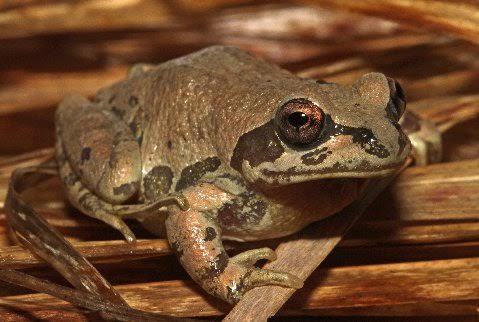 Sitting in northern Florida, some 850 miles east of Houston, Kenny and I decided that the conditions should induce breeding activities of at least four species of winter breeding anurans (3 species of chorus frog and one true frog) of which we both wanted digital format photos. We piled into my old Toyota RAV4 and headed west to Texas, a state well known for weather vagaries. And three days of vagaries were exactly what we drove 850 miles to find. The temperature the first day was actually summery but rather than showers, the rain that fell was very localized and was merely a single sprinkle that barely dampened the area. We did see three Strecker's chorus frogs, Pseudacris streckeri, one of the 4 target species. The second day was dry and cooler and we saw nothing. Rather than being the warmest of the three, the high temperature on the third day was now forecast be cooler, rainy in the morning, and then clearing and plummeting to near freezing that night. We decided to wait until the next morning, assess the situation and then decide whether to stay or skedaddle eastward. At daybreak it was dry and temperatures had dropped significantly. By noon it was dry, very windy and cold. We left, our score remaining only one out of 4 of the targets. But it was a start. Continue reading "Fumbled forecast and Strecker's chorus frogs" Can artificial insemination save the Yangtze softshell turtles?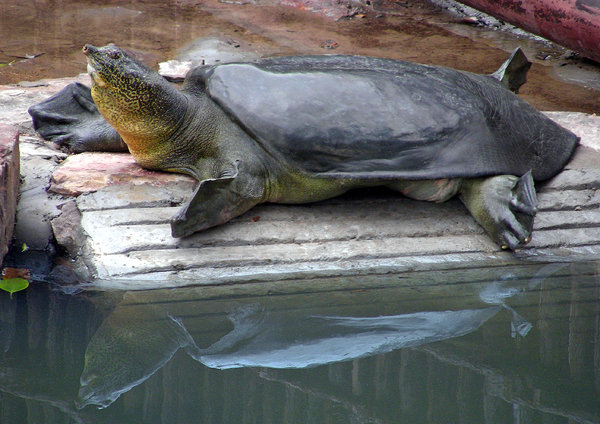 Unable to lay fertilized eggs without help, scientists have attempted the first artificial insemination of a softshell turtle. Unable to lay fertilized eggs without help, scientists have attempted the first artificial insemination of a softshell turtle.From the New York Times: “Even if we get just one or two hatchlings, I will be very happy,” said Gerald Kuchling, a project leader for the Turtle Survival Alliance, a nonprofit conservation organization. “Even a single one would give hope for the recovery of this magnificent animal. It would be a turn.” Read more here. Herp Photo of the Day: Ringneck snake
Proving that good things come in small packages, this field caught ringneck shines in our herp photo of the day, uploaded by kingsnake.com user cochran!
 Be sure to tell cochran you liked it here! Upload your own reptile and amphibian photos photos at gallery.kingsnake.com, and you could see them featured here! Wednesday, June 3 2015Alligator shows truck and driver who's boss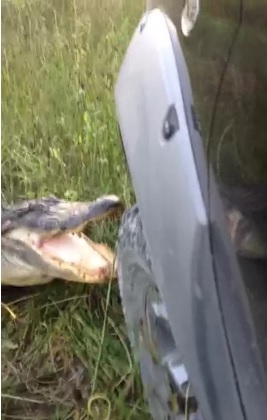 In a battle between an alligator and a truck, who would win? In a battle between an alligator and a truck, who would win?From the Huffington Post: When confronted by an oncoming truck on Thursday, an alligator in Avoyelles Parish, Louisiana, refused to back down. Instead, the reptile went on the attack, and proceeded to tear off the truck's entire front bumper. Read more here. An unexpected meeting with a termite hill gecko
They say if you're into studying or handling reptiles, you should be able to handle any species of reptile. Oddly, although I can handle almost any kind of snake, I'm a bit scared of lizards! (Although, despite my fear, I still think they're beautiful.)
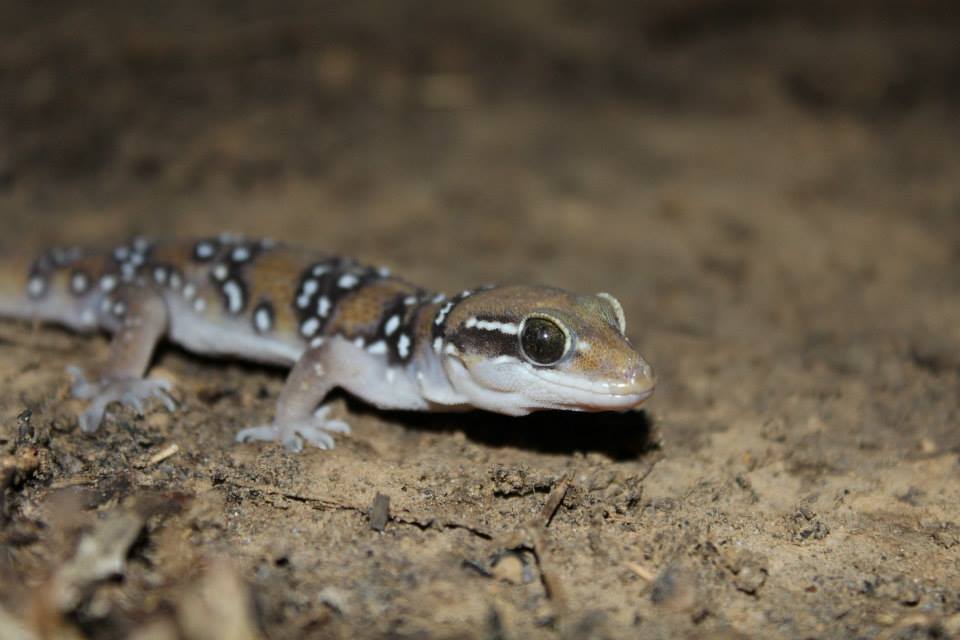 I usually only overcome my fear when the species is either rare or beautiful. That's the case with the termite hill gecko (Hemidactylus triedrus), a species of gecko found in South Asia, and one of the rare lizards I've ever touched. I was searching for some hump-nosed pit vipers with my teacher Iqbal Shaikh at night around 10 PM. I saw a movement in the dried leaves on the ground and I got a glimpse of a brownish tail. I assumed it was a hump-nosed pit viper. I was the one to remove the leaves and clear the area so it would be easy to catch, and my teacher was the one who was going to grab it. As I cleared the area and removed the leaf, I saw it was a termite hill gecko. At first, my expectations were shattered because I wanted to see a hump-nosed pit viper. However, the color of this gecko was so attractive it made me forget everything else. It was brown in color and had white dotted stripes on the back. My teacher was the one to pick it up, and after watching him handling this beauty, I gained some confidence and handled it. I had the feeling you get when you defeat your fear. It was a great night, and we actually found a few hump-nosed pit vipers, which made me even happier! Continue reading "An unexpected meeting with a termite hill gecko" Herp Photo of the Day: Hognose
Always watching, this Toffeebelly Hognose is serene in our herp photo of the day, uploaded by kingsnake.com user hogboy!
 Be sure to tell hogboy you liked it here! Upload your own reptile and amphibian photos photos at gallery.kingsnake.com, and you could see them featured here! Tuesday, June 2 2015An Ecuadorian frog in Peru
The little frog was sitting atop a frond well, up out of reach in a Bactris riparia (spiny palm).
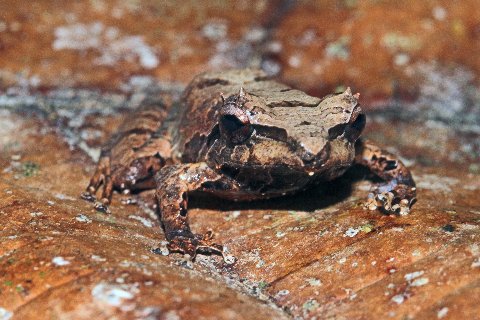 Marisa jokingly told Emerson, the preserve manager, that she wanted the frog and taking her statement at face value, he set about getting it for her. A few minutes later Emerson called Marisa and showed her the frog, then sitting quietly on the crook of his snake hook. The next morning Marisa, showed Kenny and me the frog. Neither of us were able to identify it to species. In fact, we even vacillated on genus, but eventually agreed on Pristimantis. Kenny just called it Pristimantis sp., I preferred Pristimantis sp. cf okendeni. Lots of pictures were taken. After returning home, Kenny continued to attempt a positive identification, and thanks to AmphibiaWebEcuador he succeeded. Marisa and Emerson had collected a species thought previously to be rare in and endemic to Ecuador - Pristimantis orphnolaemus, a small anuran best known as a canopy dweller in primary forest. Its finding has documented a new herpetofaunal species in Peru and it was found on Santa Cruz Forest Preserve. Thanks to all for the efforts both afield and in researching the find. Continue reading "An Ecuadorian frog in Peru" Zoo hopes to save Hellbender salamanders in Indiana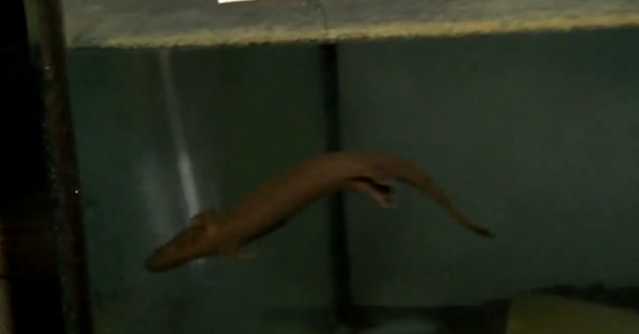 The Colombian Park Zoo and Purdue University are working together to help the Hellbenders, who are disappearing from the wild in Indiana. The Colombian Park Zoo and Purdue University are working together to help the Hellbenders, who are disappearing from the wild in Indiana.From WLFI.com: “When our amphibian species start disappearing, there’s a problem,” said senior zookeeper Noah Shields. “This is not just another animal that may be going extinct here in Indiana. This is a very, very important species.” Read more here. Herp Photo of the Day: Blind snakes
Not a very common sight, but these Brahminy blind snakes are the spotlight today in our herp photo of the day, uploaded by kingsnake.com user Canes05!
 Be sure to tell Canes05 you liked it here! Upload your own reptile and amphibian photos photos at gallery.kingsnake.com, and you could see them featured here! Monday, June 1 2015Can USFWS appeal the preliminary injunction and seek a stay? In briefs and during recent hearings, United States Fish and Wildlife Service USFWS) informed the United States District Court for the District of Columbia that it would take 75 days to determine whether to appeal the preliminary injunction (PI) granted to USARK. However, the Federal Rules of Appellate Procedure appear to only provide 60 days in which a United States agency may file a Notice of Appeal. [Rule 4(a)(1)(B)(ii)] Nonetheless, USFWS requested a stay of the PI for 75 days. In briefs and during recent hearings, United States Fish and Wildlife Service USFWS) informed the United States District Court for the District of Columbia that it would take 75 days to determine whether to appeal the preliminary injunction (PI) granted to USARK. However, the Federal Rules of Appellate Procedure appear to only provide 60 days in which a United States agency may file a Notice of Appeal. [Rule 4(a)(1)(B)(ii)] Nonetheless, USFWS requested a stay of the PI for 75 days.In his order, United States District Court Judge Randolph D. Moss stayed most of the proceedings in the Federal District Court for 60 days or until the termination of any appeal of the PI. Judge Moss did not technically stay the PI, but he effectively did so temporarily by making the PI effective 14 days after his order, on Tuesday, June 2, 2015. If it files a notice of appeal, USFWS may again seek a stay of the PI for the pendency of such appeal. It also appears that USFWS could technically file immediately for a stay of the PI with the United States Court of Appeals. [Rule 8(a)] However, it seems unlikely the Court of Appeals would be inclined to take such a motion for stay very seriously if USFWS did not simultaneously file a notice of appeal. Why? The District Court has already considered and denied any stay of the PI beyond the 14 days already allowed through June 2, 2015. Moreover, if USFWS sees the reversal of the PI as an extraordinarily important issue, then it should be able to expedite the administrative procedure for filing a notice of appeal. During the hearing, USFWS stated that it was time consuming to get administrative permission to appeal because an appeal had to be authorized by the Solicitor General, and also involved Department of Justice lawyers at the trial and appellate levels, as well as a number of folks at USFWS and The Department of Interior, at various levels. Photo: kingsnake.com user eschmit04 The buff-stripped keelback
In India you can find 16 species of keelback snakes, which makes it one of the largest family of snakes in the country. The keelback snakes are said to be relatives of the garter snakes, which are pretty common in America.
One of the keelback snakes found in my area is the buff-stripped keelback, Amphiesma stolatum, and it's also my favorite from the family because of its color and its shy nature. These snakes are found near water bodies in marshy areas and paddy fields. 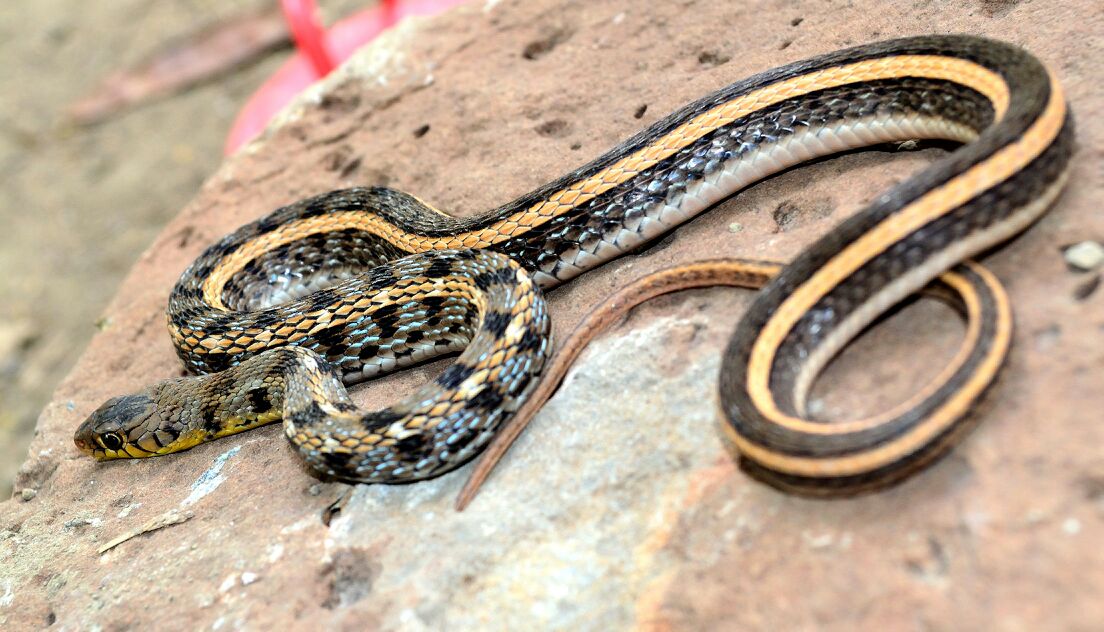 During mating season, six or seven males can be seen following a female. Due to pheromones (sex hormones) that are released in the air, even a recently killed female may attract males during this particular season. This has given rise to the misbelief that at least six more snakes turn up if a buff-stripped keelback is killed. The maximum length of this snake is 80 cm, and it is oviparous by nature, laying eggs twice in a year. The color variations in this snake is the main reason which makes it one of my favorites, as well as its shy nature, which is always beneficial during the rescues. Photo: Riyaz Khoja Unknown disease puts Australian turtle on the brink of extinction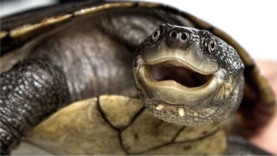 Several months ago canoeists found several dead turtles in an Australian River, and this may be the harbinger of the extinction of Bellinger River snapping turtles. Several months ago canoeists found several dead turtles in an Australian River, and this may be the harbinger of the extinction of Bellinger River snapping turtles.From Scientific American: Since then more than 400 dead turtles have shown up. Dozens more sick turtles were also recovered, each of which was lethargic, emaciated and covered in infected lesions in their eyes, skin and even internal organs. Read more here. Herp Photo of the Day: Hognose
What a better way to spotlight this gorgeous super conda hognose! This stunning snake takes center stage in our herp photo of the day, uploaded by kingsnake.com user nearhoofm!
 Be sure to tell nearhoofm you liked it here! Upload your own reptile and amphibian photos photos at gallery.kingsnake.com, and you could see them featured here! Friday, May 29 2015The Indian monitor lizard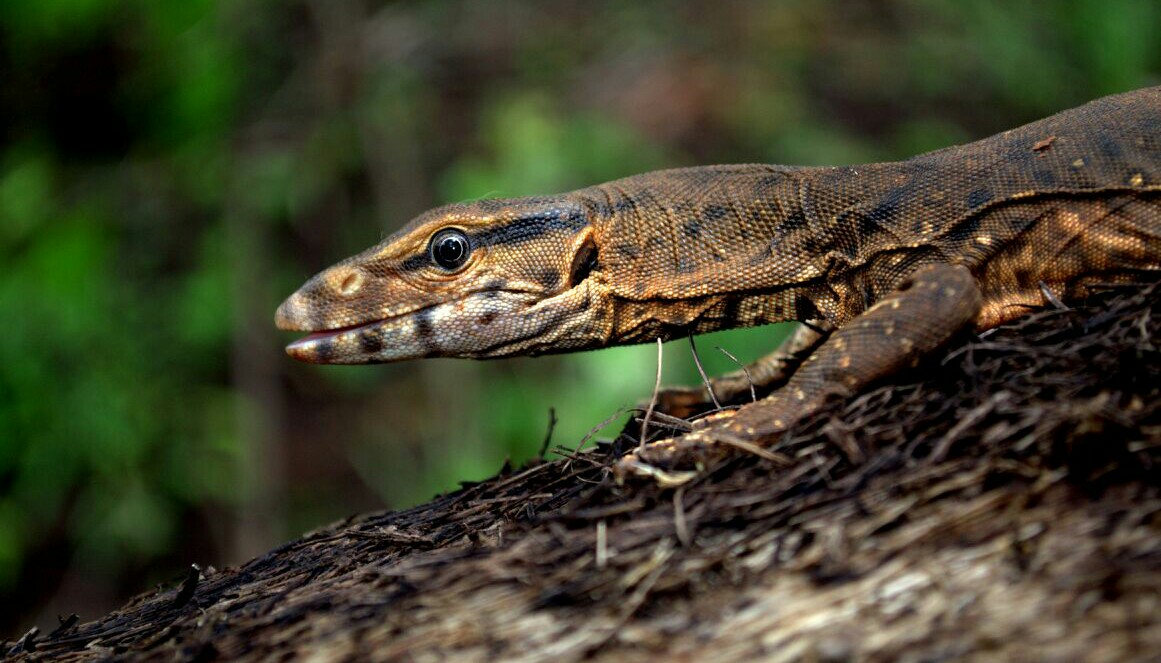 In all the time I've been writing for kingsnake.com, most of my posts have been about Indian snakes. It's like I've forgotten there are other reptiles and amphibians that also exist in India. So here are some thoughts on the most common monitor lizard of India. In all the time I've been writing for kingsnake.com, most of my posts have been about Indian snakes. It's like I've forgotten there are other reptiles and amphibians that also exist in India. So here are some thoughts on the most common monitor lizard of India.The Indian or Bengal monitor, Varanus bengalensis, is a monitor lizard found widely distributed over the Indian subcontinent, as well as parts of Southeast Asia and West Asia. This large lizard is mainly terrestrial and grows to about 175 cm from the tip of the snout to the end of the tail. The juveniles are more colorful with dotted bands, but as they grow the color of the body is grey or light brown. It is been said that a monitor lizard has a very powerful grip with claws and there is a story sys that a legendary warrior and his group of soldiers climbed a fort with the support of a monitor lizard and rope. In India, monitors are hunted for their meat, especially in rural areas. It is believed by these villagers that monitor lizard meat helps to prevent joint pain. For me, it is always a sad thing seeing these reptiles getting killed, and I am doing my best to protect them by making people aware of these magnificient creatures, and I'm sure a change is coming! Photo: Riyaz Khoja Herp Photo of the Day: Rhino iguana
It's the weekend and what better excuse to hang with your friends, just like the rhino iguana in our herp photo of the day, uploaded by kingsnake.com user spotsowner!
-med.jpg) Be sure to tell spotsowner you liked it here! Upload your own reptile and amphibian photos photos at gallery.kingsnake.com, and you could see them featured here! Thursday, May 28 2015Two Texas map turtles and not one camera
Reduced in size and flow during a drought, at the bridge where we stood the river was still about 30 feet wide and looked to be cool and fairly deep with even deeper holes. Kenny and I were watching some very wary diamond-backed water snakes that were using some cracks in the bridge abutment as hideaways when a turtle head broke the water surface, spied us, reversed, and sped to the bottom.
Texas cooter? No. But it was definitely an emydine, not a mud turtle. 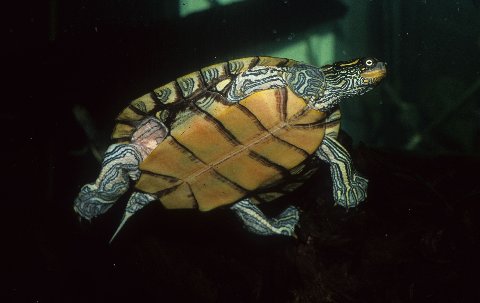 After checking the various range maps, it seemed that there was only one other choice - a Texas map turtle, Graptemys versa. Suddenly the sighting took on new importance for this was a species with which neither of us was overly familiar. So we stood quietly and patiently and watched the water slowly pass by. No turtle. We admitted defeat and clambered back to the roadway. Before returning to the car we glanced once over the edge of the bridge and there, below us, swam the turtle. Correction: swam 2 turtles. They were Texas map turtles, a small male and a larger female, and they were courting. Picture taking time! Whoops, our cameras were still in the car. Of course. Where else would they be when needed? Continue reading "Two Texas map turtles and not one camera" Windsor Humane Society investigating disturbing watersnake killing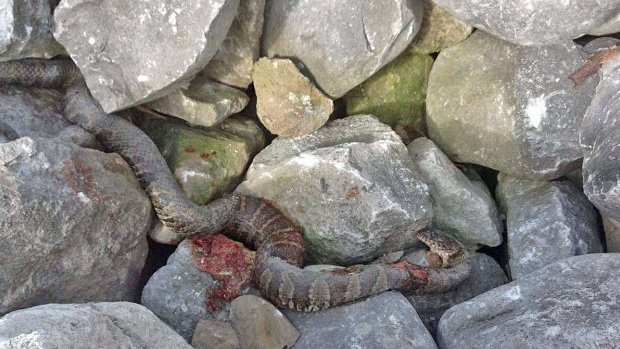 The Windsor-Essex Humane Society is decrying a violent attack on a northern watersnake, and asking the incident be taken as seriously as abuse against any other type of animal. The Windsor-Essex Humane Society is decrying a violent attack on a northern watersnake, and asking the incident be taken as seriously as abuse against any other type of animal.From the CBC: Coulter said the Humane Society consulted a snake expert who said the snake died at the hands of a human and not another animal. She also said rocks didn't simply fall on the snake and kill it. Read more here. Herp Photo of the Day: Desert horned lizards
This pair of horned lizards (aka horny toads) are just chilling like a pair of villians on their rock in our herp photo of the day, uploaded by kingsnake.com user radar357!
 Be sure to tell radar357 you liked it here! Upload your own reptile and amphibian photos photos at gallery.kingsnake.com, and you could see them featured here! Wednesday, May 27 2015Turtle reunited with her veteran savior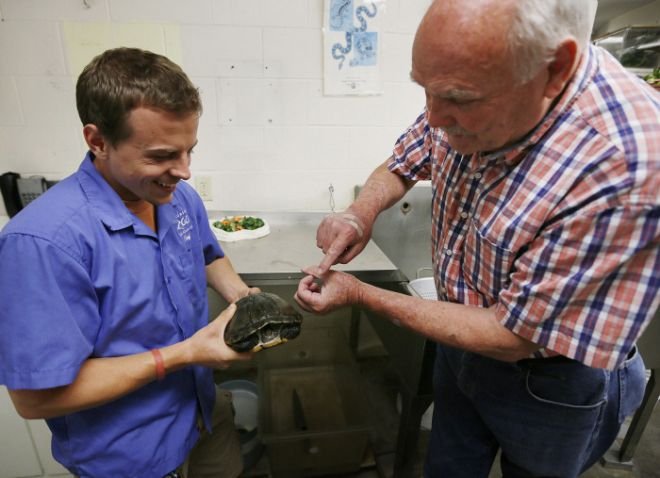 A veteran was reunited with Ba Cu, a Vietnamese pond turtle he rescued nearly 50 years ago and the oldest known example of her species. A veteran was reunited with Ba Cu, a Vietnamese pond turtle he rescued nearly 50 years ago and the oldest known example of her species.From the Columbus Dispatch: On Thursday, Lowery and Ba Cu met again in a visit arranged by zoo officials in honor of Memorial Day. Though Lowery, now 72, lives in Pickerington, he doesn’t often visit the zoo, he said, so he was glad to see the turtle. Read more here. Herp Photo of the Day: Parson's chameleon
CHOW TIME! This female Parson's chameleon is just about to grab a bite to eat in our herp photo of the day, uploaded by kingsnake.com user rocknreptiles!
 Be sure to tell rocknreptiles you liked it here! Upload your own reptile and amphibian photos photos at gallery.kingsnake.com, and you could see them featured here! Tuesday, May 26 2015Zoo teaching grade schoolers to be citizen scientists Missouri school children will be using stuffed animals and telemetry data to learn about box turtles. Missouri school children will be using stuffed animals and telemetry data to learn about box turtles.From the KPLR News: Monday evening more than 200 grade school students will track soft plush box turtles to better understand their ecosystem. Read more here. Photo by kingsnake.com user jeffb. An arboreal beauty: the green tailed rat snake
There's just that something about a green snake! Whether they are of the comparative chunkiness of a tree viper or the slender build of a rat snake, it seems that snakes of green color are hobbyist favorites.
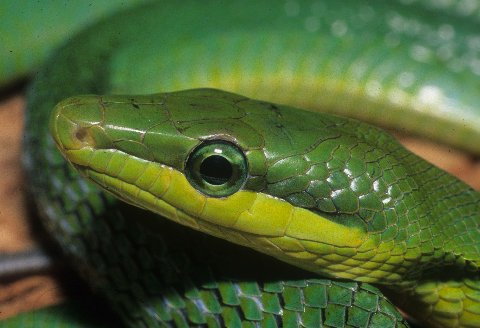 The racer-thin, rodent and bird eating, red-tailed green rat snake, Gonyosoma oxycephala (this snake also occurs in less popular blue-gray and reddish-brown phases) is one of the latter, an aptly named arboreal beauty. Adult at 6 to 7 feet in length, occasional examples can exceed 8 feet. Females are often the larger sex. Although this large and beautiful Southeast Asian snake is occasionally bred in captivity, many that become available are wild caught imports. If freshly collected before importation, survival rate may be termed "fair." But if held at a collection facility for days or even weeks (as is often the case) stress, dehydration, and endoparasites will have weakened the snakes rendering them difficult to acclimate. Although I seldom advocate routine purging of endoparasites, I have found that it does seem to benefit the newly imported examples of this taxon. Captive hatched examples are often as feistily defensive as the adults. With a bit of teasing, hatchlings will accept pinky mice from forceps. Be aware that as an arboreal species, examples of all sizes may be reluctant to drink from a water dish. This reluctance can usually be overcome by placing an aquarium air stone (attached to a small vibrator pump) in the water and/or elevating the water dish to perch level. This taxon is not for all hobbyists, but for those having interest, they are well worth the extra effort that is often required. Continue reading "An arboreal beauty: the green tailed rat snake" |
Our Sponsors CategoriesSubscribe |

|
|

|
|

