
mobile - desktop


  |
| mobile - desktop |
|
 |
 Contact Sales! |
News & Events:
|
|
Reptile & Amphibian
News Blog Keep up with news and features of interest to the reptile and amphibian community on the kingsnake.com blog. We cover breaking stories from the mainstream and scientific media, user-submitted photos and videos, and feature articles and photos by Jeff Barringer, Richard Bartlett, and other herpetologists and herpetoculturists.


Wednesday, March 19 2014Herp Photo of the Day: Red Eared Slider!
This image of a Red Eared Slider, uploaded by kingsnake.com user otis07, is our herp photo of the day!
 Upload your own reptile and amphibian photos photos at gallery.kingsnake.com, and you could see them featured here! Tuesday, March 18 2014Rare frog discovered in Eastern Tanzania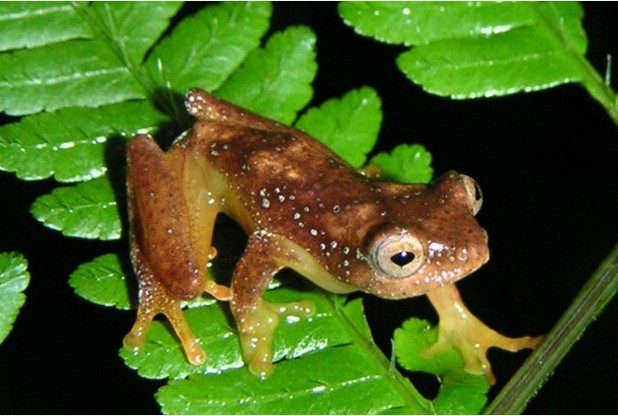 A pair of Kihanga reed frogs has been discovered in Eastern Tanzania. A pair of Kihanga reed frogs has been discovered in Eastern Tanzania.From the Western Morning News: The Whitley Wildlife Conservation Trust, which runs Paignton Zoo, Living Coasts in Torquay and Newquay Zoo in Cornwall, helped fund the fieldwork with rare amphibians in the mountains of Eastern Tanzania. Read more... Photo: Elena Tonelli/Western Morning News Rainforest reminiscences 5: The rusty whipsnake
In contrast to the emerald tree boa, which is orange as a baby and green as an adult, the rusty whipsnake, Chironius scurrulus, reverses the scenario.
Hatchlings of this forest speedster are leaf green, blending well with the rainforest verdure: 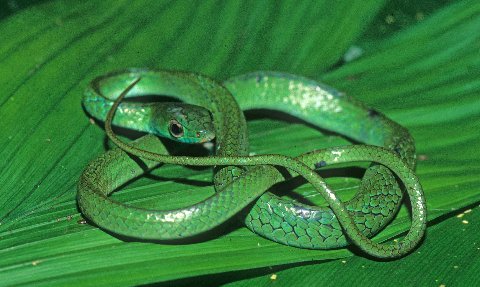 The adults, which may attain a length of 7 feet, are predominantly a beautiful burnished rusty orange but may have a varied number of scattered charcoal scales. The juveniles seem to feed primarily on hylid frogs and possibly lizards, while the adults eat amphibians, fish, lizards, and perhaps small mammals. We usually encounter the juveniles in shrubs along creek edged forest trails and the adults along the larger rivers. This is a nonvenomous snake but it will not hesitate to strike and bite if carelessly restrained. More photos under the jump... Continue reading "Rainforest reminiscences 5: The rusty whipsnake" Herp Photo of the Day: Painted Turtles!
This image of Painted Turtles, uploaded by kingsnake.com user nategodin, is our herp photo of the day!
 Upload your own reptile and amphibian photos photos at gallery.kingsnake.com, and you could see them featured here! Monday, March 17 2014Tyrannosaurus rex's teeny tiny relative Tyrannosaurus rex didn't just have tiny arms. He had a tiny cousin, too, say paleontologists Anthony Fiorillo and Ronald Tykoski of the Perot Museum of Nature and Science in Dallas. Tyrannosaurus rex didn't just have tiny arms. He had a tiny cousin, too, say paleontologists Anthony Fiorillo and Ronald Tykoski of the Perot Museum of Nature and Science in Dallas. From CNN: Researchers discovered the dinosaur's remains in 2006 in the Prince Creek Formation on Alaska's North Slope. At the same quarry, Fiorillo and Tykoski have previously uncovered other important finds, such as remnants of the horned dinosaur species Pachyrhinosaurs perotorum, whose discovery was announced in 2011. Read more... Herp Photo of the Day: Tortoise!
This image of a Tortoise, uploaded by kingsnake.com user amazoa, is our herp photo of the day!
 Upload your own reptile and amphibian photos photos at gallery.kingsnake.com, and you could see them featured here! Friday, March 14 2014Herp Photo of the Day: Anole!
This image of a Anole, uploaded by kingsnake.com user StPierre68, is our herp photo of the day!
 Upload your own reptile and amphibian photos photos at gallery.kingsnake.com, and you could see them featured here! Thursday, March 13 2014Rainforest reminiscences 4: The emerald palm snake
Green snakes can be hard to find against the verdure of the forest canopy. This has definitely been the case with this taxon, the emerald palm snake, Philodryas viridissimus.
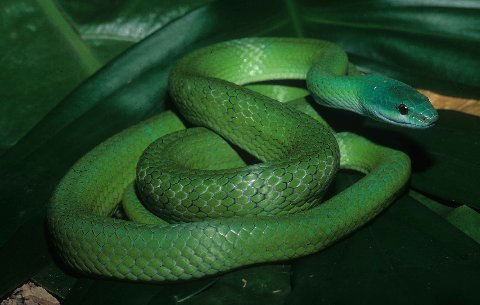 In 20 years of searching, I have not had one in hand and have only see a single sleeping example that I thought to be of this species. It was high in a tree and sped into the darkness (probably unhappily so, since they seem to be diurnal) when I tried to climb the tree. 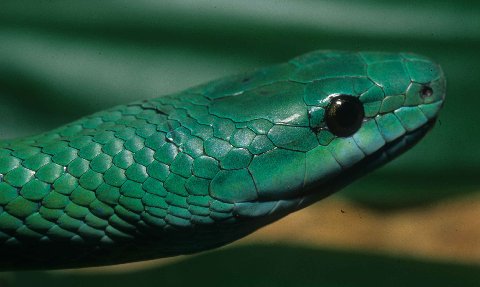 This beautiful snake is adult at 3 feet in length. It feeds on lizards, frogs, nestling birds and small mammals. An opisthoglyphid species, it has enlarged rear teeth, a relatively potent venom, and is not hesitant to bite if carelessly restrained. Both gender are deep green above, a bit lighter ventrally, and have a white to pale green chin and throat. Males have a blue face. Continue reading "Rainforest reminiscences 4: The emerald palm snake" Can the tinker frog be saved from chytrid?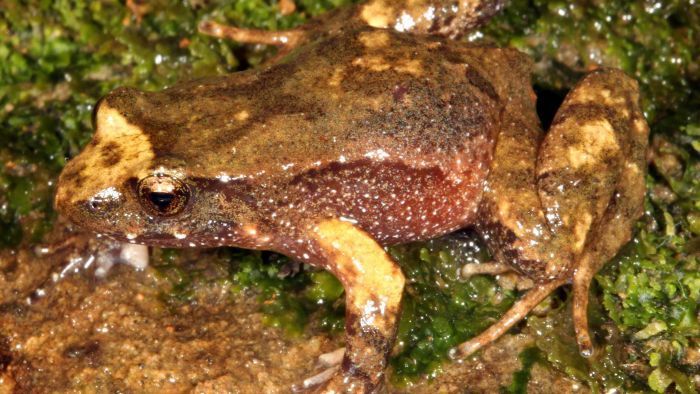 A groundbreaking tinker frog breeding program in Australia seeks to save the species from extinction due to chytrid. A groundbreaking tinker frog breeding program in Australia seeks to save the species from extinction due to chytrid.From News 7 Australia: Two of the six species of tinker frog have already been wiped out, and researchers believe the lethal amphibian Chytrid fungus is to blame. Read more... Herp Photo of the Day: Tegu!
This image of a Tegu, uploaded by kingsnake.com user Scorps, is our herp photo of the day!
 Upload your own reptile and amphibian photos photos at gallery.kingsnake.com, and you could see them featured here! Wednesday, March 12 2014First responders learn how to handle reptiles on the scene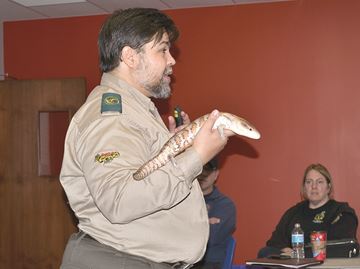 If a first responder is on the scene of an accident or injury, and there's a loose reptile present, or the injured person was bitten by one, will they know what to do? They will if they've been taught the basics by an expert. If a first responder is on the scene of an accident or injury, and there's a loose reptile present, or the injured person was bitten by one, will they know what to do? They will if they've been taught the basics by an expert.That's exactly the program being offered in one Canadian community. From Simcoe.com: Andre Ngo, director of research and curriculum at Reptilia, a Vaughan-based reptile zoo, gave an informative presentation to almost 25 police, firefighters and bylaw officers in Stayner Friday afternoon. Read more... Photo: Simcoe.com Herp Photo of the Day: Uromastyx!
This image of a Uromastyx, uploaded by kingsnake.com user mootish, is our herp photo of the day!
 Upload your own reptile and amphibian photos photos at gallery.kingsnake.com, and you could see them featured here! Tuesday, March 11 2014Why are some snakes so venomous?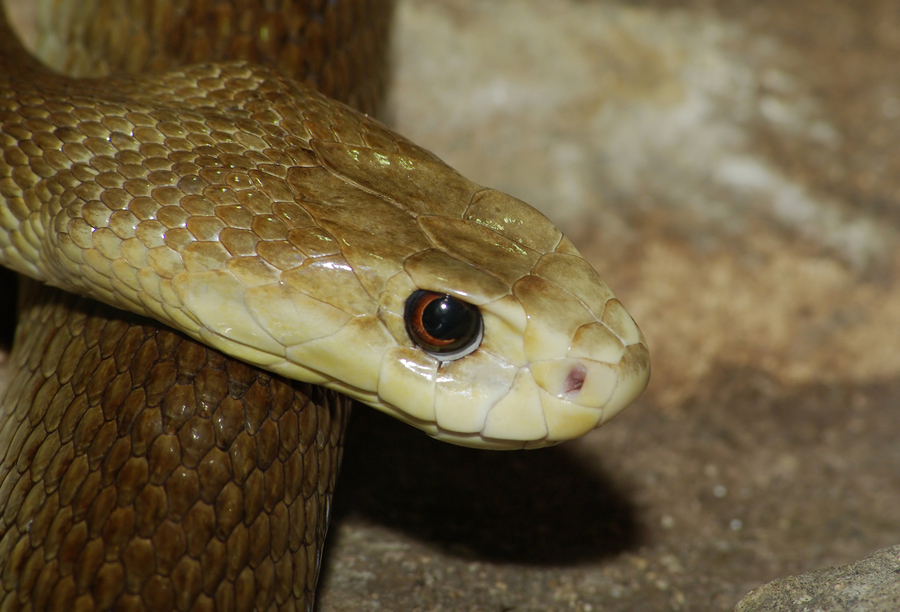 Timothy N. W. Jackson Timothy N. W. JacksonAustralia is world famous for its venomous critters, including its many highly venomous snakes. The snake that holds the popular title of “world’s most venomous” is the inland taipan (Oxyuranus microlepidotus), an inhabitant of Australia’s arid interior. Astonishingly, a single bite from an inland taipan is capable of delivering enough venom to kill 250,000 lab mice. The venom of the inland taipan has attracted considerable research interest and the toxins responsible for its extreme toxicity have been identified. Effective antivenom also exists for the treatment of bites. What we don’t know, though, is why the inland taipan needs such toxic venom. We know almost nothing about the evolutionary selection pressures that have refined and enhanced the toxins present in the venom of this iconic species of snake. Snakes vs humans Historically, the focus of snake venom research worldwide has been anthropocentric – examining the impact the venom has for humans. Large species of venomous snake, those that are known to be potentially dangerous to humans, have received the lion’s share of attention. Most attention has been given to the development of antivenom and to studying the building blocks of toxic proteins found in snake venoms. This has allowed us to learn more about human physiology and to search for compounds that may be useful in drug design, such as the toxin from the venom of a pit viper from which the blood pressure medication Captopril was developed. These are important goals for venom research, but the result of this bias toward human interest is that we still know very little about the ways in which snakes use their venom in nature. We also do not know how diet influences its composition – the ecology of venom is an almost completely neglected area of research. Continue reading "Why are some snakes so venomous?" Rainforest reminiscences 3: The velvety swamp snake
What is green, gray, or red, with or without vestiges of bands, and is usually found in quiet Amazonian shallows?
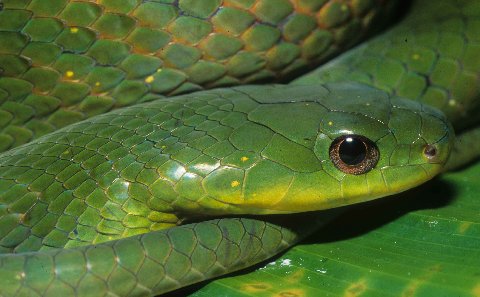 If you guessed the velvety swamp snake, Liophis typhlus, you were right. But the chances are you didn't guess this, for it is a seldom heard of, although common, semiaquatic snake. The majority of this species that we have found have been at riveredge or crossing forest trails on rainy nights. When startled, the snake may bite or flatten and expand their neck in cobra-hood style. Several individuals have regurgitated frogs or frogs' eggs when captured. To date, we have found far more green examples that red or gray, but all colors are seen with some regularity. Time to head south again and add to the memories. More photos under the jump... Continue reading "Rainforest reminiscences 3: The velvety swamp snake" Herp Photo of the Day: Bearded Dragon!
This image of a Bearded Dragon, uploaded by kingsnake.com user OrangeHypo, is our herp photo of the day!
 Upload your own reptile and amphibian photos photos at gallery.kingsnake.com, and you could see them featured here! Monday, March 10 2014Copperheads rising as Eastern kingsnakes decline
As Eastern kingsnake numbers in the southeastern U.S. drop, copperhead populations climb, according to a new study published in the journal Herpetologica.
 From the Augusta Chronicle: The non-venomous kingsnakes, which grow to more than 5-feet long, are so-named because they have a natural immunity to pit-viper venom, which allows them to prey on other snakes. They eat copperheads, a heavy-bodied venomous snake that can grow to a little more than 3-feet long. Read more... Photo: kingsnake.com user foxturtle Herp Photo of the Day: Leopard Gecko!
This image of a Leopard Gecko, uploaded by kingsnake.com user anialady, is our herp photo of the day!
 Upload your own reptile and amphibian photos photos at gallery.kingsnake.com, and you could see them featured here! Friday, March 7 2014Herp Photo of the Day: Shovel-Nosed Snake!
This image of a Shovel-Nosed Snake, uploaded by kingsnake.com user Uncloudy, is our herp photo of the day!
 Upload your own reptile and amphibian photos photos at gallery.kingsnake.com, and you could see them featured here! Thursday, March 6 2014More rainforest reminiscences: The emerald tree boa
To us, the emerald tree boa of the Amazon Basin, Corallus batesii, is a fictional species.
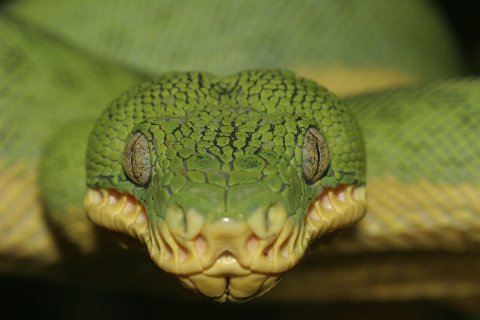 Well, actually, we all know that it exists. It is just that it doesn't exist for us -- at least in situ. For more than 20 years we have sought this beauty. For the same number of years it has evaded our every effort. It has been found one river upstream and one river downstream. It has been found on tributaries across the Amazon. But on the Rio Orosa, the small tributary on which Madre Selva Biological Preserve is located, we have not been able to find a single individual of this magnificent arboreal boid. We have searched by day and by night, in wet weather and in comparative dryness, on sunny days, rainy days, cloudy nights and clear nights. And we'll keep trying. You've heard of the shot heard around the world? Well, when we succeed in finding this snake, be it big or small, a white marked forest green adult or a similarly marked but orange neonate, it will be our victory cry that is heard around the world. More photos under the jump... Continue reading "More rainforest reminiscences: The emerald tree boa" Where do baby sea turtles go? What scientists found will surprise you!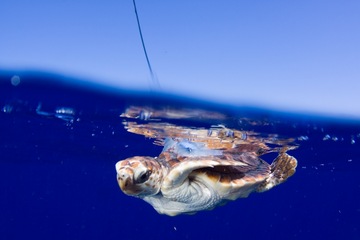 Baby sea turtles, like kids everywhere, don't always do what we expect them to do. University of Central Florida researcher Kate Mansfield and her team found a way to keep an eye on their movements -- and what they discovered surprised them. Baby sea turtles, like kids everywhere, don't always do what we expect them to do. University of Central Florida researcher Kate Mansfield and her team found a way to keep an eye on their movements -- and what they discovered surprised them.From LiveScience.com: Marine biologists track seagoing creatures, including adult loggerheads, with satellite tags that transmit information such as location, depth and temperature. But hatchlings are too small to tag — affix a tag with heavy batteries to these turtles, and they'll sink, Mansfield said. Read the full story here... Photo: Jim Abernethy/LiveScience.com Herp Photo of the Day: Bull Snake!
This image of a Bull Snake, uploaded by kingsnake.com user Leee, is our herp photo of the day!
 Upload your own reptile and amphibian photos photos at gallery.kingsnake.com, and you could see them featured here! Wednesday, March 5 2014Croc vs python; who wins?
Humans battle over the dinner check, but in Australia, a python and a crocodile battled over which one of them would be dinner. Ctizen journalist Tiffany Corlis was on the scene and caught it on her camera.
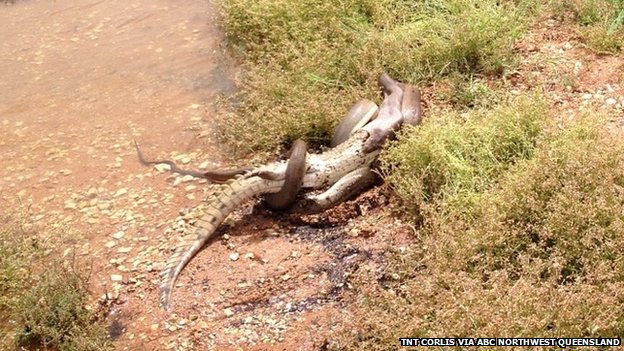 From BBC News: "It was amazing," she told the BBC. "We saw the snake fighting with the crocodile - it would roll the crocodile around to get a better grip, and coil its body around the crocodile's legs to hold it tight." Read the full story, and see the rest of her photos, here. Herp Photo of the Day: Anaconda!
This image of an Anaconda, uploaded by kingsnake.com user Physignathus, is our herp photo of the day!
 Upload your own reptile and amphibian photos photos at gallery.kingsnake.com, and you could see them featured here! Tuesday, March 4 2014Rainforest reminiscences
With its Pinocchio nose and leaf green dorsumm the green vine snake, Oxybelis fulgidus, is an eagerly sought species on each of our Peruvian rainforest tours.
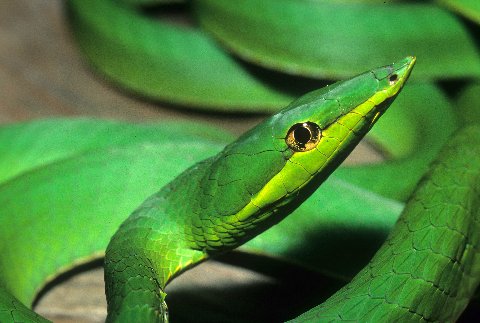 We occasionally see this interesting diurnal snake while it is active during the day. However, most are found while they are sleeping, coiled loosely in a palm or tree crotch. At 5.5 feet in total length, this pretty rear-fanged snake is also of proportionately greater girth than its congeners. A narrow white line separates the forest green dorsal and lateral color from the somewhat lighter belly. Lizards, frogs, nestling birds and tiny mammals such as mice and mouse opossums are eaten. More photos under the jump... Continue reading "Rainforest reminiscences" Dead snake bites man in graveyard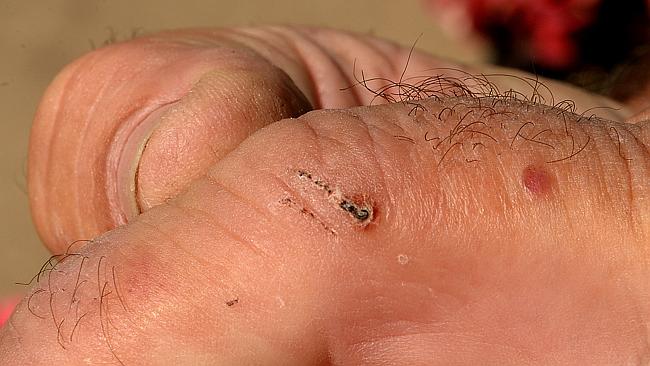 It may sound like an horror movie, but it's not, as 66-year-old Jake Thomas learned the hard way. It may sound like an horror movie, but it's not, as 66-year-old Jake Thomas learned the hard way.Mr Thomas, a volunteer who mows the local cemetery at Werris Creek where his daughter Kim is buried, came across the snake during his usual clean-up. It was in a vase on a headstone. Read more... Photo: Peter Lorimer/Daily Telegraph Herp Photo of the Day: Burmese Python!
This image of a Burmese Python, uploaded by kingsnake.com user PythonEugenics, is our herp photo of the day!
 Upload your own reptile and amphibian photos photos at gallery.kingsnake.com, and you could see them featured here! Monday, March 3 2014Society seeks salamander-spotting citizen scientists Do you ever catch site of spotted salamanders and wood frogs in the field? The Orianne Society wants to recruit you. Do you ever catch site of spotted salamanders and wood frogs in the field? The Orianne Society wants to recruit you.From Living Alongside Wildlife: The Orianne Society recently initiated "Snapshots in Time", a long-term Citizen Science project aimed at mobilizing people to monitor the timing of Spotted Salamander (Ambystoma maculatum) and Wood Frog (Lithobates sylvaticus) breeding throughout the respective ranges of these species. The purpose of this project is to use the data collected—by on-the-ground citizens, year-after-year—to investigate possible effects of climate change on the timing of reproduction. Determining changes in the timing of breeding is very important, not just for these species, but others that use the same habitat. Ultimately, the results of this project could allow us to inform land managers and development planners of important areas for conservation and look deeper into what other species in these ecosystems may be negatively affected by climate change, including some endangered species. Read more... Photo: kingsnake.com user nategodin Herp Photo of the Day: Corn snake!
This image of a Corn Snake, uploaded by kingsnake.com user dallashawks, is our herp photo of the day!
 Upload your own reptile and amphibian photos photos at gallery.kingsnake.com, and you could see them featured here! |
Our Sponsors CategoriesSubscribe |

|

|

|
|

