return to main index

  mobile - desktop
follow us on facebook follow us on twitter follow us on YouTube link to us on LinkedIn
Click for ZooMed  
Click here to visit Classifieds
Locate a business by name: click to list your business
search the classifieds. buy an account
events by zip code list an event
Search the forums             Search in:
News & Events: Kingsnake returns to Tinley . . . . . . . . . .  kingsnake.com joins Monitor Brains! . . . . . . . . . .  Sneak Peek . . . . . . . . . .  Amphibian gut bacteria showing promise in cancer research . . . . . . . . . .  Herp Photo of the Day . . . . . . . . . .  Herp Photo of the Day . . . . . . . . . .  Meet The Baroness - The world's longest snake . . . . . . . . . .  Herp Photo of the Day . . . . . . . . . .  Updates? . . . . . . . . . .  Herp Photo of the Day . . . . . . . . . .  The mechanics behind the viper strike . . . . . . . . . .  Snakes on a Train? . . . . . . . . . .  Tracking the animals in the Florida Everglades - Meet the Croc Docs . . . . . . . . . .  Reintroduction attempts give San Francisco Garter a second chance . . . . . . . . . .  Promoting Reptiles is Our Jam Man . . . . . . . . . .  Origins of Chytrid discovered . . . . . . . . . .  Wisdom Wednesday - The Forums - The water is warm... Come on in! . . . . . . . . . .  Kingsnake.com Past, Present and Future . . . . . . . . . .  IHS Celebrates 50 years . . . . . . . . . .  End of January 2026 . . . . . . . . . .  Fun Fact Friday - Green Tree Monitor . . . . . . . . . .  The Evolution of the Osteoderm discovered . . . . . . . . . .  PACNWRS Expo Jan 2026 . . . . . . . . . .  Diamondback discovered in new Texas county for first time . . . . . . . . . .  Expo Setup . . . . . . . . . .  Reptiles greater than Golden Globes . . . . . . . . . .  Meander Monday . . . . . . . . . .  Update: Release mobile friendly!! . . . . . . . . . .  Reptile Super Show Pomona California . . . . . . . . . .  Kingsnake.com at Pomona Reptile Super Show . . . . . . . . . .  Colorado Herp Society Meeting - Mar 21, 2026 . . . . . . . . . .  Bay Area Herpetological Society Meeting - Mar 27, 2026 . . . . . . . . . .  DFW Herp Society Meeting - Mar 28, 2026 . . . . . . . . . .  Tucson Herpetological Society Meeting - Mar 30, 2026 . . . . . . . . . .  Greater Cincinnati Herp Society Meeting - Apr 01, 2026 . . . . . . . . . .  PACNWRS - Apr. 18-19, 2026 . . . . . . . . . .  Colorado Herp Society Meeting - Apr 18, 2026 . . . . . . . . . .  Chicago Herpetological Society Meeting - Apr 19, 2026 . . . . . . . . . .  Bay Area Herpetological Society Meeting - Apr 24, 2026 . . . . . . . . . .  DFW Herp Society Meeting - April 25, 2026 . . . . . . . . . . 


The West African Sand Boa (Eryx muelleri)


Other images

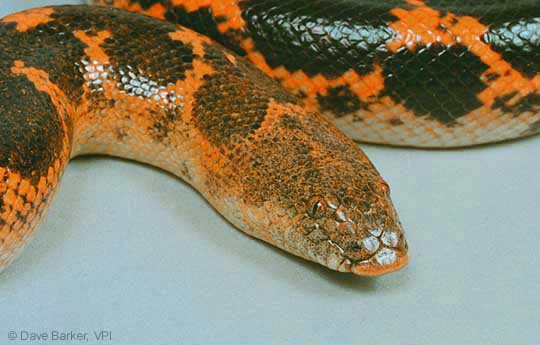
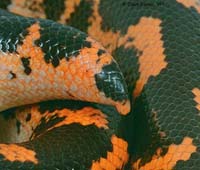
Head of West African Sand Boa

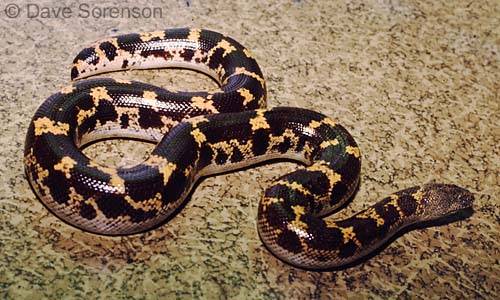
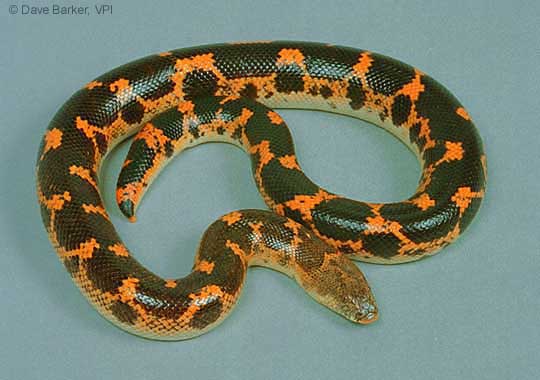
Adult West African Sand Boa

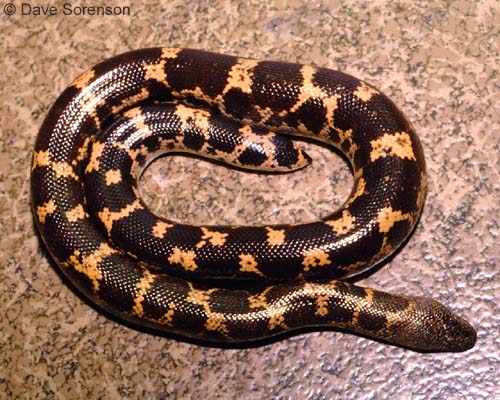
another view of an Adult West African Sand Boa

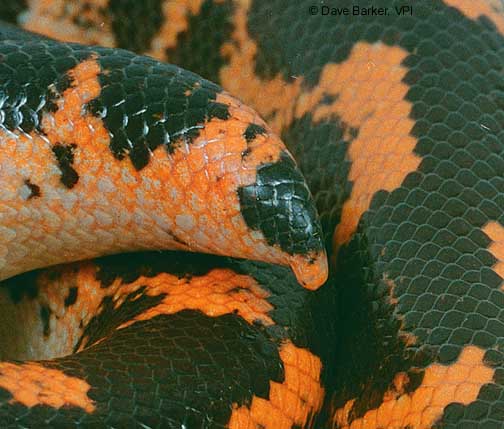
closeup of the fleshy "claw" on the tail

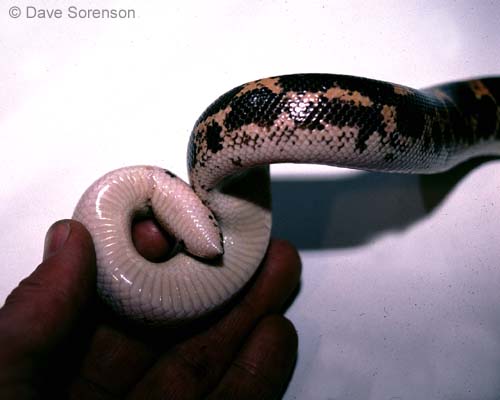
a view of the underside of the tail showing the characteristic "claw"

(thanks to Dave and Tracy Barker and Dave Sorenson for supplying pictures of this almost unknown snake!)


Other names

Mueller's Sand Boa, Saharan Sand Boa

For an explanation of my use of the genus Eryx for this taxon (as opposed to Gongylophis) see the taxonomy page


Introduction
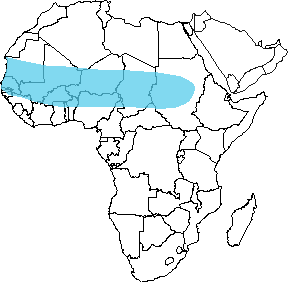
E</u>. <u>muelleri range map


This is one of the poorly known taxa of Sand Boas.   Eryx muelleri is found in the western part of Africa in the southern Sahara, from Mauritania east into the eastern Sudan.  Tokar (1995) looked at specimens from Mauritania, Senegal, Burkina Faso, Ghana, Togo, Benin, Nigeria, and Sudan.   It probably also occurs in Mali, Niger, and Chad.   The approximate range is shown in the map to the right.
In general appearance, the West African Sand Boa is very similar to the East African Sand Boa, E. colubrinus, but differs in having a hooklike "claw" on the end of its tail.   The color pattern is generally a yellowish to orange background with rounded or oval dark brown blotches.

This species has recently been imported into the United States by Dave and Tracy Barker of VPI Pythons.  They say these are docile creatures which are adjusting well to captivity.  Hopefully this will lead to a captive population of this beautiful little sandboa.  

Due to the presence of these recently imported snakes in the US, we now have learned that this species (like E. jayakari) lays eggs.  The eggs were laid very late in development and hatched within 14 days of being laid.

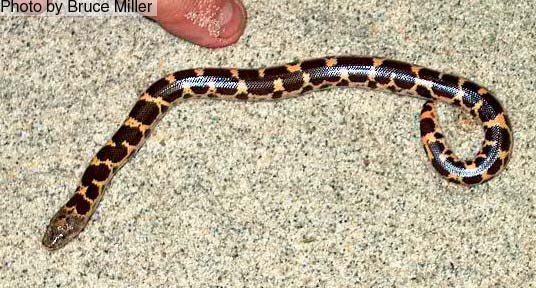
This photo shows the what is probably the first captive born Eryx muelleri ever seen!  This snake was produced by Bruce Miller of Redding Reptiles.  Many thanks to Bruce for allowing me to use the photo..

References

Roman, Benigno. 1980. Serpents de Haute-Volta (Snakes of Upper Volta). C.N.R.S.T. Ouagadougou. pp. 105-106.


Go on to the Somali Sand Boa
Return to the Genus Eryx
Return to the Sand Boa Home Page


© Chris Harrison
19 October, 2001

Sponsored Link
International Reptile Conservation Foundation
advertise here

New & Updated Business Listings
Looking for a reptile or amphibian related business? A reptile store, breeder, importer, maunfacturer or supplier? Our business directory lists some of the most popluar herp businesses in the world.
Locate a reptile or amphibian business by name:
New
Updated
list your business on kingsnake.com

Banner Pool
Click to visit Brass Man Reptiles
advertise here - click for info

Click for 65% off Shipping with Reptiles 2 You Click here for Dragon Serpents Click to visit Classifieds
KINGSNAKE.COM

Enjoy all our content free of charge with a user account that gives you full access to every feature. For added visibility, paid options are available - post in our Classifieds, showcase your business with Banner Ads or a Directory listing, promote reptile events, and more.

Quick Links
Community
Legal & Safety
Support

Register for free ✓ Sign up!

Kingsnake.com ® is a registered trademark © 1997-