mobile - desktop


  |
| mobile - desktop |
|
 |
 Contact Sales! |
News & Events:
|
|
Reptile & Amphibian
News Blog Keep up with news and features of interest to the reptile and amphibian community on the kingsnake.com blog. We cover breaking stories from the mainstream and scientific media, user-submitted photos and videos, and feature articles and photos by Jeff Barringer, Richard Bartlett, and other herpetologists and herpetoculturists.


Wednesday, September 18 2024For the Love of Crusher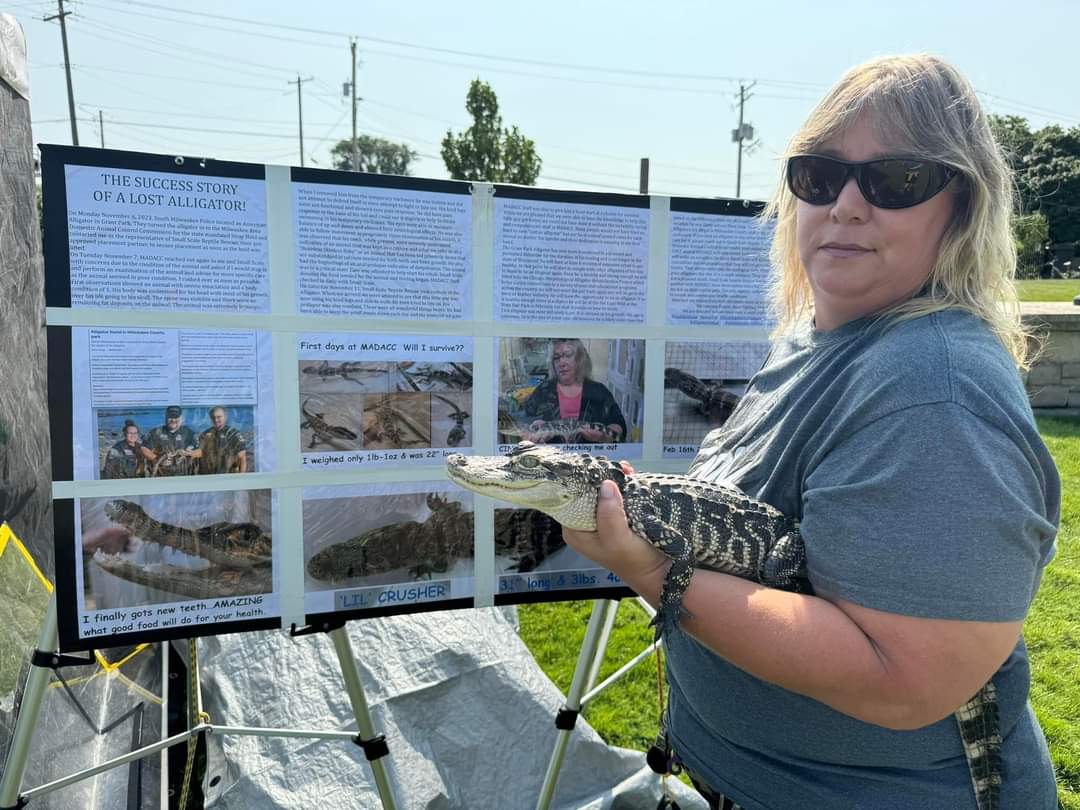 Photo of Lil Crusher and I in August at an educational event. He is well on his way to being healthy here. When I got the text about the alligator that was found by Lake Michigan in November I never realized how attached to him I would become, but ya know, I should have. When the grizzled shelter manager tells me I need to come in because he is worried about the alligator, I should have figured that I would fall head over heels for an animal that I never would live with. He is named Lil Crusher, after Reginald "The Crusher" Lisowski a famous wrestler from our area and if you know me it makes even more sense that this guy is one of my special ones. On that cold November day, 3 South Milwaukee police officers made waves in our local media when they found an American Alligator in a park in Milwaukee WI on the shores of Lake Michigan, the local media went RAMPANT with stories. We had just had the flamingos blown off course by a hurricane, did the alligator come that way too! Did it maybe swim up here? The stories were simply ridiculous. Continue reading "For the Love of Crusher" Friday, July 19 2024Wednesday, June 19 2024Vans pulls misguided ad Over the weekend Vans dropped their new ad featuring their new Cult X Diamonback BMX shoes with a very emaciated ball python. The Reptile Community was outraged and rightfully so. The animal was in poor condition. By Tuesday however, I had a very hard time locating the advertisement anywhere other than social media sites. Rather than adding to the millions of shares, I instead reached out to Vans to inquire if they pulled it and if so to thank them. I also offered to arrange for them to get a photo shoot with an actual diamondback. Today when I clicked the link via email and anywhere else I could find that would directly link it to Vans and the original ad, this is what I saw. They heard us loud and clear. While I don't expect Vans to know what a healthy snake looks like, I would expect their photographer and ad agency to know and to do better. I sincerely hope they hire a different team in the future and never use this one again. They heard us loud and clear. I'm quite sure it will be a few days before I hear back if ever, I am quite sure they have been inundated with messages from our community. I would love to see a statement from them. Hello Vans? Ya Got one? Tuesday, April 16 2024Reintroduced Siamese Crocodile exhibits first time nesting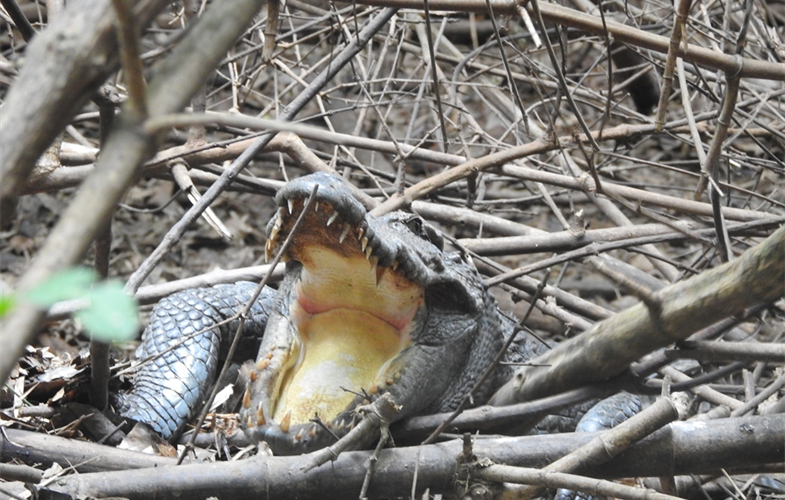 Photo Credit: ©WCS A head-started female Siamese crocodile nesting in the wild In a huge win for conservation, the first ever nesting behavior has been observed by reintroduced female Siamese crocodile that resulted in two hatchlings! The hatchlings are now being headstarted by the Wildlife Conservation Society. The authors note: “While collecting eggs for incubation in May 2022, we were able to identify a unique series of notched tail scutes on a female C. siamensis as she aggressively defended a nest. They have managed to reduce the mortality with their headstart program by an amazing 90%! To read the paper and full story, click here. Monday, April 15 2024Can a virus save Frogs from fungal disease?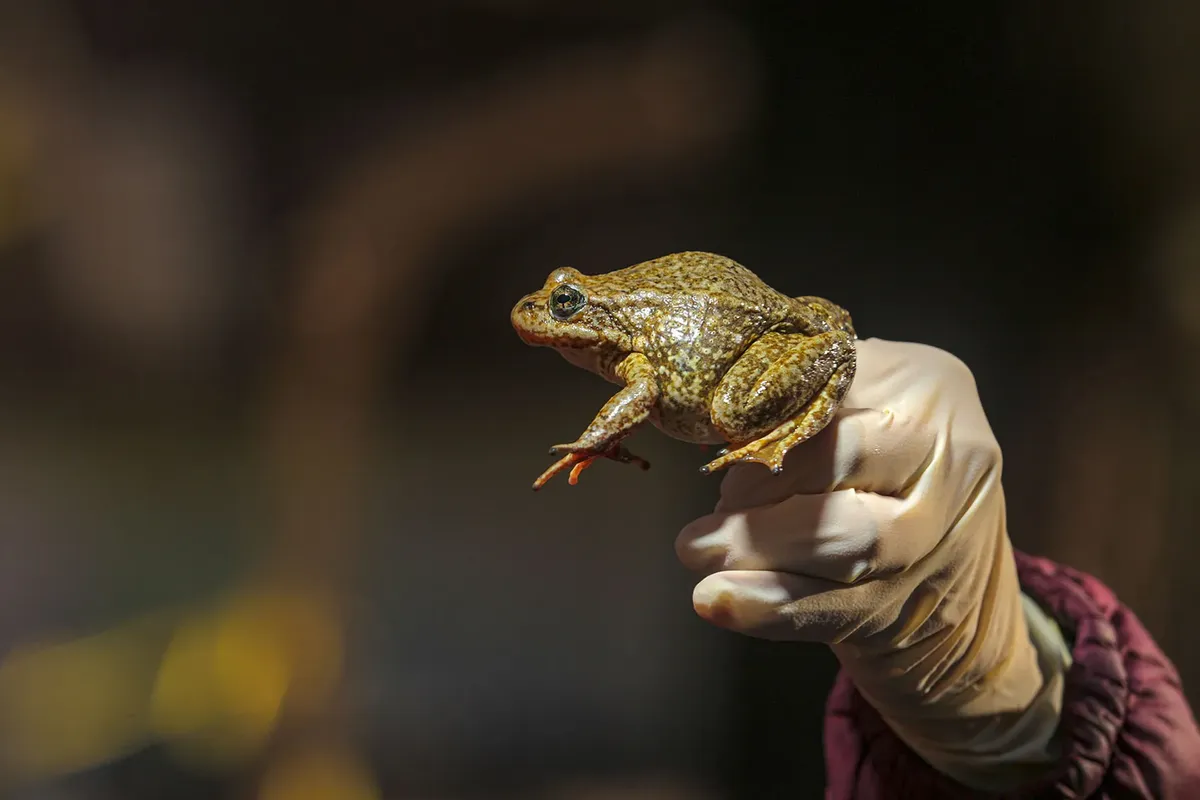 USGS biologist holds an endangered yellow-legged frog recovered from a fire-ravaged stretch of Little Rock Creek, just off Angeles Crest Highway 2 near Wrightwood in the San Gabriel Mountains. (Irfan Khan / Los Angeles Times via Getty Images) USGS biologist holds an endangered yellow-legged frog recovered from a fire-ravaged stretch of Little Rock Creek, just off Angeles Crest Highway 2 near Wrightwood in the San Gabriel Mountains. (Irfan Khan / Los Angeles Times via Getty Images)For over 500 species of frogs, Batrachochytrium dendrobatidis or more easily BD has been devastating. It has decimated populations worldwide and lead to extinctions of of 90 possible species threatening more world-wide. Scientists have been struggling to come up with a cure of any sort and have started to look at the possibility of infecting the fungus with a virus. Meet BdDV-1, a viral fragment discovered by scientists whose paper was recently published by the journal Current Biology. The researchers found it in much the same way that one disentangles a knot, by pulling on individual threads to see where they lead. While examining the BD fungus to learn about weaknesses, they discovered a single-stranded DNA virus trapped within the genome of the fungus. Although this only applied to certain strains, when infected they produced fewer spores than the uninfected fungi. Now the next step is to see if researchers can clone and engineer this virus so that it kills BD and saves the frogs. Now the question remains if they can reenginer the virus to change how it impacts the virus. To read more about the process, visit Salon here. Thursday, March 21 2024Tinley Reflections: An open letter from Mom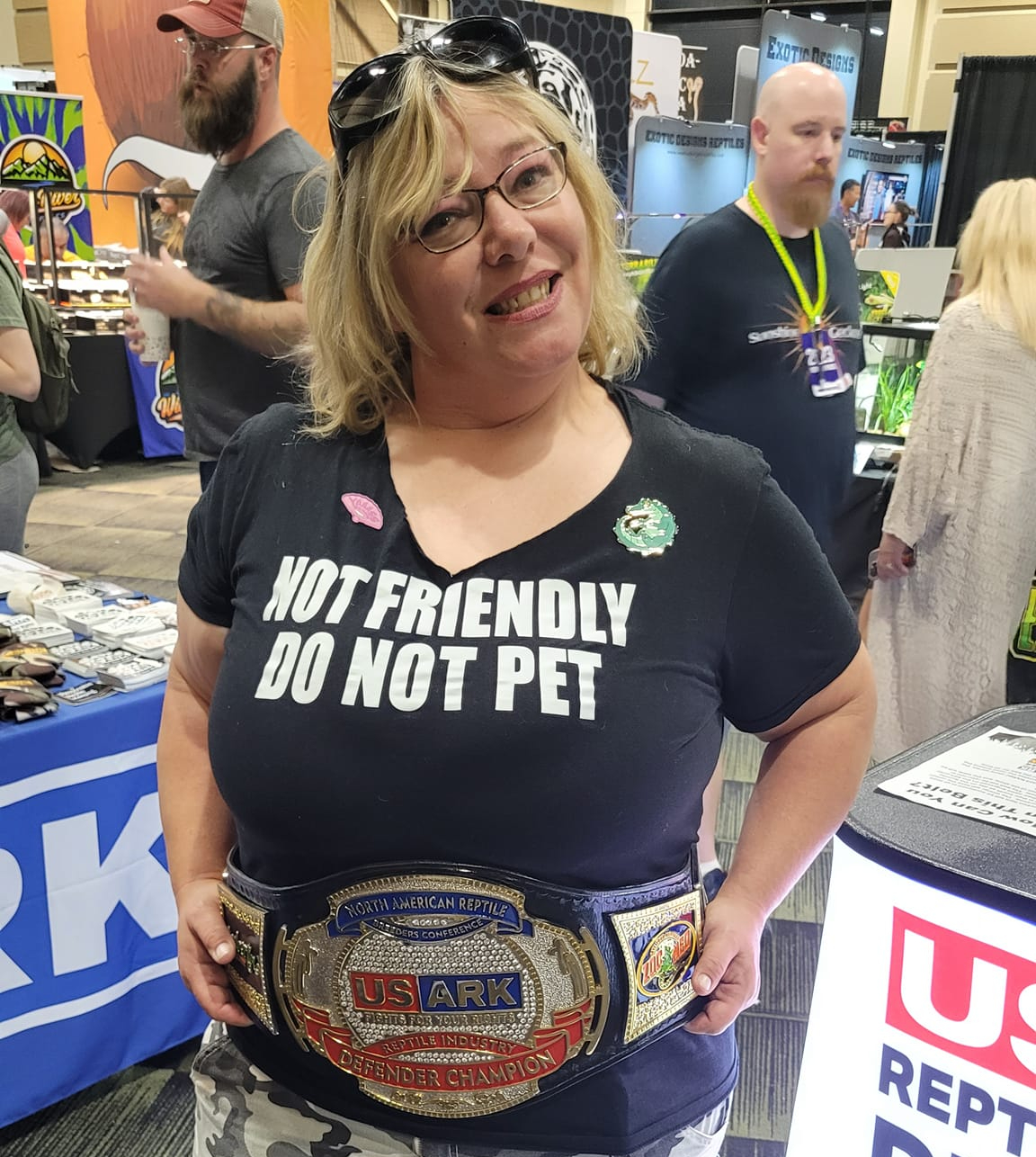 This is me, in all my Tinley Glory. If you need me, just grab me. I will always be there for you. The best part about reptile shows is we can be ourselves. We are with our tribe. People who love the same things we do and it should be a fun and safe environment for all of us. The hard reality is that there are bad people everywhere in this world, no matter where you look. This is going to be a very different post Tinley wrap and bear with me, it is going to probably be long but I promise reptile pictures from the show to lighten the mood that are not ball pythons or crested geckos at the end. Something happened that I felt needed to be addressed and shared even as vague as I intend on sharing. Let's just say, someone was naughty. Continue reading "Tinley Reflections: An open letter from Mom" Wednesday, March 20 2024Autopsy report for Gila Monster bite released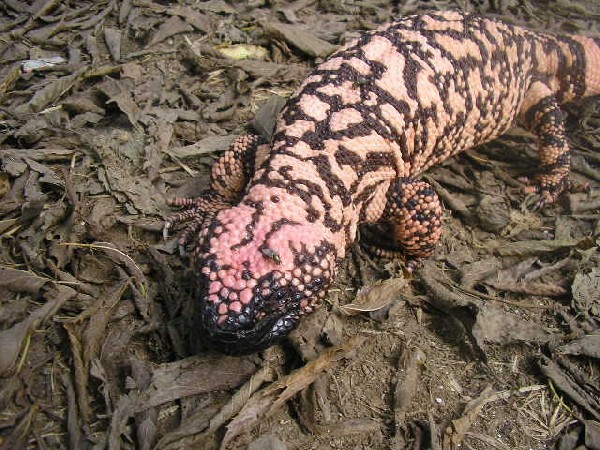 Photo of female reticulated Gila from our photo gallery by user Kevin_Hunt and not animal in question The autopsy report for the man who died after being bitten by his pet Gila Monster has been released and it lists three factors that resulted in his death. The report lists complications from envenomation of the Gila Monster, basically listed as an injury, but also listed an enlarged heart and a fatty liver as "significant contributing factors" in his death. Around 11:45 p.m. Feb. 12, someone called 911 to report an animal bite, according to Lakewood Police. It was later determined to be a Gila monster bite. He sought treatment about 2 hours after the bite. For more on the story, click here. The last known death from a Gila bite was in 1930 and the person may have had liver damage due to cirrhosis. Tuesday, March 12 2024Got Milk? Caecilians might!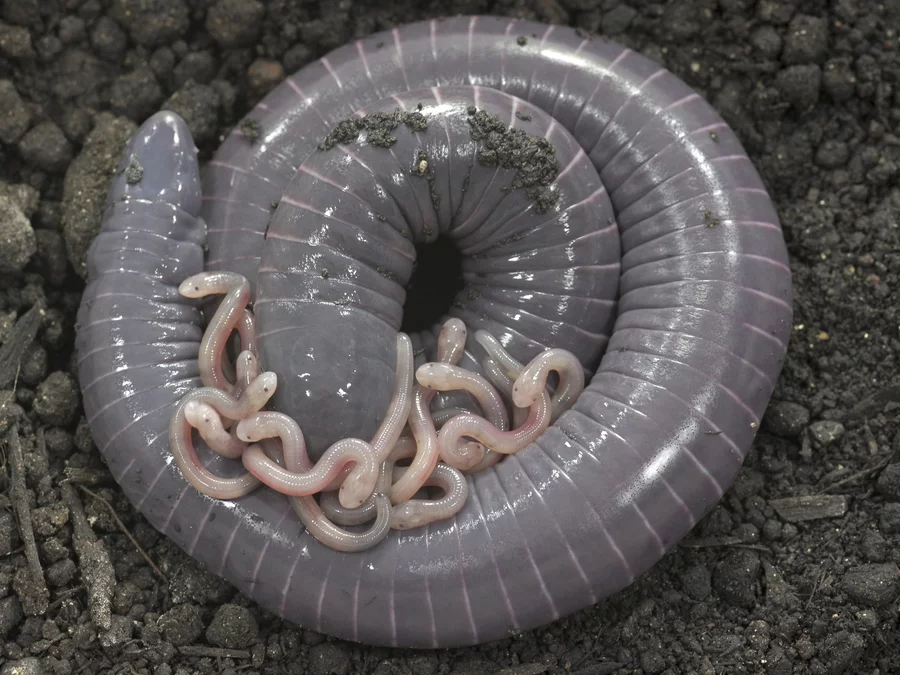 Caecilians are amphibians that look superficially like very large earthworms. New research suggests that at least one species of caecilian also produces "milk" for its hatchlings.Photo by Carlos Jared Most people look at caecilians and think EWW. They are worm-like amphibians and although they have very adorable faces they are a more secretive animal and are often overlooked. Marta Antoniazzi, a biologist at the Instituto Butantan, in Sao Paulo, Brazil has been working with Siphonops annulatus for quite some time now. They noticed that while the babies fed on the mothers shed skin weekly, they were too active for that to be their sole source of nutrition. So they did what anyone would do. Set up a camera and waited. "The babies prefer to go to the tail of the mother," he says. Is it really milk? Well, that is up in the air for now, but it is a nutrition source for the babies provided by mom. For the full story as well as a link to the study, click here! |
Our Sponsors CategoriesSubscribe |
|
AprilFirstBioEngineering | GunHobbyist.com | GunShowGuide.com | GunShows.mobi | GunBusinessGuide.com | club kingsnake | live stage magazine
| ||||||||