- Florida Kingsnake
- Lampropeltis getula floridana
- Size:
- Hatchling: 8 - 12 in.
- Adult: 48 - 72 in.(normal)
- Scalation:
- Dorsal: 23 - 25 rows
- Ventral: 210 - 221
- Sub caudal: 44 - 58
- Infra labial:9 - 10
- Supra labial: 7 - 8
- Anal Plate: Single
|
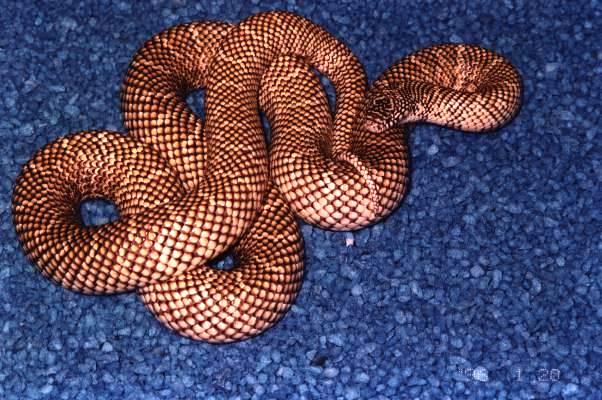
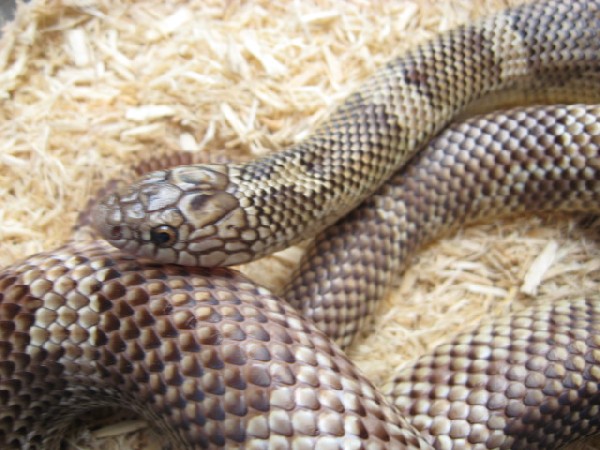
Image courtesy Martin Schmidt
click to enlarge |
Written by Deron Hartman
Coloration:
Head:
Highly variable, generally the same colors as the dorsal colors with no particular identifiers.
Dorsal:
Ground color varies, usually brown with light centered scales and numerous yellowish to white crossbands numbering 40-68. Juveniles often have red or orange coloration in the crossbands. Color lightens with age especially in males which often become very yellow resembling L. g. brooksi.
L. g. brooksi (problematic)- Known as the Brook's or South Florida kingsnake. Generally yellow with very faint crossbands which are usually obscured by the overall yellow coloration and with little or no black coloration.
L. g. goini (problematic)- Known as the blotched, Chipola, or Apalachicola kingsnake. Generally characterized by 15-20 dark cream ground color. Each dark scale is tipped with white or cream and each light scale is tipped with brown or black. There is also a striped phase and a patternless phase found in certain parts of the Apalachicola region.
Ventral Color:
Cream to yellowish with light to dark brown blotches.
Behavior:
The Florida king is mainly a diurnal snake that is seldom found on the move. They are secretive and tend to stay in or near areas that are cool and shaded from the sun and are often found under logs, in tall grass or leaf litter. They are long lived hardy snakes that adapt well to captivity and make excellent pets. Newly collected specimens will occasionally bite when first caught but calm down once in captivity. They should be kept on a substrate of wood shavings or newspaper and be given a hide box and a water bowl large enough for them to soak in.
Breeding:
The Florida king is a very easy snake to breed. A 2-3 month cooling down period with temperatures ranging from 55-65 is usually required in order to breed them. Being found in southern Florida means that they don't have a hibernation period and in the wild they will feed throughout the winter except on the coldest days. Breeding takes place in March and April with 6-18 eggs usually laid in May or June. Incubation lasts from 54-60 days.
Range:
Found from southern Florida north to Gainesville with an isolated population found in a few counties along the Suwanee River and Jacksonville area. Lampropeltis g. floridana intergrades extensively with L. g. getula throughout much of its range with specimens of intergrade status occurring throughout central Florida and south to the southern end of Lake Okeechobee.
There are two other possible subspecies of L. getula that are found in Florida. They are considered by some to be subspecies but by others to be merely color and pattern morphs. They are the blotched kingsnake, L. g. goini which is found in the Apalachicola region of Florida and the Brook's kingsnake L. g. brooksi which is found in southern most Florida generally south of I-75 (Alligator Alley).
Habitat:
They occur in cypress swamps, everglades, oak hammocks, subtropical hammocks and are often found around farmland especially the sugarcane fields surrounding Lake Okeechobee. They can be collected along canals dissecting the everglades and are very common along the irrigation canals that run through the sugarcane fields. They are often found under boards, barrels and in trash piles.
Prey:
Florida kingsnakes are opportunistic feeders. They feed on frogs, toads, lizards, rodents, turtle eggs, juvenile turtles and snakes including venomous species.
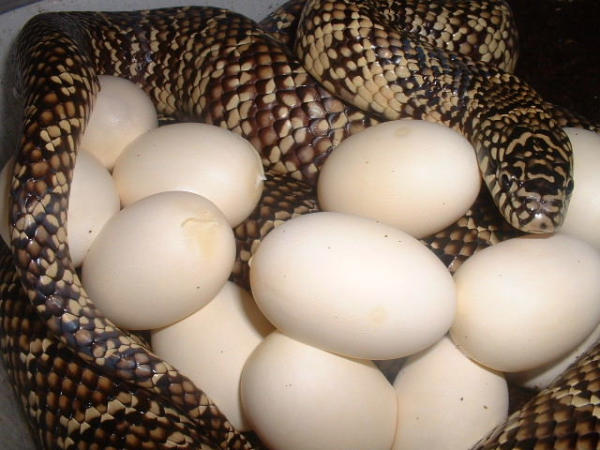
Gallery Photo by SRAC
Click to Enlarge |
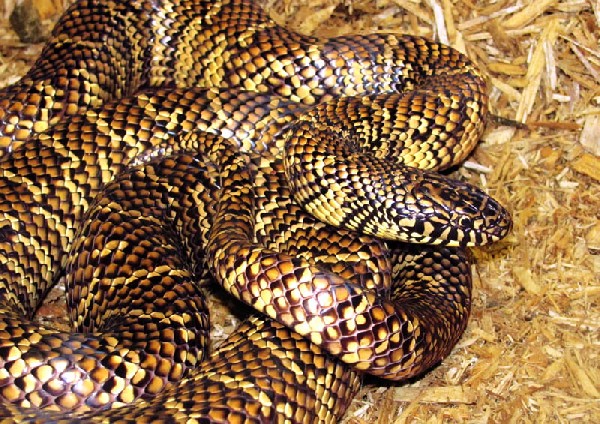
Gallery Photo by lucy47
Click to Enlarge |
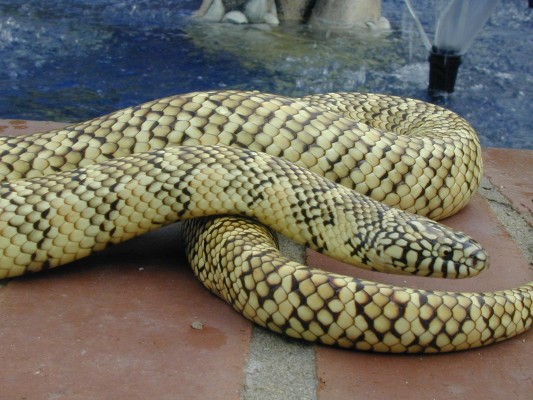
Lampropeltis getula brooksi
Gallery Photo by mattcbiker
Click to Enlarge |
Lampropeltis getula goini
Gallery Photo by Beatty Reptiles
Click to Enlarge |
|
|
Sponsored Link
New & Updated Business Listings
Looking for a reptile or amphibian related business? A reptile store, breeder, importer,
maunfacturer or supplier? Our business directory lists some of the most popluar herp businesses in the world.
| Locate a reptile or amphibian business by name:
|
|
Recent Kingsnake Forum Forum Posts
• new albino cali king, posted by dolphinvolley
• Kingsnake with possible IBD, posted by King
• Advice needed for Alterna, posted by rani
• Cage for Cali/Mexican Kingsnake, posted by Gregg_Mac
• Cage for Cali/Mexican Kingsnake, posted by Gregg_Mac
• when to separate Cal king babies, posted by steeve111
• Scarlet King temps, posted by johnfin
• Please ID This King Snake, posted by Cel49
• New VE 6 Rack, posted by unbeatablebonz
• Is there anybody in here, posted by Jlassiter
• can anybody help?, posted by tzahif
• cannabis is good for snake?, posted by Sharron568
• milk snake habitat, posted by mcevermj
• Please id!!!!, posted by Shaleeclifton96
• Feeding Issue - Please Help!, posted by Acton
Recent Kingsnake Classifieds:
- Now Buying Kingsnakesall...
- Mexican Black Kingsnake ...
- 2025 Female Pinstripe Ca...
- T Albino FL King
Banner Pool
KINGSNAKE.COM
Enjoy all our content free of charge with a user account that gives you full access to every feature.
For added visibility, paid options are available - post in our Classifieds, showcase your business with
Banner Ads or a Directory listing, promote reptile events, and more.
|
Quick Links
|
Community
|
Legal & Safety
|
Support
|
|
|
Kingsnake.com ® is a registered trademark © 1997-
|
|
|