- California Kingsnake
- Lampropeltis getula californiae
- Size:
- Hatchling: 7 - 9 in.
- Adult: 36 - 60 in.(normal)
- Scalation:
- Dorsal: 23 - 25 rows
- Ventral: 213 - 255
- Sub caudal: 60
- Infra labial:44 - 63
- Supra labial: 7 - 8
- Anal Plate: Single
|
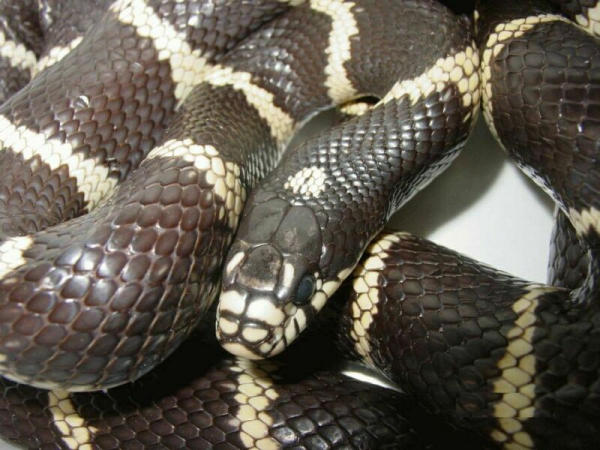
Gallery Photo by Nanya
click to enlarge |
Written by John Cherry
- Coloration
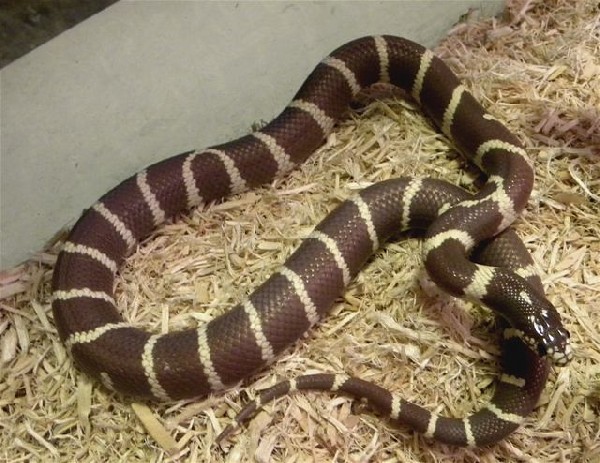
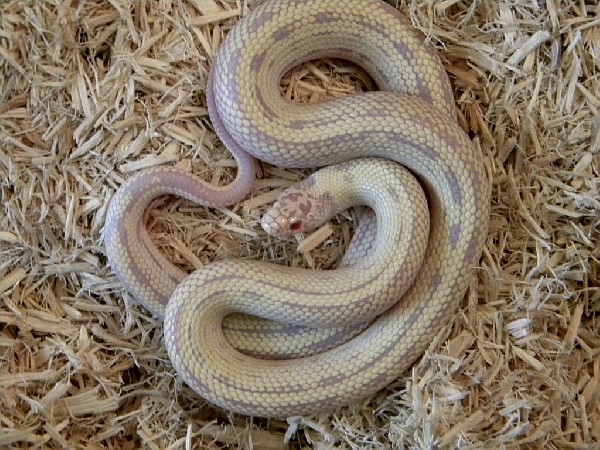
- This animal can only be described as the most variable form of Common Kingsnake in it's
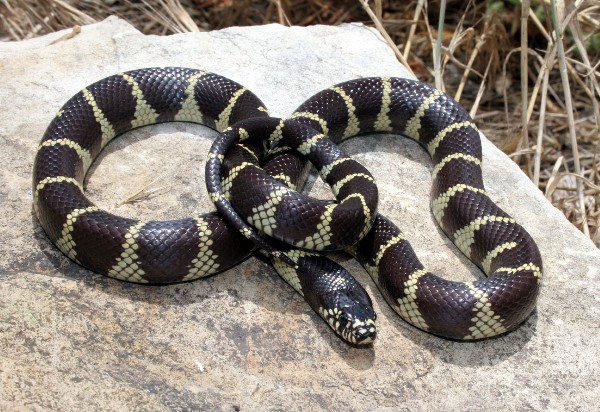
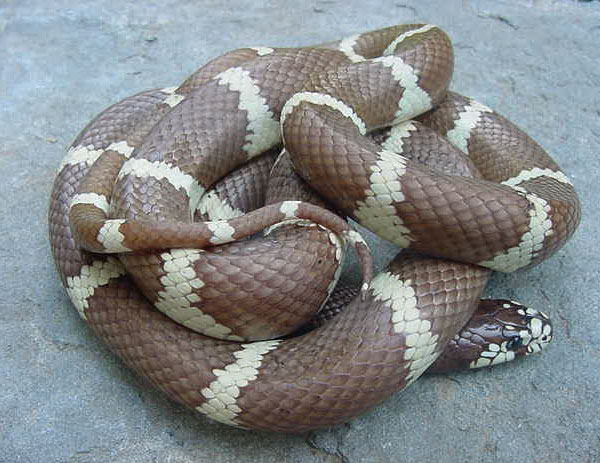
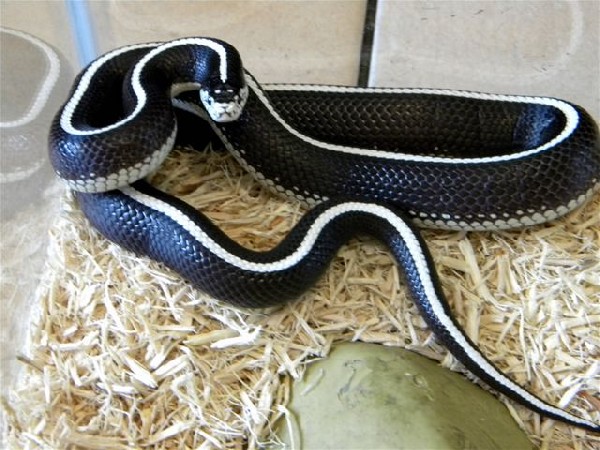
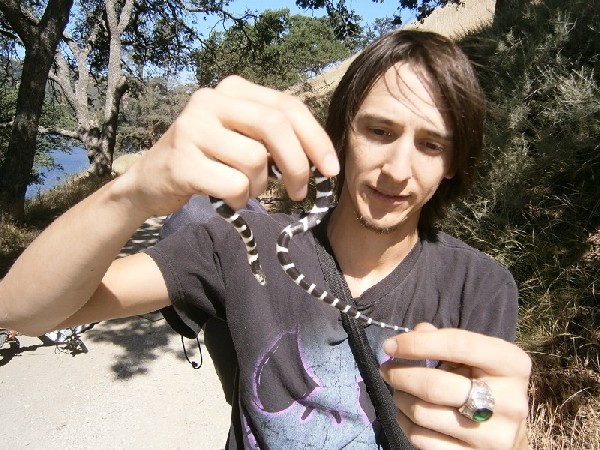
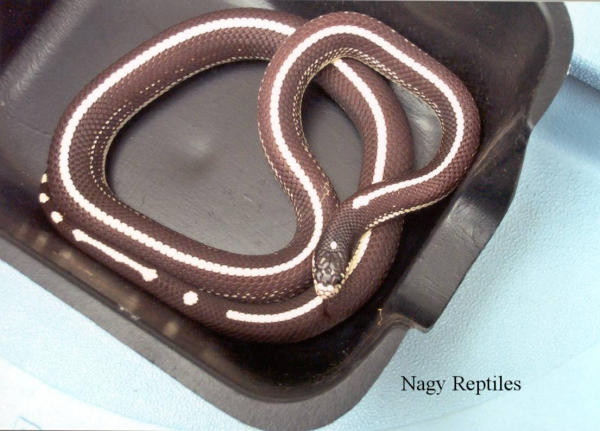
present classification. It is ringed, striped and any combination thereof. Spotting in conjunction with the rings and/or striping is also common. There are several forms that were once separated that are presently not recognized. Examples of this are the Nitida(Baja striped), Conjucta (Baja banded), Boylii (typical) and Yumensis (Arizona ringed). All shades of black, brown and chocolate patterns are known with a ground color ranging for brilliant white to nearly coal black.
- Head:
Dark on top with a light area to the center rear of head, snout and lower half of head paler.
- Dorsal:
Two basic pattern types, ringed and striped. Any combination thereof is possible.
- Ventral:
Checkered, banded or occasionally solid black or brown
- Range:
- Oregon to southern Utah. Arizona, Nevada, California and the Baja Peninsula of Mexico.
They are known to intergrade with L.g.splendida and L.g.nigritus in Arizona
- Habitat:
- Deserts, forests, farmland, river bottoms and brushy areas
- Prey:
- In captivity these animals do excellent on a diet of lab. raised mice. Juveniles normally feed after their first shed and continue to be aggressive feeders throughout their life. Wild specimens have been known to feed on all manners of prey and have even taken fish and other reptiles when available and their ability to consume rattlesnakes is well known. They mainly feed on rodents when given the opportunity.
- Behavior:
- This is a species that does well in captivity. At times it will signal agitation by tail rattling and display the normal getulas reaction to feeding etc. They have become probably the second most kept snake in captivity and are rivaled only by the corn snake for different colors, variations and patterns.
WARNING : be sure and house this animal separately and watch closely during breeding season as they do feed on other snakes.
- Breeding:
- Breeding in captivity is achieved in the same manner as with all colubrids using the following as a guideline. Towards the end of October cease feeding totally, allowing at least 2 -3 weeks at normal temperature for clearing of the gut. Then gradually reduce the ambient temperature inside the cage to the lower 50's and maintain for a period of 3 months. Be sure and provide clean water and systematically check animals for general condition and welfare during this period. After brumation and the animals are brought back up to optimum temperature of 78 - 84 degrees, feeding should resume for approx. three weeks and the pair should be placed together under supervision for short periods of time until copulation can be confirmed. An egg laying chamber partially filled with damp vermiculite or sphagnum moss is helpful. Eggs should be removed immediately after laying and placed in damp vermiculite for the incubation period of 59 - 64 days at temperatures of 80 - 83 degrees.
- Literature Cited:
- Stebbins,Robert C. 1985 second editition revised. A field guide to Western Reptiles and Amphibians. Houghton Mifflin Company
- Cherry, John & Cindy - Field & Breeding Notes
Gallery Photo by Canes05
Click to Enlarge |
Gallery Photo by James Wilson
Click to Enlarge |
Gallery Photo by MMCalKing
Click to Enlarge |
Gallery Photo by MMCalKing
Click to Enlarge |
Gallery Photo by trevid
Click to Enlarge |
Gallery Photo by Nagy Reptiles
Click to Enlarge |
Gallery Photo by MMCalKing
Click to Enlarge |
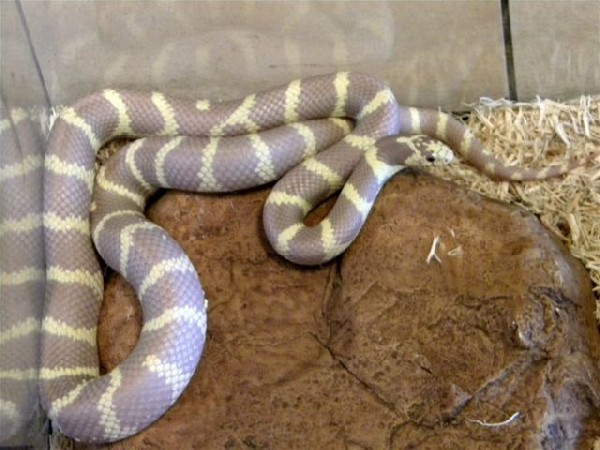
Gallery Photo by MMCalKing
Click to Enlarge |
|
|
Sponsored Link
New & Updated Business Listings
Looking for a reptile or amphibian related business? A reptile store, breeder, importer,
maunfacturer or supplier? Our business directory lists some of the most popluar herp businesses in the world.
| Locate a reptile or amphibian business by name:
|
|
Recent California Kingsnakes Forum Posts
• New Kingsnake Owner, looking for advice, posted by NICKMARX
• Kingsnake with suspected IBD, posted by King
• where to release a kingsnake?, posted by aaahhhhhh
• Cali Kingsnake not eating, posted by alaskaskeeper
• HELP WITH NEW CALI KING, posted by Dbenn42
• albino california king snake eating tail, posted by cbsmarty
• New owner- advice please!, posted by TOFUrious3
• Not Eating! Help!, posted by Payanscoo
• new owner, getting cold., posted by lwright
• Help, posted by Mom23232323
• Help with wild king snake, posted by greenmyrtle
• Feeding schedule???, posted by KiwiTheSnek
• New snake questions!, posted by doctorowl
• Name the morph, posted by paraherpetology
• Mbk x cali, posted by Shawcal
Recent Kingsnake Classifieds:
- 2021 10 Apalachicola Lib...
- Mexican Black Kingsnake ...
- Now Buying Kingsnakesall...
- 2025 Female Pinstripe Ca...
- T Albino FL King
Banner Pool
Snake Forums
Launched in 1997, the kingsnake.com message board system is one of the oldest and largest systems on the internet. Here you may share and discuss information with others about your favorite reptile and amphibian related topics such as care and feeding, caging requirements, permits and licenses, and more.
Click a link below to visit a forum or a tab above to see more forums.
|
Enter a keyword to search. Search in: |
Search Tips - More - Old forum archives
Snake Forums
Lizard Forums
Launched in 1997, the kingsnake.com message board system is one of the oldest and largest systems on the internet. Here you may share and discuss information with others about your favorite reptile and amphibian related topics such as care and feeding, caging requirements, permits and licenses, and more.
Click a link below to visit a forum or a tab above to see more forums.
|
Enter a keyword to search. Search in: |
Search Tips - More - Old forum archives
More Forums
Launched in 1997, the kingsnake.com message board system is one of the oldest and largest systems on the internet. Here you may share and discuss information with others about your favorite reptile and amphibian related topics such as care and feeding, caging requirements, permits and licenses, and more.
Click a link below to visit a forum or a tab above to see more forums.
|
Enter a keyword to search. Search in: |
Search Tips - More - Old forum archives
Venomous Forums
Amphibian Forums
Turtles & Tortoises
General Forums
KINGSNAKE.COM
Enjoy all our content free of charge with a user account that gives you full access to every feature.
For added visibility, paid options are available - post in our Classifieds, showcase your business with
Banner Ads or a Directory listing, promote reptile events, and more.
|
Quick Links
|
Community
|
Legal & Safety
|
Support
|
|
|
Kingsnake.com ® is a registered trademark © 1997-
|
|
|