This article appeared in the June 1997 issue of Reptile Hobbyist
The Worst Reptiles for Beginning Hobbyists
by Petra Spiess
With all of the reptile species available today has come some
misconceptions about which reptiles are best for beginning hobbyists. The cheapest species
are very often not the easiest or most suitable for the beginner. Several species have in
fact, been traditionally sold as "starter" reptile pets, when in fact, they are
far from suitable. Many of these "starter" reptile species should only be kept
by experienced herpetocultuists.
What Makes a Reptile Species Difficult?
Just with the best reptile species, there are several factors that
contribute to making a reptile the "worst" species for beginners. Aggressive
reptile species should not be kept by beginning hobbyists, these animals can be difficult
to handle and can cause injury to an inexperienced keeper. Reptile species that are
heavily parasitized, as is the case with the majority of imported species, are difficult
to maintain for the beginner and should be avoided. Large species that are potentially
dangerous, or that are expensive to feed, house, and maintain should be left to
experienced keepers. Reptiles that require demanding environmental conditions, or reptiles
that stress in captivity easily are difficult to maintain for everyone, not just
beginners. Unfortunately, there is rather a long list of difficult reptile species, but it
is important to know which commonly seen species to avoid.
Burmese, Reticulated, and African Rock Pythons.
All of these species are very cute as hatchlings, but quickly grow HUGE
not matter what size of enclosure they are kept in. Although Burmese pythons often can
become very tame, this is seldom true for the other two species, reticulated and African
Rock pythons. A large, aggressive snake is not much fun to maintain for the beginner.
Unfortunately, these species are so prolific, there are many captive born hatchlings for
sale on the market. Subsequently, the price is relatively low for a hatchling, and this
often tempts beginning keepers into a purchase they should avoid. The reticulated and
African rock python are often imported, to both their and the purchasers detriment.
Imported specimens are often emaciated, dehydrated, tick and mite infected, and sick,
which creates a whole host of problems for the purchaser. Adults of these species require
room sized enclosures, and can be expensive to feed and maintain.
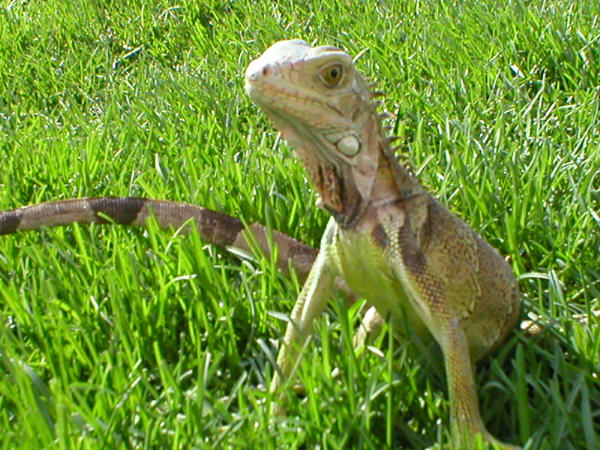
Green Iguanas
Green iguanas are by far the most common reptile pet on the market. This
is unfortunate as this species is not suitable for the beginner for several reasons.
Iguanas are large lizards, adults can easily exceed 5 feet. Iguanas require very large
enclosures to fare well, and most homes cannot provide for this necessity. There is no
aquarium on the commercial market that is large enough to house an adult iguana. Although
some iguanas can become tame, many never do, and some animals may even be aggressive,
especially males. Iguanas have specific dietary and environmental requirements in
captivity that cannot be met by children of any age, so they do not make good children's
pets. This species is one of the cheapest on the market today, do not let this fool you,
iguanas are difficult, demanding, and expensive captives.
Box Turtles
Box turtles have been sold for many years as a "easy to
maintain" or "ideal children's reptile pet". Neither of these two
statements are true. The majority of people who wish to purchase box turtles want to
maintain them inside year-round. This presents several difficulties. Box turtles require a
lot of room to fare well, even one box turtle cannot be housed in an enclosure any smaller
than a 30 gallon breeder aquarium. Almost all box turtles are wild-caught adult animals
that are heavily parasitized. As with the green iguana, box turtles require very specific
dietary and environmental conditions, which make this species less than ideal for the
beginner. If the purchaser researches all the captive needs of box turtles, and can find a
captive born animal to purchase, box turtles make excellent captives. Unfortunately, this
seldom occurs, and box turtles die by the thousands due to ignorance.
Green Anoles
Anoles are another "disposable reptile" in the industry. Green
anoles are a lot more difficult to maintain than most people realize. Many people purchase
anoles as pets for their children because they are very inexpensive. What they do not
realize, or are not told, is that the proper set-up for anoles is ten times the purchase
price of the animal. Anoles are still relatively inexpensive even with the proper
equipment, but there are several other factors that make this species a less than ideal
captive. Almost all anoles on the market are wild-caught animals that are heavily
parasitized. Even a healthy looking anole can carry a huge parasite load that will
eventually lead to its demise. Anoles DO NOT tolerate handling well. This lizards are
naturally very wary (everyone eats them) and become very stressed by handling. Captive
born anoles in the proper, naturalistic enclosure can make a beautiful display, but they
are not suitable for beginning reptile pets.
Wild-Caught Ball Pythons
Although captive born ball pythons make one of the best reptile species
for the beginner, wild-caught or captive hatched species are among the worst. Wild-caught
adult ball pythons are notorious for finicky eating and heavy parasitization. Do not let
the term "captive hatched" or "farm raised" fool you, these animals
are only slightly better than wild-caught specimens. The reason for this is the fact that
captive hatched or farm raised ball pythons are still imports, and although they many not
be as heavily parasitized as their wild-caught brethren, are still subject to the stresses
of the importation process. Imported ball pythons, whether they be wild-caught or captive
hatched, are often stressed severely by shipping, and crowding together with other animals
at dealers and importers. The crowding that occurs often acts as a vector for the spread
of external parasites and disease. The only ball pythons a beginner should consider are
captive born, feeding animals that have not been subjected to excessive stress. Although
the wild-caught and captive hatched ball pythons are cheaper, they will cost more in vet
bills and frustration in the long run.
Wild-Caught Chameleons of any Species
Even captive born chameleon are demanding captives, but mixing together an
antisocial nature, the stress and crowding of importation, and heavy parasitization, makes
wild-caught chameleons terrible captives for the beginner. Some dealers make a concerted
effort to establish wild caught chameleons before sale, deparisitizing and acclimating
their animals, most importers however, are not this conscientious and subscribe to the
idea of "buyer beware". Chameleons are asocial, and do not tolerate handling
well. Chameleons need to be housed away from other chameleons and from stressful household
occurrences such as cats, dogs, vacuum cleaners, and high traffic areas. Feeding and
housing chameleons appropriately requires a lot of effort and time, these animals are
stunning, fascinating, and beautiful, but are too difficult and frustrating for the
beginning hobbyist.
The Tokay Gecko
There are few other reptile species of any genera more aggressive than the
tokay gecko. This species is very common on the market, and is subsequently very low
priced. Most tokays are imported animals and have all the problems that go with this
process. Tokay geckos, with very few exceptions, do not become docile and do not tolerate
handling well. In addition, they are extremely quick and, as with all arboreal geckos, can
climb even slick surfaces with ease. The first thing a tokay geckos does when it feels
threatened (which seems to be anytime anything comes near one) is to gape its prodigious
mouth as a warning, which is why most close photographs of the tokay geckos show the
animal in this position. The second course of action for a threatened tokay is a load
barking noise followed by a lunge at the threatening object (if you are keeping one, this
is usually your hand). The last course of action is biting, and boy, can they bite! Tokay
geckos have very strong jaws, capable of causing serious injury to anyone fool enough to
be bitten by one of these animals. This beautiful and interesting gecko can make a good
captive for those who are experienced in handling aggressive, fast moving reptile species.
Beginners generally do not fall into this category, so should pass this species by when
looking for a new purchase.
Caimans or Alligators
There are many reasons not to keep these two species, among them is the
fact that many states ban the private sector from owning these animals. Baby alligators
are produced heavily in the East and South, a determined person will be able to purchase
one, legal or not. Caimans can be found in almost every state that does not ban their
sale. Baby caimans and baby alligators are undeniable cute, they make cute sounds, and are
extremely soft to the touch. Most people who purchase these animals as babies have never
seen an adult animal or do not plan on caring for the animal for its entire life. I will
never forget speaking with a person who had just purchased a baby alligator and asking,
"What will you do with this animal when it gets anywhere near the
adult size?" The answer I received was,
"I Dunno know", which is the typical response of a person who
purchases one of these completely inappropriate reptiles. Many alligators purchased by
people such as this die or are killed long before they reach an "inconvenient"
size. Alligators are extremely unsuitable to just about all reptile keepers, experienced
or not. Their huge size, demanding housing and feeding requirements, and aggressive nature
makes this species one of the worst reptile species to maintain in captivity. Caimans are
much smaller than alligators, but size is relative considering alligators are beyond HUGE.
Caimans are also aggressive, and require very large aquatic enclosures most people cannot
provide.
With so many reptile choices on the market today, it is sometimes
difficult for a beginning hobbyist to choose an appropriate reptile pet. There are many
reptile species that are wonderful for beginners, but there are many commonly available
and cheap species that are not. It is important that beginning hobbyists have good
experiences with the reptiles they choose to purchase, as this encourages them to become
more involved in a fascinating hobby that will last a lifetime.